
Aeolesthes
Aeolesthes
Description
How to identify
Aeolesthes is a genus of large longhorn beetles belonging to the family Cerambycidae, known for being significant wood-boring pests in various forest and fruit trees.
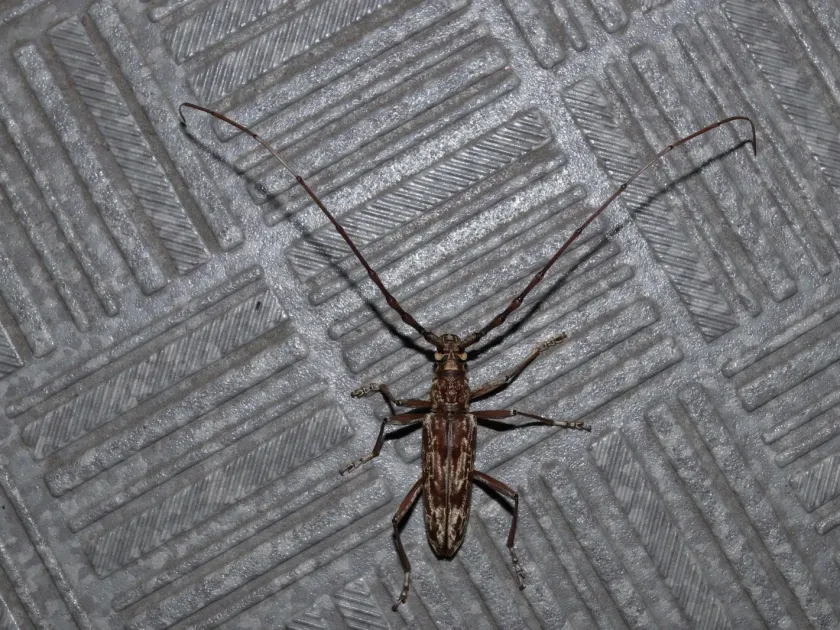
The adults are typically robust, measuring between 30 to 60 mm in length, often covered with dense hair or scales, providing a camouflage appearance on tree bark.
One of the most distinguishing features is their long antennae, which, especially in males, are significantly longer than the length of their body.
The larvae are white or yellowish, fleshy, and possess highly developed mandibles designed to tunnel through dense wood tissues efficiently.
They undergo a complete metamorphosis, but because they reside deep within the wood, they are often difficult to detect until substantial damage has occurred.
What it damages
Aeolesthes species are classified as destructive xylophages, meaning they feed primarily on the xylem of host plants, leading to severe physiological stress.
They target a wide variety of hardwoods and fruit-bearing trees, including apple, pear, chestnut, and walnut, often choosing mature or stressed trees.
The larvae create extensive tunnels throughout the sapwood and heartwood, which effectively severs the tree’s water and nutrient transport systems.
Infested trees frequently show signs of decline, such as canopy thinning, leaf yellowing, and branch dieback due to the disrupted vascular flow.
In severe cases, the structural integrity of the tree is so compromised that it becomes prone to snapping or falling during windstorms.
When it appears
The adult emergence period for Aeolesthes typically begins in late spring and peaks throughout the warmer summer months.
During this time, adults are active at night or during twilight, searching for suitable hosts to deposit eggs, often selecting crevices in the bark.
Once hatched, the larvae penetrate the bark and begin their feeding cycle, which can persist for one to three years depending on the specific species and climate.
Pupation occurs within a specially constructed chamber inside the wood, from which the adult will eventually emerge by boring a hole through the bark.
Seasonal patterns are influenced heavily by temperature; warmer regions often experience faster larval development and more frequent generation overlaps.
Signs of infestation
The presence of circular or oval-shaped emergence holes on the bark surface is a primary indicator of a past or current infestation by these beetles.
Accumulations of frass, which looks like coarse sawdust or wood shavings, at the base of the tree or caught in bark fissures are common diagnostic signs.
Tree distress signals, including unexpected sap flow or gumming from points on the trunk, are common responses to larval boring activity beneath the surface.
Early-season wilting of entire limbs, despite adequate watering, suggests that the conductive tissues have been severed by internal larval tunneling.
In mature stands, one might observe woodpecker activity as they seek out the large larvae living within the wood, which is a sign of hidden infestation.
Control measures
The primary control measure involves the systematic removal and destruction of infested wood to eliminate breeding sites and stop the spread of the beetle.
Monitoring using pheromone-baited traps during the adult flight season helps in tracking population spikes and timing potential chemical interventions.
For high-value trees, trunk injections with systemic insecticides can provide long-term protection by targeting the larvae as they feed on treated tissues.
Maintaining tree health through proper irrigation, fertilization, and sanitation helps the tree create natural resin barriers to prevent larval penetration.
- sanitary logging and immediate burning of infested biomass;
- application of residual contact insecticides on trunks during the flight period;
- physical barriers or netting to prevent egg-laying on susceptible trunks.
Taxonomy
- Latin name
- Aeolesthes
- Order
- Coleoptera (beetles)
- Family
- Cerambycidae
- EPPO code
- AELSSP
Discussion
No discussions yet — be the first.