
Aegomorphus clavipes
Aegomorphus clavipes
Description
How to identify
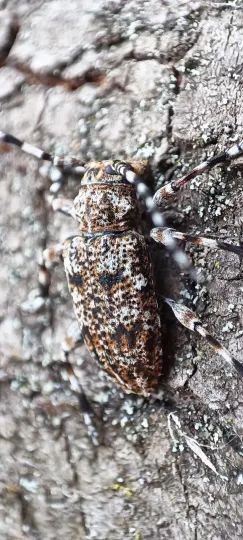
Aegomorphus clavipes is a member of the longhorn beetle family (Cerambycidae), order Coleoptera. Adult beetles typically measure between 10 and 18 mm in length, displaying a mottled brown and gray color pattern that provides effective camouflage against tree bark.
The species is distinguished by club-shaped swellings on the tibiae of the middle legs, a unique trait that inspired its scientific name. Males possess exceptionally long antennae, significantly exceeding their body length, which are used for sensory detection.
Like other Cerambycids, the beetle undergoes a complete metamorphosis: egg, larva, pupa, and adult. The larval stage is spent entirely within the host plant, making early detection a significant challenge for arborists and foresters.
Adults are primarily nocturnal, spending daylight hours hiding in bark crevices. Their ability to fly allows them to disperse efficiently to locate suitable host trees, especially those that are already stressed or compromised.
Females select specific sites on the host tree, often using their mandibles to create small depressions in the bark where they deposit their eggs. This strategic placement ensures the larvae have immediate access to the nutrient-rich cambium layer.
What it damages
The primary damage is caused by the larvae, which bore galleries beneath the bark of various deciduous trees including oak, linden, maple, and several fruit-bearing species. This feeding behavior disrupts the flow of nutrients and water.
As larvae excavate wide, meandering tunnels within the phloem and cambium layers, they effectively girdle the tree. In severe cases, this process leads to the widespread death of branches and can eventually cause the decline of the entire tree.
In addition to physiological stress, the holes created by larvae serve as entry points for secondary pathogens, such as fungi and bacteria, which accelerate wood decay and structural weakness.
The commercial value of timber is significantly reduced due to the galleries bored by the larvae. For orchard owners, an infestation can lead to poor fruit production and permanent deformation of the tree architecture.
Healthy trees can sometimes survive localized infestations, but stressed or dying trees act as reservoirs for the pest, facilitating the rapid expansion of the population across the landscape.
Signs of infestation
The most reliable indicator of an infestation is the presence of small circular entrance holes on the bark, accompanied by frass (a mixture of wood dust and excrement) being pushed out by the larvae.
Visual signs also include bark cracking, blistering, or loose patches of bark where the larvae have extensively fed on the underlying wood, often revealing large, flattened galleries beneath.
During the peak activity season, adult beetles may be spotted on the tree trunks, especially at dusk. Their camouflage makes them difficult to see, but movement or mating pairs can often be detected by a keen observer.
Crown dieback, where individual branches exhibit chlorosis (yellowing) or premature foliage drop, often points to damaged vascular tissues further down the trunk caused by the larval activity.
Finding pupal chambers or empty cocoons during routine inspections is a definitive sign that a generation has completed its development within the tree, confirming the presence of an established population.
Control measures
Sanitation is the most effective management strategy; this involves identifying, cutting, and removing infested trees before the next generation of adults emerges to prevent the spread of the pest.
Monitoring programs using pheromone or light traps are essential for determining the timing of beetle flights. This data allows for the precise application of protective measures, such as chemical sprays, at the most vulnerable stage of the lifecycle.
Maintaining tree vigor through proper irrigation, fertilization, and site management creates a defensive environment. Healthy trees produce sap and defense compounds that can often resist or discourage larval colonization.
Chemical control involving systemic insecticides may be necessary for high-value ornamental trees or orchards. Applications should target the bark surfaces just before the anticipated start of the beetle activity period.
- Regular trunk inspections for frass.
- Removal of dead or heavily infested wood.
- Application of bark-protecting agents.
- Use of biological control agents where appropriate.
Taxonomy
- Latin name
- Aegomorphus clavipes
- Order
- Coleoptera (beetles)
- Family
- Cerambycidae
- EPPO code
- ACADCL
Discussion
No discussions yet — be the first.