
Acanthoderes quadrigibba
Acanthoderes quadrigibba
Description
How to identify
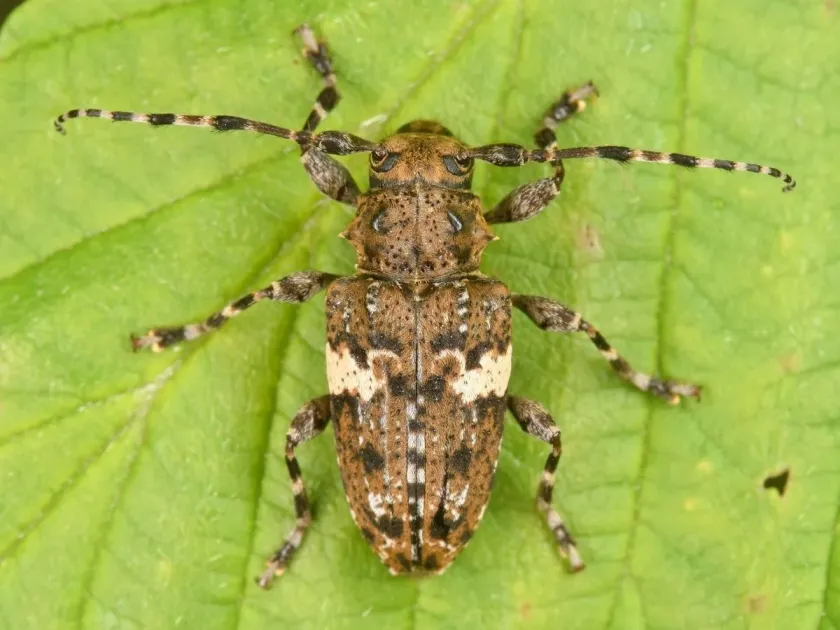
Acanthoderes quadrigibba is a species of beetle belonging to the family Cerambycidae, commonly known as longhorn beetles. These insects are specialized wood-borers that play a specific role in forest and orchard ecosystems, often targeting weakened or dying woody plants.
Adult beetles are characterized by their elongated bodies, long antennae, and a distinct pattern of four tubercles on the pronotum. This specific morphological feature serves as their primary identifying characteristic for entomologists and researchers.
The insects are predominantly nocturnal, staying hidden on the bark during daylight hours. Their coloration, featuring mottled patterns, provides excellent camouflage, allowing them to blend perfectly with the texture and color of the bark.
The larvae are typical xylophagous organisms, possessing a creamy white body and powerful, well-developed mandibles. They spend their developmental cycle tunneling through the cambium and xylem layers of their host plants.
The life cycle involves an egg-laying phase on the surface of the bark, followed by the hatching of larvae that immediately begin excavating galleries within the tree, which can last for one or more seasons depending on the climate.
What it damages
The primary hosts of Acanthoderes quadrigibba are various deciduous trees and shrubs. The damage is primarily caused by the larval stage, which feeds on the tree's internal vascular tissues, disrupting the flow of water and nutrients.
Infested trees often show signs of decline, including the wilting of branches and a general loss of vigor. If the infestation is severe, the structural integrity of the affected branches may be compromised, leading to breakage.
As the larvae create extensive tunnels, they open pathways for opportunistic pathogens, such as wood-decaying fungi and bacteria. This secondary infection often causes more damage to the tree than the feeding activity of the beetle itself.
In orchards, this pest can lead to reduced yield and stunted growth. If the main trunk is heavily infested, it can result in the complete death of the tree, creating significant economic loss for growers.
Younger trees are especially vulnerable to the damage, as their thinner bark allows easier access for larvae to enter the cambium layer. Mature, healthy trees are generally more resistant unless they are suffering from environmental stress.
Signs of infestation
The most visible signs of infestation are small, circular or oval exit holes found on the trunk or larger branches. These holes are often accompanied by frass (a mixture of wood dust and larval excrement) accumulating in crevices or at the base of the tree.
Branch dieback is a critical indicator of activity. If specific parts of the canopy begin to yellow or dry out unexpectedly, it is often a sign that the nutrient supply to those parts has been cut off by larval tunneling.
Discoloration or sap bleeding from the bark can also indicate that the tree is trying to defend itself against wood-boring activity. Examining the bark surface can reveal these signs during routine garden inspections.
Adult beetles can be detected during the evening using light traps. Monitoring for the presence of adults is a proactive way to gauge the pest population level within the immediate environment.
Peeling back a small portion of the dead or dying bark may reveal the intricate, winding galleries left behind by the larvae. This is a definitive sign of an active or past infestation of Acanthoderes beetles.
Control measures
The primary control measure is the systematic removal and destruction of infested wood. Pruning and burning affected branches helps eliminate the population of larvae before they can mature and emerge as adults to spread further.
Improving tree health is essential for prevention. Ensuring that trees receive adequate irrigation, proper fertilization, and protection from mechanical damage strengthens their natural defenses against pest colonization.
Chemical control using systemic insecticides can be effective if applied during the emergence period of adults or the early larval hatching phase. Proper timing is crucial to ensure that the chemical reaches the target area.
Biological control methods, such as utilizing beneficial nematodes, can offer an environmentally friendly alternative to traditional pesticides for treating trunks of valuable landscape trees.
- Installing pheromone or light traps for monitoring and reducing adult populations.
- Applying protective coatings or lime wash to the trunks to deter egg-laying.
- Regular inspections to identify and treat early-stage infestations before they cause severe damage.
Taxonomy
- Latin name
- Acanthoderes quadrigibba
- Order
- Coleoptera (beetles)
- Family
- Cerambycidae
- EPPO code
- ACADQU
Discussion
No discussions yet — be the first.