
Acanthoderes nigricans
Acanthoderes nigricans
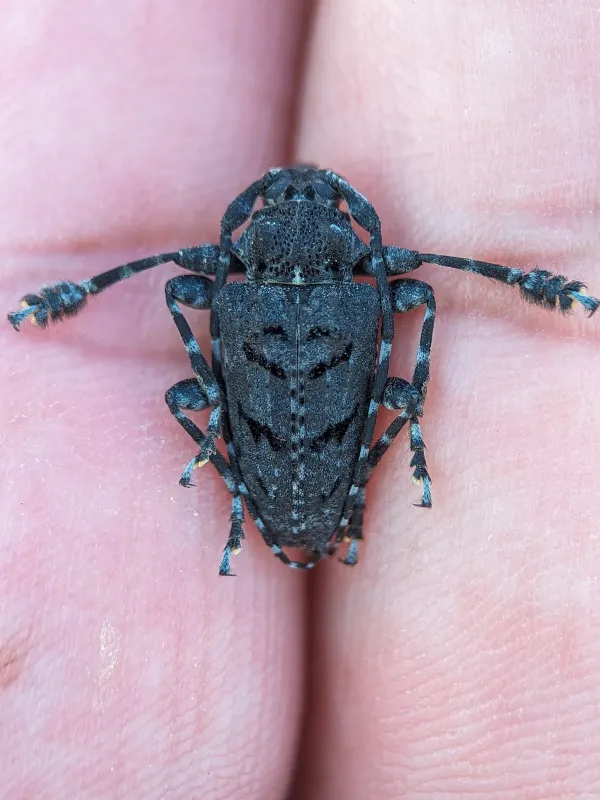
Description
How to identify
Acanthoderes nigricans is a species of longhorn beetle (family Cerambycidae), order Coleoptera, characterized by its specialized adaptation to a wood-boring lifestyle.
The adult beetle typically exhibits a cryptic coloration of dark shades, allowing it to blend seamlessly into the bark of its host tree species.
The larvae are typically legless, white, and equipped with strong mandibles, which are essential for navigating and consuming woody plant tissues.
The morphology of these beetles is indicative of their role as specialized wood-borers that thrive in diverse forest ecosystems.
Accurate identification of the species relies on examining specific anatomical features that distinguish it from other wood-boring longhorn beetles.
What it damages
The primary damage is caused by the larval stage, which feeds on the inner bark and outer sapwood, effectively creating tunnels that disrupt nutrient flow.
This feeding activity often leads to the gradual decline of host trees, manifesting as branch dieback, thinning canopies, and eventually tree mortality.
The tunnels created by larvae also serve as entry points for secondary pathogens, such as wood-decay fungi, which further weaken the tree structure.
While the beetle prefers stressed or dying trees, large populations can attack healthy trees, causing significant ecological and economic impact.
The overall wood quality is severely compromised by these activities, leading to devaluation in timber products and forestry management losses.
When it appears
The biological cycle of Acanthoderes nigricans is highly seasonal, with adult emergence typically coinciding with warmer months of the year.
During the flight period, adults seek suitable host trees to mate and lay eggs, often choosing sites where bark has been previously damaged.
The larval stage resides within the wood, often completing its development over one or more seasons depending on the local environmental conditions.
Pupation occurs within the wood, followed by the emergence of adults, which drill circular or oval holes through the bark to complete their life cycle.
Management strategies are most effective when timed with the specific life cycle phases of the beetle, particularly during the emergence window.
Signs of infestation
Key indicators of an infestation include small exit holes on the tree trunk, which are indicative of adults having recently emerged from the wood.
Accumulations of frass, or "wood dust," found at the base of the tree or within branch crotches, are clear evidence of internal larval boring activity.
Visible signs of tree stress, such as yellowing foliage, reduced crown density, or unexpected branch death, often point to a significant infestation.
Localized bark fissures or areas of sunken tissue on the trunk may indicate the presence of larval galleries lying just beneath the surface.
Advanced cases can often be detected by the presence of wood-pecker activity or other signs that predators are targeting the larvae within the wood.
Control measures
The most effective management strategy involves sanitation logging, which is the removal and destruction of infested or dead trees before the adults emerge.
Ensuring overall tree vigor through proper silvicultural practices, such as adequate spacing and fertilization, helps trees withstand potential attacks.
Biological control, such as encouraging local woodpecker populations or parasitic wasps, can naturally suppress beetle populations in forest stands.
Systemic insecticides may be used in nursery or landscape settings, specifically timed to the peak emergence period to prevent further egg-laying.
Monitoring populations using pheromone traps is recommended to track the activity of this pest and to determine the necessity of intervention measures.
Taxonomy
- Latin name
- Acanthoderes nigricans
- Order
- Coleoptera (beetles)
- Family
- Cerambycidae
- EPPO code
- ACADNI
Discussion
No discussions yet — be the first.