
Acanthoderes
Acanthoderes
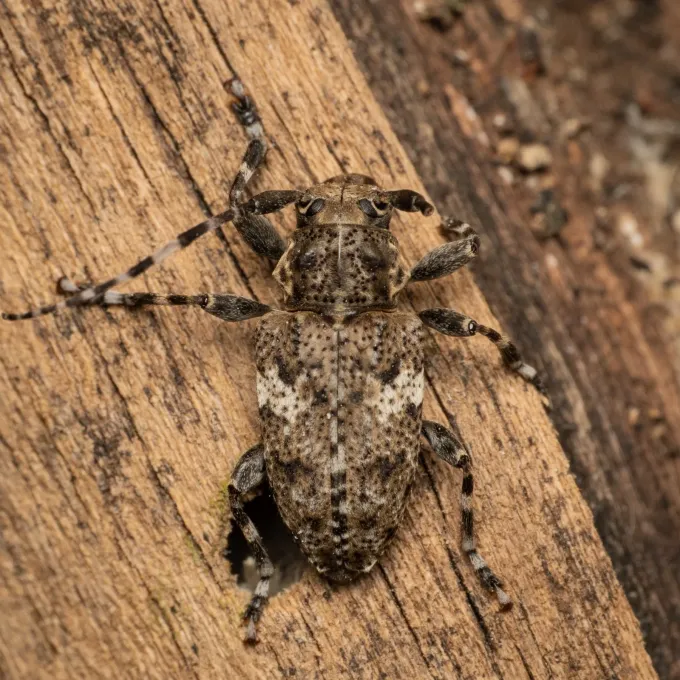
Description
How to identify
Acanthoderes belongs to the family Cerambycidae, commonly known as longhorn beetles or wood-boring beetles. These insects are classified within the order Coleoptera and are specialized to survive and thrive on woody plant tissues.
Adult beetles are characterized by their sturdy build and long antennae, which are typical for the family. Their coloration is usually camouflaged, featuring mottled patterns that mimic tree bark, making them nearly invisible to predators when stationary.
The larvae are typically pale, legless, and possess a well-developed, hardened head capsule with powerful mandibles. They are highly efficient at consuming woody material and are anatomically adapted to navigate within their tunnel systems.
Identification often requires careful examination of the pronotum and elytral structures. Experts distinguish the genus Acanthoderes by specific patterns and physical features that separate them from other common wood-boring longhorn beetles.
Females are selective about their egg-laying sites, frequently choosing trees that show signs of physiological stress, as these hosts are less capable of utilizing defensive mechanisms against the invading larvae.
What it damages
This pest primarily affects hardwood tree species, including various types of oaks, lindens, and poplars. In some cases, neglected fruit trees can also become hosts if their vitality is sufficiently low.
The larvae are the main source of damage, as they carve extensive galleries through the cambium and sapwood layers. This behavior effectively severs the nutrient transport vessels of the tree, leading to crown dieback.
Adult beetles may contribute to minor physical damage by feeding on young, tender shoots and bark, but their primary impact is the introduction of larvae into the tree and potentially transporting pathogens.
Stressed trees, such as those damaged by extreme weather or poor pruning, are particularly susceptible. Once infested, these trees become hotspots for further infestation by secondary pests and diseases.
In forestry settings, unchecked populations can cause significant timber degradation, reducing the economic value of the trees and compromising the overall health of the forest stand.
When it appears
Adult activity typically peaks during the spring and summer months, coinciding with the warm weather required for mating and flight. This is the period when most new infestations are initiated.
The lifecycle duration is variable and often takes one to several years depending on ambient temperature, host tree vigor, and moisture levels within the wood. Northern regions generally see slower development cycles.
Summer is the most critical time for monitoring, as larvae are often actively feeding and expanding their tunnels, while adult beetles are looking for suitable hosts to lay their eggs for the next generation.
Wintering occurs primarily in the larval stage. Larvae often retreat deeper into the heartwood or construct specialized chambers beneath the bark to withstand the cold until the following spring.
The transition from the pupal stage to the adult stage results in the emergence of mature beetles. This emergence leaves behind distinct, often circular exit holes in the bark, signaling the start of a new cycle.
Signs of infestation
The most prominent sign of an infestation is the presence of exit holes on the trunk or branches. These are often accompanied by frass — a mixture of wood shavings and larval excrement pushed out by the beetle.
Tree vigor is a key indicator; wilting leaves, yellowing of the foliage, and the dieback of upper canopy branches suggest that the vascular system is being compromised by larval activity.
Bark abnormalities, such as loose or cracking patches, are common near the sites of larval galleries. In many cases, the bark may even show dark staining due to the decay caused by the pest.
Woodpecker activity is a significant indicator. These birds often target trees heavily infested with wood-boring larvae, and excessive drilling on the trunk is a strong signal that the tree is currently under attack.
In advanced stages of decay, the trunk may sound hollow when tapped, indicating extensive internal tunneling that has significantly weakened the structural integrity of the woody host.
Control measures
Preventive maintenance is the most effective defense. Keeping trees healthy through proper irrigation, fertilization, and avoiding mechanical damage to the bark ensures they can naturally resist pest pressures.
Promptly removing and disposing of dead or heavily infested wood is essential to prevent the spread of the beetle to healthy neighboring trees. Sanitation remains a cornerstone of successful pest management.
For high-value specimen trees, systemic insecticide injections can be highly effective. These treatments deliver the pesticide directly into the tree's circulatory system to target larvae feeding within the wood.
Biological control methods involve supporting local populations of natural enemies, such as parasitic wasps and predatory beetles, which can exert natural pressure on the longhorn beetle population.
Targeted insecticide applications during the adult emergence period can reduce the number of breeding adults. However, timing is critical, as treatment must be applied precisely when the beetles are most active.
Taxonomy
- Latin name
- Acanthoderes
- Order
- Coleoptera (beetles)
- Family
- Cerambycidae
- EPPO code
- ACADSP
Discussion
No discussions yet — be the first.