
Acanthocinus
Acanthocinus
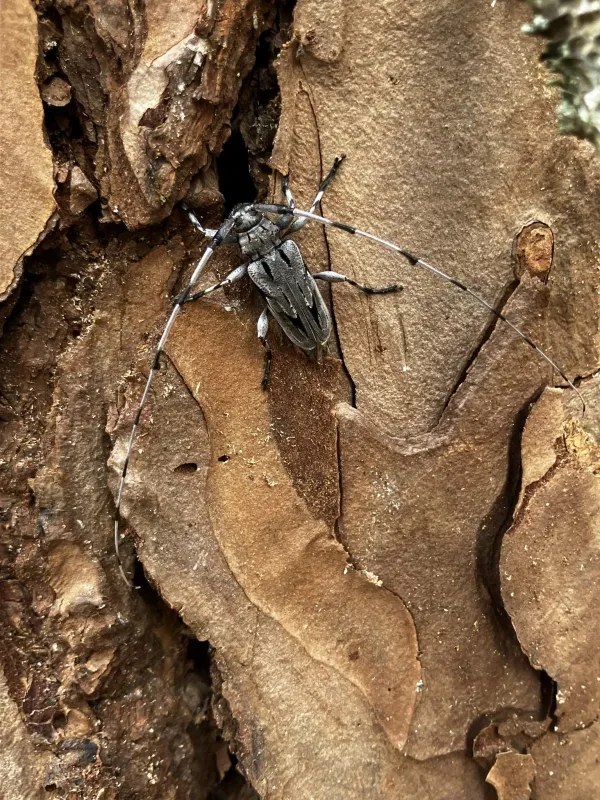
Description
How to identify
Acanthocinus is a genus of longhorn beetles belonging to the family Cerambycidae, known for their distinctively long antennae and specialized wood-feeding habits.
Adult beetles typically possess a mottled grey or brown appearance, which provides excellent camouflage against the bark of the host trees they inhabit.
The body length of the adults varies between 10 and 25 millimeters, depending on the species and the availability of nutritional resources during their larval stage.
Larvae are legless, ivory-colored, and equipped with strong mandibles designed to tunnel through the cambium and the outer layers of the wood.
These insects are well-adapted to life under the bark of forest trees, often completing their entire larval development within the conductive tissues of the stem.
What it damages
Acanthocinus primarily targets weakened, stressed, or recently felled coniferous trees such as pine, spruce, and fir in temperate forest ecosystems.
Larval feeding activity occurs in the phloem and cambium layers, creating intricate galleries that disrupt nutrient transport and weaken the overall tree structure.
Their presence significantly lowers the commercial value of timber, as the tunnels provide entry points for wood-decay fungi and cause structural wood degradation.
In cases of high population density, these beetles can exacerbate the damage caused by other pests, such as bark beetles, leading to the rapid death of trees.
Although they rarely attack perfectly healthy trees, they play a critical role in forest dynamics by colonizing trees that are already in decline due to drought or disease.
When it appears
The flight period for adult Acanthocinus typically spans from late spring through the end of summer, depending on local climate conditions and temperatures.
Following mating, females search for suitable egg-laying sites, focusing on bark crevices or wounds on the trunks of susceptible host trees.
The lifecycle duration from egg to adult is usually one to two years, reflecting the time required for larvae to gain sufficient nutrients for pupation.
Winter is generally spent in the larval stage, buried deep within the galleries beneath the bark, where the insect remains dormant until spring warmth arrives.
Pupation takes place inside a specialized chamber constructed by the larva, from which the adult beetle emerges by cutting an exit hole in the bark.
Signs of infestation
A common sign of infestation is the appearance of frass, a fine sawdust-like material, accumulating at the base of the tree or around fissures in the bark.
- Noticeable entrance or exit holes on the surface of the trunk, often oval in shape.
- Elaborate, winding galleries visible on the underside of bark when it is peeled away from the wood.
- Fading or yellowing of the foliage in coniferous species, indicating disrupted nutrient flow.
- Localized patches of dead or loosened bark caused by the larval galleries underneath.
Adult beetles are often difficult to spot due to their cryptic coloration, but they can sometimes be seen moving along the bark during warm daylight hours.
Control measures
The most effective management strategy involves the timely removal and disposal of infested trees to prevent the emergence of the next generation of beetles.
Proper forest hygiene, including the rapid transport of harvested timber away from the forest, is crucial to minimize breeding sites for these pests.
Pheromone traps can be deployed during the peak flight season to monitor population trends and reduce the number of breeding adults in the area.
Chemical treatments are generally restricted to high-value trees or nursery stocks where protection is essential and the scale allows for targeted application.
Maintaining forest vitality through responsible management practices is the best long-term approach to preventing widespread Acanthocinus colonization.
Taxonomy
- Latin name
- Acanthocinus
- Order
- Coleoptera (beetles)
- Family
- Cerambycidae
- EPPO code
- ACAHSP
Discussion
No discussions yet — be the first.