
Sweet potato (as host of phytopathogens)
Sweet potato
Sweet potato (Ipomoea batatas) can harbor various phytopathogens that significantly compromise yield quality. The primary pathogens include fungi such as Fusarium spp., Ceratocystis fimbriata, and various soft rot bacteria.
What the section contains
Sweet potato (as host of phytopathogens)
These pathogens function as necrotrophic parasites, infecting both the aerial parts during growth and the storage roots during the post-harvest phase. Proper identification usually requires an assessment of symptoms combined with laboratory analysis.
The taxonomic diversity of these pathogens ranges from soil-borne fungi to bacteria capable of rapid cell wall degradation. Understanding their survival mechanisms in soil is crucial for successful management.
Agronomists should monitor for specific environmental conditions that favor pathogen development, such as high soil moisture and warm temperatures, which stimulate sporulation and infection cycles.
Frequent field scouting is essential to identify early-stage symptoms, such as wilting or foliage discoloration, which may indicate the presence of root-infecting pathogens.
The economic impact of these diseases is severe, particularly concerning post-harvest losses. Infected storage roots lose their commercial value and nutritional quality rapidly.
Rotting roots not only become unsalable but can also serve as a source of inoculum for healthy tubers in storage containers. This leads to substantial waste if storage conditions are not managed.
Field damage includes restricted growth and stunted root development, which directly reduces overall harvest weight. Severe infections can lead to total crop failure in specific zones of the field.
Some pathogens persist in the soil for years, necessitating strict rotation strategies. This creates limitations on crop diversity within the farm's management plan.
The physical damage caused by the pathogen weakens the structural integrity of the crop, making it highly susceptible to secondary invaders that worsen the decay process.
Most infections occur during the peak of the growing season when warm temperatures and frequent rains create an ideal environment for pathogen proliferation.
The harvest season represents the most critical period. Mechanical wounds sustained during harvesting allow easy entry for pathogens, especially if the soil is wet at the time of extraction.
During the storage phase, the pathogens continue to spread if conditions are not strictly controlled. Poor ventilation and high humidity allow fungi to move from tuber to tuber.
Spring planting is a period of high risk if infected sprouts are used. Ensuring a clean start with pathogen-free planting material is the most important step in seasonal management.
Environmental management during the curing phase (post-harvest) is essential to transition the tubers into a dormant state, where the risk of pathogen infection is minimized.
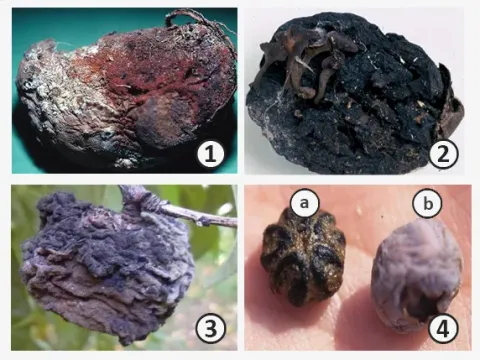
Signs of infection often manifest as localized lesions, surface discoloration, or tissue softening on the storage roots, and wilting of the vegetative canopy.
- Dark brown or black depressed lesions on the root surface.
- Mycelial growth, appearing as white, pink, or gray fungal mats.
- Foul odor and watery texture due to bacterial soft rot.
- Chlorosis and premature yellowing of the foliage.
- Internal tissue decay, resulting in dry or spongy voids within the tuber.
Bacterial infections often show a slimy exudate on the surface of the root, which quickly spreads to adjacent tubers, creating characteristic "wet rot" nests.
Dry rot symptoms involve the shriveling of the root, where the tissue becomes mummified or pithy. This is often an internal process that remains hidden until the root is opened.
Vascular discoloration can be observed if the root is sliced, indicating a systemic infection that prevents the plant from transporting water and nutrients efficiently.
Integrated Pest Management (IPM) is the gold standard for sweet potato protection, starting with a crop rotation cycle of at least 3 to 4 years to reduce soil-borne inoculum.
The use of certified, disease-free planting material derived from meristem culture is the most effective way to eliminate vertical transmission of pathogens.
Curing is vital: storing the harvested roots at 28-30°C and high humidity for about a week allows the tubers to form a protective cork layer over harvest wounds, preventing infection.
Field sanitation, including the removal of infected crop residues and weeds, reduces the potential for disease carry-over in the soil environment.
In storage, maintaining a temperature of 13-15°C and proper airflow is essential to prevent condensation, which is the primary driver of rapid post-harvest rot development.