
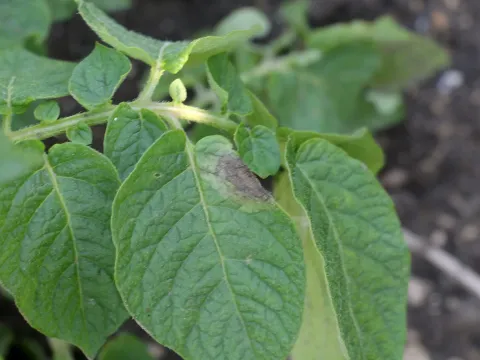
Late blight
Suspected
The causative agent of the disease is Phytophthora infestans, a pathogen belonging to the kingdom Chromista. Although often referred to as a fungus, it is biologically classified as an oomycete, also known as a water mold.
What the section contains
Late blight
The life cycle of P. infestans involves asexual reproduction through motile zoospores and sexual reproduction, which leads to the formation of hardy oospores capable of surviving in the soil for several years.
The pathogen overwinters as mycelium within infected potato tubers, bulbs, or crop debris, acting as a primary source of inoculum for the next growing season.
During the spring, under favorable moisture conditions, the pathogen produces sporangia that are dispersed by wind, rain, or irrigation, leading to secondary infection cycles.
Inside the plant tissue, the mycelium spreads rapidly, utilizing haustoria to penetrate host cells and extract nutrients, which leads to tissue necrosis and plant degradation.
Late blight primarily affects members of the Solanaceae family, including potatoes, tomatoes, peppers, and eggplants, though it can occasionally affect other species.
The disease causes significant damage to all aerial parts of the plant, including leaves, stems, and fruits, often resulting in rapid wilting and total crop failure if left uncontrolled.
In potatoes, the pathogen causes tuber rot, which often leads to secondary bacterial soft rot during storage, resulting in substantial post-harvest losses.
For tomatoes, late blight results in rapid defoliation and fruit decay, rendering the harvest unmarketable and unsuitable for human consumption.
Economic losses due to late blight can be devastating, with potential yield reductions ranging from 20% to nearly 100% in favorable conditions for the disease.
Late blight development is strictly dependent on climatic factors; it thrives in cool to moderate temperatures ranging from 15 to 20°C (59–68°F) accompanied by high humidity.
Periods of prolonged leaf wetness, such as morning dews, fog, or frequent rainfall, are critical for the successful germination and infection process of zoospores.
Outbreaks often occur during the mid-to-late growing season when nighttime temperatures drop and humidity levels remain consistently high over several days.
The spread of the disease is highly correlated with wet weather patterns; therefore, well-ventilated fields and proper row spacing can help reduce the pathogen's impact.
In hot, dry weather, the development of the pathogen is inhibited, which can lead to a temporary pause in the spread of the infection across the field.
Early symptoms include the appearance of small, dark, water-soaked spots on the leaves, which rapidly expand into large, irregular, dark brown to black necrotic lesions.
Under humid conditions, a characteristic white, fuzzy growth—consisting of sporangiophores and sporangia—becomes visible on the underside of the affected leaf tissue.
Stems may develop elongated dark lesions, causing the plant to weaken and potentially collapse, leading to rapid plant senescence.
On infected fruit, the disease manifests as dark, firm, sunken spots that expand quickly, leading to total rot of the fruit flesh.
- Dark brown lesions on foliage.
- White moldy growth on leaf undersides.
- Stem lesions and plant collapse.
- Brown, dry rot in tubers and fruits.
Effective management requires an integrated approach, starting with the use of certified, disease-free seed tubers and the removal of all cull piles and crop debris after harvest.
Crop rotation and maintaining adequate distance between potato and tomato fields are essential to prevent cross-contamination and the buildup of inoculum in the soil.
Monitoring weather conditions is crucial for timing fungicide applications; protective spraying should commence before the disease symptoms appear in the region.
Using a combination of contact and systemic fungicides can help control the disease during periods of active growth and high infection pressure.
The selection and planting of resistant varieties significantly reduce the severity of the disease and decrease the reliance on intensive chemical control measures.