
Leafhoppers
Cicadellidae
Description
How to identify
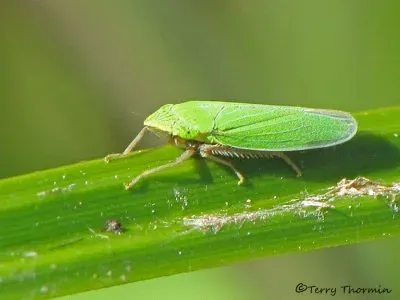
Leafhoppers (family Cicadellidae) are a diverse group of jumping insects within the order Hemiptera. Adult insects typically have a streamlined body, ranging from 2 to 15 mm in length, and are often cryptically colored to blend into foliage. A key diagnostic feature is the presence of rows of fine spines on their hind tibiae, which facilitates their characteristic rapid jumping behavior.
Taxonomically, leafhoppers belong to the kingdom Animalia, phylum Arthropoda, and class Insecta. In agronomy, they are primarily recognized as significant vectors of plant pathogens, including viruses and phytoplasmas. Both adults and nymphs possess piercing-sucking mouthparts designed to penetrate plant tissue and feed on vascular sap.
The life cycle of leafhoppers includes egg, nymph, and adult stages. Females insert eggs into plant tissues such as leaves or stems. Nymphs resemble miniature, wingless versions of adults and go through several instars, feeding continuously on the host plant throughout their development.
In temperate climates, the life cycle may take several months, allowing for multiple generations per season. Most species overwinter in the egg stage, tucked away in plant debris or bark, while some species survive the winter as adults in sheltered environments.
Optimal conditions for leafhopper outbreaks include warm, dry weather and the presence of abundant weed hosts. These weeds serve as initial reservoirs for the pathogens and provide essential food sources during the early stages of the growing season.
What it damages
Leafhoppers cause both direct and indirect damage to crops. Direct damage results from the extraction of plant sap, which leads to reduced photosynthesis, stunted growth, chlorosis, and the curling or burning of leaf margins, often referred to as "hopperburn."
The most critical impact, however, is their role as vectors for phytoplasmas and viruses. These pathogens, such as aster yellows or wheat dwarf virus, are injected into the plant during feeding and propagate rapidly through the vascular system, causing systemic diseases.
Leafhoppers affect a vast array of crops, including cereals (wheat, barley), vegetables (tomatoes, potatoes), fruit trees, and vineyards. No crop is entirely immune, and the severity of the damage often depends on the timing of the insect migration.
The economic impact is severe because infections often manifest only after it is too late for remedial action. Even a low density of infected leafhoppers can cause an entire field to become symptomatic, leading to significant yield losses and poor-quality produce.
Once a crop is infected with a phytoplasma-borne disease transmitted by leafhoppers, there are no curative chemical treatments available. Therefore, management must focus entirely on preventing the initial transmission of the disease.
Signs of infestation
The first indicator of a leafhopper infestation is the sight of insects jumping away when foliage is disturbed. Closer inspection of the underside of leaves reveals tiny, white or yellowish stippling marks, which are the physical sites of feeding punctures.
Affected plants often show systemic symptoms such as chlorosis, where leaves turn yellow or develop reddish-purple hues. Leaf distortion, crinkling, or stunted internodes are common signs of phytoplasma infection rather than simple insect feeding damage.
In cereals, plants may appear "bunchy" or produce excessive lateral shoots, resulting in a stunted appearance. Yield loss is marked by smaller grain heads or fruit that fails to develop properly, severely impacting marketability.
The presence of shed nymphal skins (exuviae) on the underside of leaves is a clear sign that the population is actively developing on the crop. Additionally, sticky honeydew secretions may attract secondary fungal growth, causing black sooty mold to form on the leaves.
Diagnostic confirmation often requires laboratory techniques, such as PCR or ELISA, to distinguish between nutrient deficiencies and vector-borne diseases, as the visual symptoms are often overlapping and deceptive.
Control measures
Integrated Pest Management (IPM) is essential for controlling leafhoppers. Since they are mobile vectors, the primary focus is on sanitation and reducing the availability of host weeds, which act as reservoirs for the pathogens during the off-season.
Chemical control involves the use of systemic insecticides, such as neonicotinoids or pyrethroids, applied during the peak migration periods. However, timing is critical, and treatments should be based on threshold counts using yellow sticky traps.
Agronomic strategies include crop rotation, avoiding overlapping planting dates, and using resistant cultivars where available. Properly managed fertilization helps plants withstand some feeding pressure, although it does not prevent disease transmission.
Biological control relies on preserving natural enemies, such as egg parasitoids in the genus *Anagrus*, which can provide significant suppression of leafhopper populations. Promoting biodiversity around field borders can support these beneficial populations.
- Monitor fields consistently using yellow sticky cards.
- Eliminate broadleaf weeds and grasses from fence rows and ditches.
- Apply systemic insecticides based on action thresholds.
- Utilize resistant varieties to mitigate the impact of viral infections.
- Remove and destroy symptomatic plants immediately to prevent further spread.
Causes diseases · 1
Discussion
No discussions yet — be the first.