
Late leaf spot of peanut
Cercosporidium personatum
Description
How to identify
The causal agent of late leaf spot is the fungus Cercosporidium personatum (syn. Passalora personata), classified within the kingdom Fungi. It is a highly specialized plant pathogen that primarily affects species within the Fabaceae family, with cultivated peanut as its main host.
The fungus develops its mycelium within the leaf tissue, eventually erupting through the surface to produce conidiophores and conidia. These reproductive structures appear as dark, dense clusters, which are a definitive diagnostic feature of this specific disease.
The lifecycle is polycyclic, meaning it can produce multiple generations of spores during a single growing season. It overwinters in infested crop debris, serving as the primary inoculum for the next crop cycle.
What it damages
The disease affects foliage, petioles, and stems. Foliar infection leads to significant tissue necrosis, which reduces the photosynthetic area of the peanut plant, directly impacting the plant's ability to fill pods and store oil reserves.
Severe infestations result in heavy defoliation, which causes physiological stress to the crop. This manifests as reduced pod yield, lower seed quality, and increased susceptibility to other environmental stressors, significantly lowering the overall economic value of the harvest.
When it appears
Late leaf spot typically becomes prominent during the mid-to-late stages of the growing season. While early leaf spot may appear sooner, Cercosporidium personatum tends to build up its population density as the plant approaches maturity.
High relative humidity and moderate temperatures are essential for the germination of spores. Prolonged leaf wetness, often caused by heavy dew or frequent rainfall, is the most critical environmental trigger for widespread disease dispersal within a field.
Signs of infestation
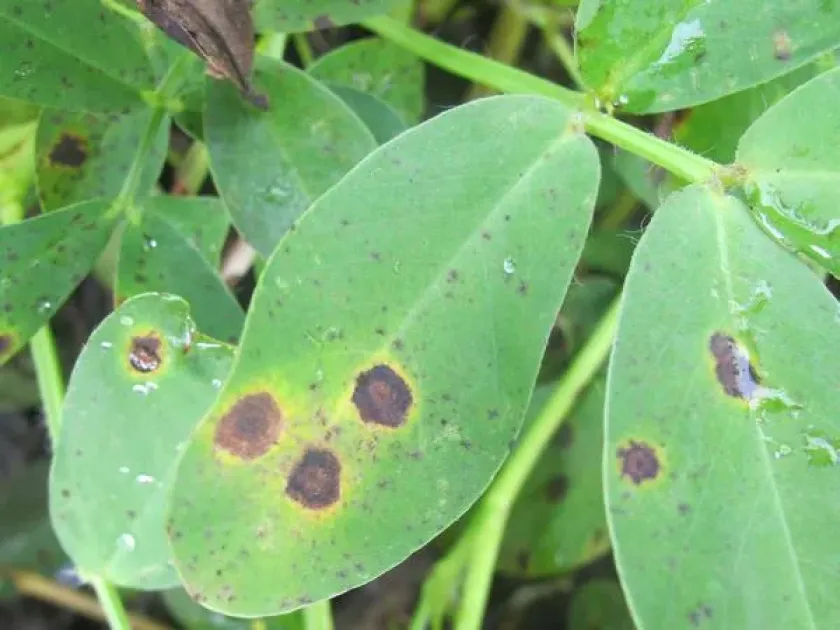
The primary symptom consists of small, circular dark-brown to black spots located primarily on the underside of the leaves. These spots are darker than those caused by early leaf spot and lack the broad necrotic halos typically associated with other fungal pathogens.
As the infection progresses, individual spots coalesce to cover large areas of the leaf. Eventually, the affected leaves turn yellow, wither, and drop prematurely, leaving the plant stems bare and vulnerable to secondary infections.
Control measures
Integrated pest management strategies are crucial, starting with the use of crop rotation, typically with non-host crops, to reduce soilborne inoculum levels. Deep plowing of crop debris immediately after harvest helps accelerate the degradation of infected residues.
Fungicide applications are recommended when disease thresholds are met or environmental conditions favor rapid spread. Utilizing resistant cultivars is the most sustainable approach to minimize yield losses while reducing reliance on chemical control methods.
Causes diseases · 1
Discussion
No discussions yet — be the first.