
Leaf spot
Fleck
Description
How to identify
Leaf spot is a general term describing various plant diseases characterized by the appearance of necrotic spots on leaves. These are primarily caused by pathogenic fungi, bacteria, or viruses, with common genera including Septoria, Cercospora, and Phyllosticta.
Taxonomically, most fungal agents causing leaf spots fall within the kingdom Fungi, specifically the divisions Ascomycota and Basidiomycota. These organisms function as parasites that colonize plant tissues to extract nutrients, often causing significant cellular damage.
The infection process begins when spores land on a leaf surface. Given moisture and appropriate temperature, they germinate and produce hyphae that breach the plant epidermis, either through stomata or directly through the cell wall via enzymatic secretion.
The biology of these pathogens usually involves a asexual cycle (conidia) for rapid spread during the growing season and a sexual cycle for long-term survival in debris. This dual-reproduction strategy makes them highly resilient in agricultural environments.
Accurate identification is crucial for effective management. While symptoms are often similar, microscopic analysis of the fruiting structures (pycnidia or conidiophores) is typically required to determine the specific genus and species of the pathogen.
What it damages
Leaf spot affects a vast range of agricultural crops, including cereals, vegetables, and ornamental plants. The economic impact varies but is generally related to the reduction of the leaf area available for photosynthesis.
By killing the chlorophyll-containing cells, the pathogen limits the plant's ability to produce energy, leading to decreased yields. In severe cases, the infected leaves drop prematurely, causing stunted growth and poor fruit development.
For perennial crops, consistent leaf loss over several seasons can severely weaken the plant, reducing its vigor and cold hardiness. This makes the plants more susceptible to secondary infections, such as cankers or stem rots.
The cosmetic damage is significant for market-grade fruits and vegetables, as necrotic lesions reduce their shelf life and market value. Contaminated plant material also serves as a source for further spread across the farm.
Overall, uncontrolled leaf spot can reduce farm profitability through decreased tonnage, higher costs for remedial chemical applications, and the loss of entire crop cycles in extreme weather conditions.
When it appears
Leaf spot pathogens typically thrive in warm, humid conditions. Temperatures between 18°C and 25°C combined with high relative humidity are optimal for rapid disease progression and spore dispersal.
Wet weather, including heavy rainfall, dew, and fog, is essential for the disease cycle. Splashing water acts as the primary mechanism for transporting spores from infested ground debris to the lower canopy of the plants.
The early vegetative stage is often a period of primary infection. As new growth emerges, it becomes susceptible to spores released from overwintering sites, leading to an initial wave of colonization if conditions allow.
Secondary infections often peak in mid-to-late summer. During this time, the pathogen can multiply rapidly, producing millions of spores that blow from plant to plant, potentially leading to widespread damage across the field.
As the season ends, the pathogens revert to a dormant state. They overwinter as mycelium, sclerotia, or fruiting bodies on fallen leaves or in the soil, ready to restart the infection cycle when favorable conditions return in the following spring.
Signs of infestation
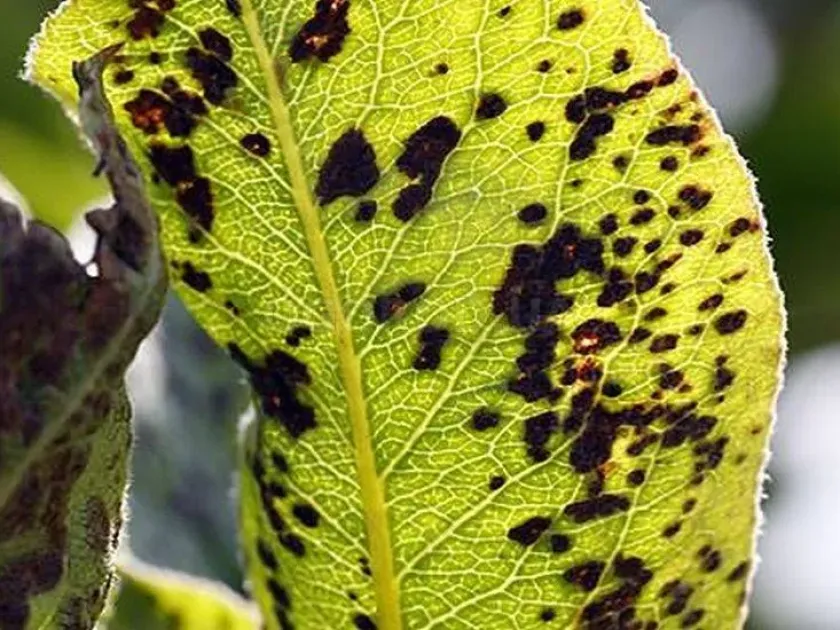
Symptoms are diverse, ranging from small dots to large, irregularly shaped lesions. Common colors include brown, black, grey, or tan, depending on the specific host and the pathogen involved.
A frequent hallmark of leaf spot is a distinct border or halo around the lesion, which often indicates the host plant's attempt to isolate the infection. Small, dark pinhead-sized structures may appear in the center, representing the fungus's reproductive spores.
In advanced stages, these spots may coalesce, covering a significant portion of the leaf. This typically causes the leaf tissue to turn yellow (chlorosis), curl, and eventually become necrotic, causing the plant to lose its foliage prematurely.
Some pathogens cause the dead tissue to fall out, leaving small holes in the leaf, commonly referred to as "shot-hole" symptoms. Stem infections may manifest as elongated streaks or cankers, affecting the plant's structural integrity.
- Circular or angular necrotic spots.
- Fuzzy or powdery fungal growth on the underside.
- Yellow halos surrounding the lesions.
- Premature leaf drop and wilting.
Control measures
Managing leaf spot requires an integrated pest management (IPM) approach. The most effective strategy is the removal or destruction of infected crop residues, which significantly reduces the initial inoculum load in the field.
Crop rotation is a fundamental practice. By alternating with non-host crops, farmers can starve the pathogen and break the cycle of infection, making it difficult for the fungus to persist in the soil for consecutive seasons.
Selecting disease-resistant or tolerant cultivars is the most sustainable long-term solution. Breeding programs continuously work to improve the genetic resilience of major crops against the most prevalent fungal pathogens.
Fungicide applications are often necessary during periods of high disease pressure or wet, humid weather. Using systemic products that offer both protective and curative action helps maintain the plant's health throughout the critical growth stages.
Good agricultural practices, such as proper plant spacing to improve air circulation and balanced fertilization (especially potassium), help create a microclimate less conducive to fungal growth and strengthen the plant's defense mechanisms.
Causes diseases · 1
Discussion
No discussions yet — be the first.