
Shallot latent virus
Shallot latent
Description
How to identify
Shallot latent virus (SLV) is a plant pathogenic virus belonging to the genus Carlavirus within the Betaflexiviridae family. It contains a positive-sense single-stranded RNA genome.
The virus consists of filamentous particles approximately 650 nm in length. It is an obligate parasite, meaning it requires living host tissue for replication and cannot survive long-term in the soil or outside of the plant host.
Transmission occurs primarily through aphid vectors, such as Myzus persicae, in a non-persistent manner. The virus is acquired by the aphid during short probing periods on infected plants and is rapidly transmitted to healthy ones.
Vegetative propagation is the most significant pathway for the virus to spread across regions. Infected onion sets or cloves serve as primary reservoirs, ensuring the virus is passed down to subsequent generations of crops.
Mechanical transmission is also common in commercial production. Contaminated equipment, including pruning shears and harvesting machinery, can easily transfer the virus from infected to healthy plant sap during routine maintenance.
What it damages
The virus primarily affects species within the Allium genus, including shallots, onions, garlic, and leeks. These plants act as both hosts and reservoirs for the viral pathogen.
By disrupting the plant's metabolic processes and photosynthesis, the virus stunts overall development. While symptoms may be subtle, the reduction in nutrient synthesis leads to decreased vigor in the crop.
Economic impact is primarily seen in the reduction of yield quantity and quality. Infected bulbs often exhibit smaller sizing and poorer storage characteristics, leading to premature rot during warehouse storage.
The presence of SLV often weakens the plant's resistance to other stressors. Plants carrying the virus are frequently more susceptible to secondary soil-borne pathogens like fungal wilts or bacterial soft rots.
Cumulative damage occurs when infected material is repeatedly replanted, leading to a progressive decline in crop productivity and eventual economic loss for the grower.
Signs of infestation
The term "latent" in its name reflects the fact that the virus frequently remains asymptomatic in many host cultivars, particularly when it infects the plant alone without other viruses present.
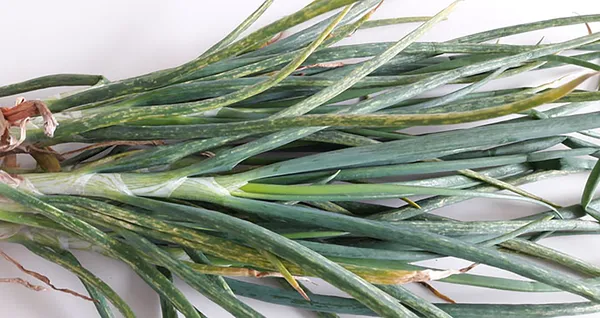
When symptoms are visible, they typically manifest as mild mosaic patterns, light chlorotic streaks on leaves, or slight leaf distortion. These symptoms are often overlooked or mistaken for nutrient deficiencies.
Stunting of the entire plant is a common sign in heavily infected stocks. Leaf tips may turn yellow and wither prematurely, which is often dismissed as a response to water stress or environmental factors.
Often, SLV acts in synergy with other viruses, such as Onion yellow dwarf virus (OYDV). In these mixed infections, the symptom expression is much more severe, including significant twisting and leaf yellowing.
Because symptoms are rarely definitive, laboratory identification is essential. Techniques such as ELISA (Enzyme-Linked Immunosorbent Assay) and RT-PCR are used to accurately detect the viral RNA.
Control measures
The primary control strategy is the use of virus-indexed, certified disease-free planting material. Growers should source seeds and sets from reputable suppliers who prioritize phytosanitary standards.
Management of aphid populations is critical. Implementing an integrated pest management (IPM) program, including the use of systemic insecticides, helps reduce the frequency of virus introduction into healthy fields.
Regular roguing, the practice of identifying and removing symptomatic plants as early as possible, helps to decrease the inoculum level within the crop and prevents further spread by aphids.
Maintaining proper field hygiene, including controlling volunteer onion plants that may harbor the virus, and ensuring isolation distances from older or abandoned onion patches are key preventative measures.
Strict cleaning and disinfection protocols for all mechanical tools used in the field help minimize the risk of spreading the virus through plant sap contact during pruning and cultivation tasks.
Causes diseases · 1
Discussion
No discussions yet — be the first.