
Sphaeria alopecuri
Sphaeria alopecuri
Sphaeria alopecuri is a species of ascomycete fungi that acts as a plant pathogen, primarily targeting various species of grasses. Classified within the kingdom Fungi, it belongs to a group of pathogens known to form distinct reproductive structures on host tissues.
What the section contains
Sphaeria alopecuri
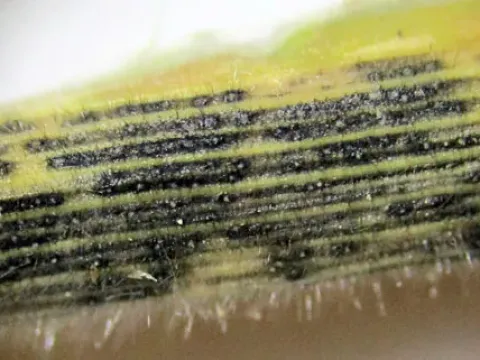
The fungus is characterized by the production of perithecia, small flask-shaped fruiting bodies that contain spores. These structures are the primary diagnostic feature used to identify the pathogen in the field.
Biologically, Sphaeria alopecuri is adapted to survive on living and decaying grass tissues. Its lifecycle involves both sexual and asexual phases, enabling it to persist in the environment under various conditions.
Identification often requires careful microscopic examination of affected plant parts to distinguish this fungus from other common grass pathogens that may cause similar symptoms.
Understanding the taxonomic position and biological nature of the fungus is essential for developing effective strategies to prevent its spread in agricultural and natural grass ecosystems.
The primary hosts for Sphaeria alopecuri include members of the Poaceae family, particularly the genus Alopecurus. It can also affect other wild and domesticated grass species.
The pathogen attacks leaves, stems, and sometimes floral parts, leading to physiological disruption within the plant. By feeding on host cells, the fungus weakens the plant's overall vigor.
Damage symptoms often include tissue necrosis, which reduces the plant's photosynthetic capacity. This negatively impacts the growth, development, and overall productivity of the infected grass.
In addition to direct damage, the presence of the fungus may increase the susceptibility of the grass to secondary fungal or bacterial infections, further compromising plant health.
Economically, this pathogen can lead to reduced biomass yields in forage crops and lower the quality of feed, which is a significant concern for livestock producers.
The development cycle of Sphaeria alopecuri is highly influenced by seasonal factors, particularly temperature and humidity levels during the growing season.
Infection cycles typically begin in early spring, as rising temperatures and spring rains facilitate the germination of overwintering spores found on crop debris.
During the summer months, the fungus continues its vegetative growth. Frequent leaf wetness from dew or precipitation provides an ideal environment for the spread of spores to new plants.
As the season draws to a close, the fungus focuses on preparing for the winter. It forms durable perithecia within dead plant material, allowing it to survive through the cold months.
Farmers should monitor their fields during periods of high humidity and moderate temperatures, as these are the peak times for active infection and pathogen proliferation.
Initial signs of Sphaeria alopecuri infection often manifest as discoloration or small spots on the leaves, which may slowly grow and merge over time.
The most distinctive symptom is the appearance of tiny, dark-colored perithecia on the surface of the infected tissue. These dots are often arranged along the leaf veins or stem nodes.
As the disease progresses, affected plant parts may lose turgidity, turn brown or yellow, and eventually die. This leads to a scorched appearance in severely infected areas.
In dense grass stands, a yellowing of the foliage and premature drying are reliable indicators that a fungal disease is actively damaging the crop.
- Presence of dark-colored perithecia on stems and leaves.
- Brown or yellow necrotic leaf spots.
- Weakening and premature death of plant parts.
- Reduction in overall crop biomass quality.
Effective control of Sphaeria alopecuri begins with good agricultural practices, such as crop rotation, to break the cycle of the pathogen in the field.
Removing or burying infected plant debris through deep plowing helps to reduce the primary inoculum load for the next growing season significantly.
Proper management of forage crops, including timely harvesting, can prevent the fungus from completing its reproductive cycle and spreading its spores to healthy plants.
Balanced fertilization can improve plant health and resistance, making the grass less susceptible to fungal attacks and helping it recover from damage more effectively.
While chemical fungicides may be an option, they should be applied judiciously, following all regulatory guidelines to ensure safety and minimize environmental impact.