
Sphaerella tassiana
Sphaerella tassiana
Sphaerella tassiana belongs to the kingdom Fungi, phylum Ascomycota, and the genus Sphaerella (often treated as a synonym of Mycosphaerella tassiana). It is a polyphagous fungus affecting numerous plant species.
What the section contains
Sphaerella tassiana
The fungus is an ascomycete pathogen. Its life cycle is characterized by the sexual stage, represented by pseudothecia that contain asci with ascospores.
The mycelium of the fungus penetrates plant tissues, causing necrosis. It often acts as a saprotroph, waiting for the plant's immune system to weaken before invading.
Dissemination occurs primarily through ascospores, which are spread by wind and rain splashes. The fungus survives the winter as mycelium or fruit bodies on crop residues.
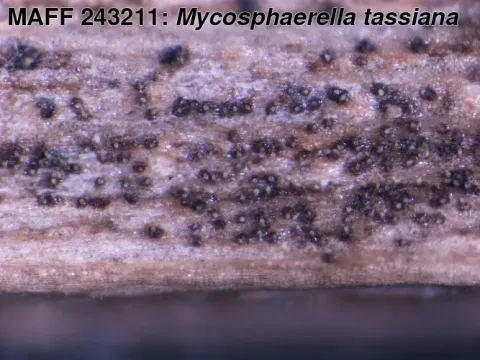
Identification in the field is challenging and usually requires laboratory analysis. Under a microscope, dark pseudothecia and characteristic spores are clearly visible.
This pathogen affects a wide range of cultivated and wild plants. It is particularly damaging to cereals, legumes, and several vegetable species.
The fungus causes leaf and stem spots on affected plants. Tissue damage interferes with photosynthesis and leads to premature drying of the vegetative mass.
The economic impact involves a reduction in overall crop yield and a decline in seed quality. Severe infections can result in the loss of entire seedlings.
The disease weakens plants, making them more susceptible to secondary infections by other pathogens, which complicates the overall phytosanitary situation.
Yield losses are highest under conditions of high humidity and moderate temperatures, which favor active sporulation and rapid spread of the disease.
Pathogen activity begins during the growing season when favorable weather conditions occur. The presence of surface moisture is a critical factor for infection.
Crop residues left in the soil after harvest serve as the primary source of infection. The fungus survives the winter period in a dormant state within the substrate.
In spring, rising temperatures and humidity trigger the massive release of ascospores, leading to initial infection of young leaves and shoots.
The disease continues to develop throughout the summer, with multiple infection cycles triggered by rainfall and warm weather patterns.
Towards the end of the season, the pathogen forms dormant structures that ensure survival until the following year, completing the cycle on the field.
Initial signs of infection appear as small light or brown spots on leaves. These spots gradually expand and can coalesce into larger necrotic areas.
A dark border often forms around the spots, indicating the plant's defense reaction. The center of the spot may fade or become covered with a dark spore mass.
Infection of stems leads to browning and necrosis, which weakens the stalks and can cause plant lodging during wind or heavy rain.
Small black dots, representing the fungal fruit bodies, appear on the surface of dead tissue, serving as a reliable diagnostic sign during field inspection.
- Yellowing and wilting of foliage.
- Loss of turgor in affected plant organs.
- Presence of irregular necrotic spots.
Crop rotation is the primary method of control. Susceptible crops should not be returned to the same field for at least three to four years.
Effective soil management and the deep burial of crop residues are essential to minimize the accumulation of the pathogen in the field.
The use of resistant cultivars and hybrids is recommended, along with regular phytosanitary monitoring to identify and remove infection centers early.
Chemical control involves the application of broad-spectrum fungicides. These treatments are most effective early in the season to prevent epiphytotics.
Avoid excessive plant density and over-application of nitrogen fertilizers, as these practices make plant tissues more vulnerable to fungal colonization.