
Sphaceloma perseae
Sphaceloma perseae
Sphaceloma perseae is a fungal pathogen that belongs to the class Dothideomycetes. It is specifically recognized as the causative agent of avocado scab, a disease that primarily affects plants within the Persea genus.
What the section contains
Sphaceloma perseae
Taxonomically, the fungus is situated within the order Myriangiales. It operates as an obligate parasite on the aerial parts of the avocado tree, thriving in environments that provide high humidity and warmth.
The pathogen produces conidia, which are asexual spores that allow it to spread efficiently within an orchard. These spores are disseminated via wind, splashing rain, and physical contact with contaminated gardening tools or human activity.
The fungus is structurally adapted to thrive on the leaf and fruit surfaces of the host, forming localized lesions that can expand under favourable climatic conditions. It is known for its ability to persist in dormant stages on plant debris.
Diagnostic confirmation of Sphaceloma perseae in professional settings involves examining infected tissues for the presence of specific greyish-brown spore-bearing structures known as acervuli.
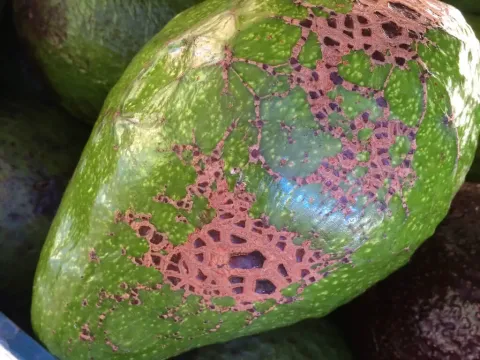
The damage caused by Sphaceloma perseae is particularly severe on fruit, leaves, and young twigs. Fruit infection leads to the development of rough, corky, and raised lesions, which significantly downgrade the commercial value of the produce.
On young foliage, the infection manifests as dark lesions that can cause distortion, brittleness, and premature leaf drop. This reduction in photosynthetic area weakens the overall tree vigor and limits fruit production capacity.
Young twigs are also highly susceptible, often developing longitudinal lesions or cracks. If the infection becomes severe, these twigs may suffer from stunted growth, dieback, or even secondary infections by other microorganisms.
In high-density commercial orchards, avocado scab can lead to substantial yield losses. Beyond immediate fruit loss, the disease impairs tree health over several seasons, making the orchard more susceptible to stress and other pathogens.
Nurseries are at high risk, as infected seedlings can spread the disease to new regions. Therefore, strict management is required to ensure that planting stock is completely free from any traces of this fungus.
The development of Sphaceloma perseae is strongly correlated with periods of high humidity and rainfall. The fungus thrives when there is sufficient free moisture on the surface of plant tissues to facilitate spore germination.
Infections typically begin during the early stages of new growth, particularly during the flowering and fruit-setting phases. Rapidly expanding tissues are the most vulnerable, providing easy access for the pathogen to establish colonies.
The disease cycle is most active during rainy seasons or in regions with persistent fog and high humidity. While the fungus may remain inactive during dry spells, it successfully survives in woody tissue or fallen debris, ready to resume activity once moisture levels rise.
Optimal temperatures for the fungus range from 20°C to 28°C. These conditions allow for a fast replication cycle, often leading to rapid spread throughout the canopy if left unchecked by preventative measures.
Effective orchard management requires monitoring environmental conditions closely. By anticipating high-moisture periods, growers can apply protective measures before the fungus has the opportunity to infect new tissue.
The initial signs of Sphaceloma perseae infection are small, purplish-brown spots on the leaves. As the infection progresses, these spots may become more defined and can eventually cause the tissue to dry out and fall away.
Fruit symptoms are perhaps the most recognizable, characterized by raised, circular to irregular lesions that look like scabs. These scabs can merge over time, covering large areas of the fruit skin and causing it to crack.
Twigs often display elongated, greyish-brown necrotic lesions. These spots can encircle the stem, leading to girdling and subsequent death of the distal part of the branch.
Microscopic examination of these lesions often reveals the presence of fungal spore masses. The texture of the infected area is typically velvety due to the abundance of conidia produced under favorable humidity.
- Small purplish leaf spots.
- Raised scab-like lesions on fruit skin.
- Distortion and splitting of fruits.
- Lesions and necrosis on young branches.
- Premature defoliation of the canopy.
Preventative control begins with orchard hygiene, which includes the removal and destruction of infected pruning debris and fallen fruit. This practice is vital to reduce the primary inoculum in the orchard environment.
Pruning to improve air circulation within the tree canopy is another effective strategy. By lowering humidity levels inside the foliage, growers can create an environment that is less favorable for fungal spore germination.
Chemical control usually involves the prophylactic application of copper-based fungicides. These must be applied before the onset of the wet season and throughout the period of rapid shoot and fruit development to ensure full protection.
The selection of resistant cultivars is the most sustainable long-term solution. While genetic resistance may vary among varieties, choosing appropriate stocks can significantly reduce the need for intensive fungicide applications.
Implementing an integrated pest management (IPM) program that combines cultural practices, periodic monitoring, and targeted fungicide usage is the recommended approach for maintaining a healthy and productive avocado orchard.