
Spermoedia microcephala
Spermoedia microcephala
Description
How to identify
Spermoedia microcephala is the anamorph, or conidial stage, of the fungus responsible for ergot, a significant disease affecting various cereal crops and grasses.
Taxonomically, this pathogen is placed within the order Hypocreales, class Sordariomycetes, being part of the Clavicipitaceae family.
It functions as an obligate parasite, infecting the ovaries of grasses during their flowering stage and replacing healthy grains with specialized fungal structures.
The fungus is well-known for its dual reproductive cycle, producing both asexual spores (conidia) in a sticky substance and sexual spores (ascospores) in mature sclerotia.
Microscopic identification often focuses on the presence of small conidia within the honeydew, which serves as a vector for secondary spread by insects.
What it damages
This pathogen causes severe damage to essential agricultural crops including rye, wheat, barley, and triticale by hijacking their reproductive cycle.
The primary damage is economic, as the fungus replaces grain with toxic sclerotia that contain alkaloid compounds harmful to both humans and livestock.
Ingestion of contaminated grain can lead to ergotism, a serious condition historically associated with the consumption of flour derived from infested wheat or rye.
Farmers face significant financial losses due to crop yield reduction and the necessity for rigorous grain cleaning or rejection of contaminated batches.
Market restrictions often prevent the sale of grain lots that exceed strict limits for sclerotia content, making this pathogen a major concern for food security.
When it appears
The infection cycle begins during the flowering phase of host plants, when environmental conditions allow spores to land on the exposed stigma.
Moist and cool weather conditions in spring act as a trigger for the germination of sclerotia that have successfully overwintered in the soil.
Primary infection results in the exudation of honeydew containing conidia, which marks the start of the secondary infection spread within the field.
Insects, such as flies and bees, play a crucial role in spreading conidia from infested ears to healthy ones, exacerbating the disease spread.
As the plant matures, the fungus completes its life cycle by developing hard, dark-colored sclerotia that remain in the ears until harvest.
Signs of infestation
The earliest symptom is the presence of sticky, sweet, cloudy droplets, commonly referred to as honeydew, oozing from the infected spikelets.
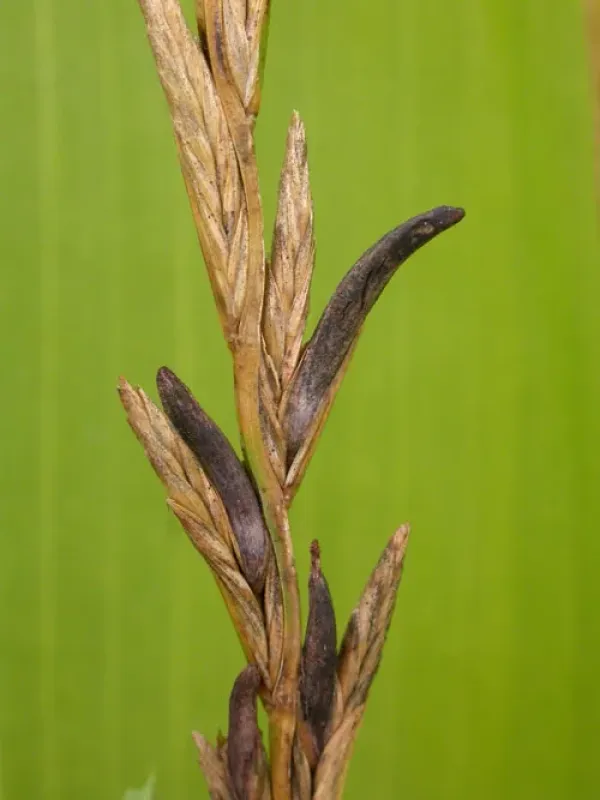
As the crop reaches maturity, the affected florets reveal elongated, dark violet or black sclerotia instead of normal, healthy seeds.
These fungal structures, often called ergot bodies, extend well beyond the glumes, making them highly visible during field inspection or after threshing.
- Exudation of honeydew from flowers.
- Development of dark, hard sclerotia in the grain head.
- Visible deformation of the spikelets.
The distinct visual appearance of the black ergot bodies against the golden or green color of the cereal spikes is the definitive field indicator.
Control measures
The primary control measure is the use of high-quality, certified seed stocks that are guaranteed to be free from any sclerotia contamination.
Deep plowing in the autumn is highly effective, as it buries sclerotia deep into the soil, preventing them from germinating during the next season.
Implementing a diverse crop rotation cycle helps to break the survival chain of the fungus by avoiding consecutive plantings of susceptible grass hosts.
Controlling wild grasses on field margins is an essential management practice to reduce the overall inoculum pressure within the local environment.
Timely harvest and proper cleaning of grain remain the most critical final steps to prevent the accumulation of sclerotia in the soil and storage facilities.
Causes diseases · 1
Discussion
No discussions yet — be the first.