
Soybean vein necrosis virus
Soybean vein
Soybean vein necrosis virus (SVNV) is a plant virus belonging to the genus Tospovirus and the family Tospoviridae. It is a negative-sense, single-stranded RNA virus that impacts leguminous crops.
What the section contains
Soybean vein necrosis virus
The virus is identified in laboratory settings using ELISA (Enzyme-Linked Immunosorbent Assay) or RT-PCR tests. Field identification is challenging due to the overlap of symptoms with other viral or bacterial diseases.
The primary vector for SVNV is the soybean thrips (Neohydatothrips variabilis). The insect acquires the virus while feeding on infected plant tissue and retains it throughout its adult life.
Transmission occurs when infected thrips feed on healthy plants, injecting the virus into the vascular system. This creates a persistent cycle of infection within the field environment.
Systematic research into SVNV strains is ongoing, as viral evolution can lead to changes in host range and disease severity, requiring constant monitoring by plant pathologists.
Soybean (Glycine max) is the primary host for this pathogen. Various wild legumes can also act as reservoirs for the virus, allowing it to survive in the environment throughout the year.
The damage caused by SVNV manifests as a reduction in plant vigor, leading to lower seed yields and decreased seed quality. It affects the overall physiological health of the soybean crop.
Yield loss is significantly higher when plants are infected during the early vegetative stages. Late-season infections may have a less severe impact on total grain production compared to early onset.
The virus compromises the plant's metabolic functions, including photosynthesis, which leaves the crop vulnerable to other secondary stressors, such as fungal pathogens or environmental extremes.
Economic losses are correlated with the incidence rate in a specific field. In regions where thrips populations are high, the disease can cause widespread reduction in crop performance.
Symptoms of SVNV typically appear mid-season, corresponding with the peak population density of the thrips vector. Disease spread intensifies during the warmer summer months.
Hot, dry weather conditions provide an ideal environment for the multiplication of the insect vector, which leads to increased viral transmission rates throughout the soybean growing season.
The disease cycle often starts with the migration of thrips from overwintering sites, such as perennial weeds or forest edges, into newly emerged soybean fields.
As the season progresses, the infection expands from initial focal points throughout the field. By the end of the season, symptoms may persist until leaf senescence occurs.
Overwintering of the virus is suspected to occur in perennial weeds or in residual thrips populations that survive the winter months, serving as a springboard for the next growing season.
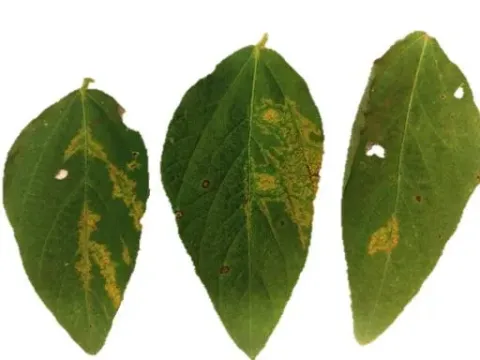
Early symptoms of SVNV appear as chlorosis or yellowing around the main veins of the leaves. This is the most diagnostic feature of the disease at the onset of infection.
- Yellowing (chlorosis) in the areas surrounding the leaf veins.
- Development of dark, necrotic spots along the veins.
- Progression to larger patches of brown, dead tissue on leaves.
- Leaf distortion, curling, and overall stunting of the plant.
- Reduced vigor in the upper canopy where thrips feeding is most frequent.
As the infection progresses, the yellowing can extend beyond the veins, eventually leading to large brown or necrotic patches across the leaf surface. This gives the leaf a mottled appearance.
The symptoms are most prominent on the younger, upper leaves of the soybean plant. Severe infections can lead to premature leaf drop, which further hinders the plant's ability to fill pods.
Distinguishing SVNV from other conditions like bacterial pustule or nutritional deficiencies requires professional diagnostic expertise, often involving specialized laboratory confirmation.
The primary control strategy involves managing the population of the thrips vector. Timely application of insecticides can mitigate the spread of the virus during the early stages of soybean growth.
Agricultural practices, such as controlling weeds in and around fields, are essential for reducing the virus reservoir. Eliminating weed hosts decreases the likelihood of early season infections.
Selecting and planting resistant or tolerant soybean varieties is the most sustainable approach for managing SVNV in high-risk regions where the virus is prevalent.
Crop rotation and field management practices that interrupt the life cycle of the vector are recommended. Avoiding the planting of soybean near perennial legume fields can reduce disease pressure.
Monitoring fields with yellow sticky cards for thrips activity allows growers to make informed decisions about intervention. Proactive management is critical to protecting crop yield potential.