
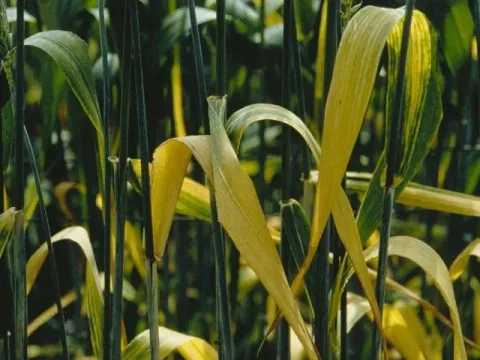
Sorghum yellow dwarf
Yellow sorghum
Sorghum yellow dwarf is caused by the Barley yellow dwarf virus (BYDV). It is a plant-pathogenic virus within the Luteoviridae family, characterized by its transmission through aphid vectors such as the bird cherry-oat aphid and the English grain aphid.
What the section contains
Sorghum yellow dwarf
The virus is non-persistent in its vector, meaning it circulates within the insect's body after feeding on infected plants before being transmitted. It does not spread through mechanical contact or contaminated seeds.
Systemically, the virus colonizes the phloem tissues. By restricting the flow of sap, it severely hampers the translocation of nutrients, which effectively stunts the physiological development of the sorghum plant.
Laboratory diagnosis is essential for confirmation, typically involving ELISA (Enzyme-Linked Immunosorbent Assay) or RT-PCR techniques to detect the presence of viral RNA in leaf samples.
Sorghum serves as a primary host, but the virus is capable of infecting a wide range of cereal crops and wild grasses, which facilitates its persistence throughout various seasonal cycles.
The damage is most severe when sorghum plants are infected at the seedling stage. Early-season infection significantly reduces the potential for biomass accumulation and grain yield development.
In sugar sorghum, the virus negatively impacts the sugar accumulation process in the stalk, leading to lower quality and poor technological properties during processing.
Yield loss is directly related to the timing of infection and the susceptibility of the hybrid. Heavy infestations result in uneven field maturation and significant losses in seed weight and quality.
The virus complicates plant recovery from environmental stresses, such as drought or heat, which are frequent in sorghum-growing regions, potentially leading to total loss in the most affected field spots.
Economic impact includes both direct yield loss and the increased cost of insecticide applications required to control the vector population throughout the growing season.
Symptoms often manifest as yellowing of leaf tips, which progresses towards the base of the leaf blade. In many sorghum varieties, this discoloration shifts towards shades of orange or reddish-purple.
Stunting is a hallmark sign; infected plants exhibit shortened internodes, creating a compact and sickly appearance compared to healthy, robust plants in the same field.
Reproductive development is severely hampered, resulting in small, sterile panicles with poorly filled or empty grains. The overall vigor of the plant is substantially reduced due to metabolic disruption.
- Yellowing or reddish discoloration of leaf tips.
- Significant stunting and shortened internodes.
- Poorly developed or sterile panicles.
- Reduced tillering and overall poor plant health.
- Asymmetrical growth patterns within the field.
Environmental conditions modulate symptom expression. Cool, moist conditions tend to exacerbate the visible yellowing, while warmer temperatures may mask symptoms despite the underlying viral stress.
Effective management focuses on controlling the aphid population. Systematic use of insecticides early in the season is a standard practice to prevent the transmission of the virus by winged aphids.
Agrotechnical strategies, such as adjusting planting dates, are crucial. Planting outside the peak migration window of aphids can significantly reduce the incidence of infection in young crops.
Sanitation practices, including the eradication of grass weeds and volunteer cereals around field edges, effectively eliminate the reservoirs where aphids and the virus survive between seasons.
The deployment of resistant or tolerant sorghum hybrids is the most sustainable approach to control. Current breeding programs emphasize developing lines that restrict viral replication in host tissues.
Balanced fertilization, ensuring that plants have adequate macro- and micronutrients, improves the resilience of the crop to viral infection and helps in maintaining yield quality despite potential pressure.