
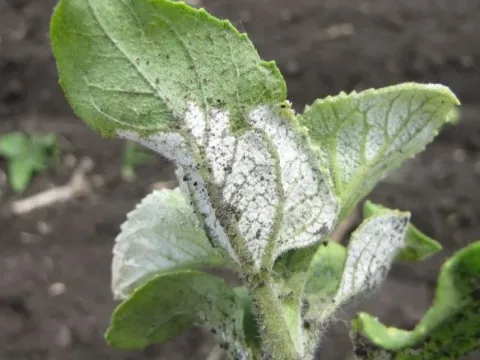
Sunflower downy mildew
Pustula helianthicola
The causative agent of this disease is the oomycete Pustula helianthicola, previously recognized as Plasmopara halstedii. It is an obligate parasite of the Chromista kingdom that targets sunflowers exclusively.
What the section contains
Sunflower downy mildew
The pathogen survives in the soil as oospores, which can remain viable for up to 10 years, creating a persistent threat to sunflower cultivation in infested fields.
Infection starts when soil-borne oospores germinate under moist conditions and infect the root system of young seedlings.
Once the infection is established, the mycelium spreads systemically throughout the plant, colonizing the stems and potentially reaching the developing flower head.
The pathogen produces sporangiophores through the leaf stomata, which facilitates secondary infection cycles throughout the growing season.
The disease causes significant damage, often resulting in seedling death or severe stunting of plants, making them appear dwarf and deformed.
When the flower head is affected, seeds fail to develop or remain shriveled and empty, leading to major yield losses for the farmer.
Infected plants typically exhibit thickened stems and shortened internodes, which makes them stand out visually within a healthy crop stand.
Yield losses can reach 100% in highly susceptible varieties under environmental conditions that favor the pathogen's development.
Additionally, the disease negatively impacts oil quality and overall crop uniformity, affecting the economic viability of the harvest.
Infection is most common during the seedling stage when cool temperatures (15–18°C) and high soil moisture provide ideal conditions for oospore germination.
Secondary infections occur throughout the summer, driven by high humidity and dew, which allow zoosporangia to spread via wind and water splashes.
Prolonged rainy periods significantly increase the risk of rapid disease spread across the field during the early and mid-vegetative stages.
The disease cycle is most active when the environment is consistently wet, as the zoospores require liquid water to move and infect new tissues.
By the end of the season, the pathogen shifts its development towards forming overwintering oospores within the dead plant tissues.
Early symptoms include light chlorotic (yellowish) spots on the cotyledons and the first true leaves, usually appearing between the leaf veins.
A diagnostic sign is the presence of a thick, white, fuzzy fungal growth on the underside of the leaves, representing the pathogen's sporulation.
- Chlorotic leaf patterns restricted by leaf veins.
- White moldy growth on the underside of leaves.
- Severe plant stunting and stem deformation.
- Vertical positioning of flower heads in some cases.
As the disease progresses, these yellow areas turn necrotic (brown), and the leaves may eventually wither and die prematurely.
The primary control strategy is the selection of sunflower hybrids with documented genetic resistance to the prevailing local races of the pathogen.
Crop rotation is essential, with a minimum interval of 7 to 8 years before planting sunflowers in the same field to allow oospore populations to decline.
Seed treatment with systemic fungicides, specifically those containing metalaxyl or mefenoxam, is critical to protecting seedlings from soil-borne infection.
Controlling volunteer sunflowers and weeds in the field is necessary to eliminate alternative reservoirs for the pathogen.
Implementing good soil drainage and avoiding early planting in waterlogged soils can further reduce the risk of severe outbreaks.