
Sugarcane smut
Ustilago scitaminea
Description
How to identify
The causal agent of sugarcane smut is the fungus Ustilago scitaminea (also known as Sporisorium scitamineum), classified within the Basidiomycota division. It is an obligate parasite specifically adapted to Saccharum species.
The fungus produces masses of black, powdery teliospores. These spores are capable of surviving in the soil and can be dispersed over long distances via wind and irrigation water.
The infection process typically begins at the growing point (meristem) of the sugarcane stalk. Once the fungus enters the host, it colonizes the plant systemically throughout its developmental stages.
The pathogen is highly variable, with numerous physiological races existing globally, which complicates breeding programs aimed at developing resistant sugarcane varieties.
Diagnosis is usually performed through field observation of characteristic symptoms, though laboratory techniques like microscopy and PCR are used for certifying clean planting material.
What it damages
Sugarcane smut poses a significant threat to global sugar production. The disease impacts the yield of cane per hectare and significantly reduces the sucrose content in the stalks.
Infection leads to a reduction in plant height and stalk thickness, effectively stunting growth and decreasing the amount of harvestable biomass in the plantation.
The economic impact is exacerbated by the need to replace entire infected fields with resistant cultivars, which is a labor-intensive and costly agricultural practice.
Secondary infections often colonize smut-damaged stalks, further degrading the quality of the juice and complicating the extraction and crystallization processes in sugar mills.
If not managed correctly, the disease can spread rapidly throughout a farm, causing substantial losses in both quality and quantity of the final agricultural product.
Signs of infestation
The most diagnostic symptom of sugarcane smut is the appearance of a whip-like structure emerging from the apex of the stalk, which replaces the normal inflorescence.
This "whip" is initially covered by a thin silvery membrane that eventually ruptures, releasing a black, dusty cloud of teliospores into the atmosphere.
Affected plants often display an abnormal proliferation of tillers, creating a grass-like or "fan-like" appearance that makes the plant look stunted and unhealthy.
Leaves on infected stalks may appear narrower and more erect than normal, and the overall plant vigor is significantly diminished as the fungus diverts nutrients.
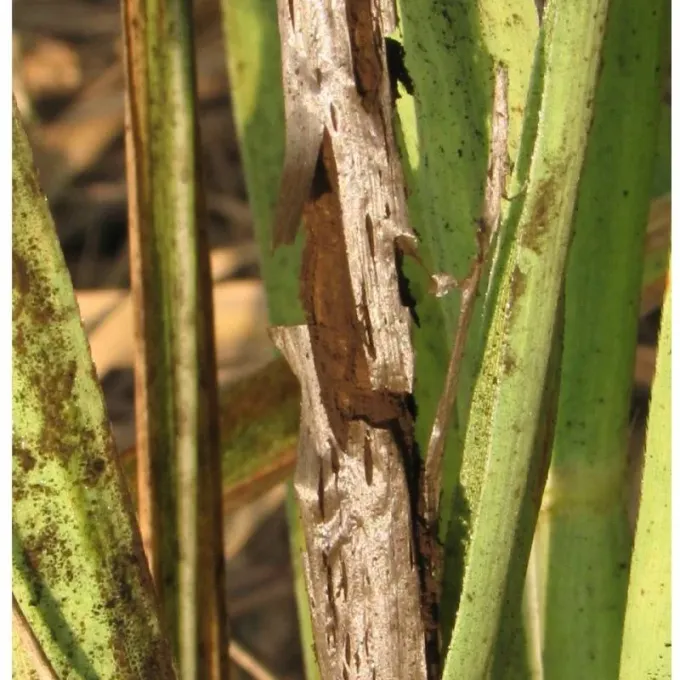
Internal examination of the stalks may reveal dark, necrotic streaks where the mycelium has colonized the plant tissues, affecting nutrient transport.
Control measures
The primary control strategy involves the use of disease-free, certified planting material derived from hot-water treatment or tissue culture methods.
Breeding and planting resistant cultivars is the most effective long-term management strategy to suppress the development of smut in commercial fields.
Sanitation practices, such as roguing (removing) infected plants as soon as they appear, help reduce the inoculum load within the field and slow the spread of spores.
Crop rotation and field hygiene are essential to prevent the accumulation of spores in the soil, especially in regions prone to high infection rates.
- Use of systemic fungicides to treat seed cane.
- Regular field inspections to identify and remove symptomatic plants.
- Controlled irrigation to prevent spore movement between fields.
- Implementation of quarantine measures for seed material movement.
Causes diseases · 1
Discussion
No discussions yet — be the first.