
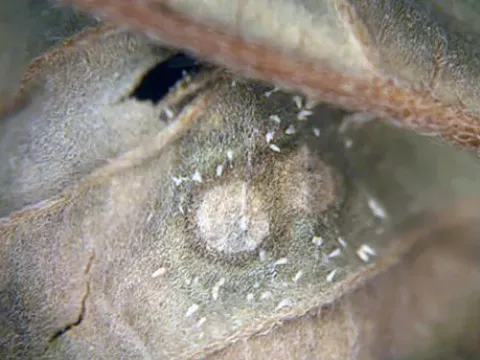
Cristulariella pyramidalis
Cristulariella pyramidalis
Cristulariella pyramidalis is an anamorphic fungus classified within the Hyphomycetes. Its sexual stage, which produces apothecia, is taxonomically known as Grovesinia pyramidalis.
What the section contains
Cristulariella pyramidalis
The fungus is widely recognized as the causal agent of a specific leaf spot disease. The name derives from its unique reproductive structures—conidiophores that grow in a distinct, microscopic pyramid-like arrangement.
The pathogen survives the winter in the form of sclerotia residing in fallen leaves or soil. When environmental conditions improve in the spring, these sclerotia germinate to produce the primary inoculum for the new season.
The morphology of the conidiophores is highly branched, with conidia clustered at the tips of the branches. This specialized structure allows the fungus to efficiently disperse spores through wind or rain splash.
As an obligate parasite, it relies on host plant cells for its metabolic needs. Identifying the pathogen in the field can be challenging, as early signs often resemble common environmental stress or other necrotic leaf spots.
Cristulariella pyramidalis has a broad host range, infecting various woody trees and shrubs, most notably walnut (Juglans spp.), pecan, maple, cherry, and grapevines.
Economic damage is most significant in the walnut and pecan industries. The disease causes premature defoliation, which severely limits the tree's photosynthetic capacity and reduces both the yield and the quality of nuts.
The fungus induces large, necrotic lesions across the leaf blades. The cessation of photosynthesis in these areas leads to rapid foliage loss, often occurring mid-season during the critical development period.
Beyond the leaves, the pathogen can infect tender young shoots, especially in high-humidity nursery settings. This leads to stem necrosis, shoot dieback, and significant structural weakness in young saplings.
Chronic infection over multiple consecutive seasons drains the tree’s energy reserves, weakening the root system and making the host highly susceptible to secondary pathogens and severe winter kill.
The development of the disease is strictly dictated by climatic factors. The pathogen thrives in warm, wet conditions, making mid-to-late summer the peak period for disease progression.
Primary infections occur via spores transported from overwintered leaf debris to the lower canopy. This process is accelerated by frequent rain events and high relative humidity.
The incubation period generally spans from a few days to two weeks. The optimal temperature range for rapid mycelial growth and conidial production is between +20°C and +25°C.
In late summer, particularly during rainy seasons, massive sporulation occurs. This results in the rapid spread of the disease throughout the entire canopy, leading to rapid disease escalation.
As the growing season concludes, the fungus initiates the formation of sclerotia. These structures are designed for long-term survival, dropping to the soil floor with the autumn leaves to wait for the next cycle.
Initial infection symptoms appear as small, water-soaked spots on the upper surfaces of the leaves, which eventually turn tan, brown, or grayish in color.
The definitive sign is the presence of microscopic, pyramid-shaped conidiophore structures on the undersides of the leaves, visible with a hand lens or under a microscope.
A yellow chlorotic halo often develops around the necrotic spots, indicating the release of fungal toxins that disrupt plant tissue metabolism.
As the infection spreads, the spots merge, covering large portions of the leaf surface, which causes the leaves to curl, dry out, and eventually abscise prematurely.
- Darkening of leaf veins within the lesion areas.
- Grayish powdery growth on the leaf undersides.
- Premature leaf drop despite otherwise healthy-looking branches.
- Black, dot-like sclerotia found on decaying leaf debris.
Sanitation is the most effective management strategy. Removing and burning fallen leaves in the autumn prevents the overwintering of sclerotia and significantly lowers the primary inoculum for the following year.
Pruning trees to improve airflow and sunlight penetration within the canopy is crucial. Reducing humidity levels inhibits fungal growth and limits the pathogen's ability to infect new tissue.
Protective fungicides, including copper-based products or systemic fungicides like triazoles and strobilurins, should be applied early in the season to prevent the establishment of the infection.
A consistent spray schedule is necessary during periods of high humidity. It is vital to protect the foliage during its most vulnerable stage of expansion to minimize the overall impact of the disease.
Integrating cultural practices—such as optimal fertilization and irrigation management—strengthens the tree’s innate resistance, helping to mitigate the damage caused by the fungal pathogen.