
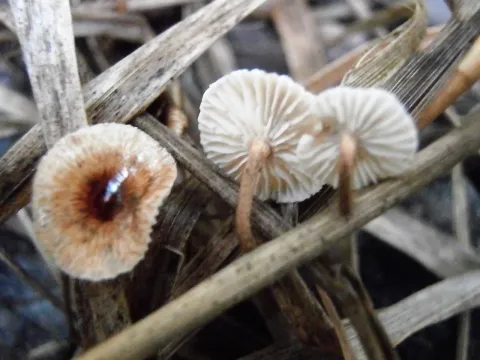
Crinipellis sarmentosa
Crinipellis sarmentosa
Crinipellis sarmentosa is a basidiomycetous fungus belonging to the Marasmiaceae family. It is recognized as a woody tissue pathogen that can impact the longevity of various tree species.
What the section contains
Crinipellis sarmentosa
The fungus develops mycelial structures within the host tissue, often appearing as fine, fibrous threads that colonize dead or weakened wood. Its fruiting bodies are typically small, leathery, and brown, characteristic of the Crinipellis genus.
From a phytopathological perspective, it acts as a semi-parasitic organism. It thrives by utilizing the nutrients in compromised plant tissues and can occasionally extend its reach into living layers.
Systematically, this species is noted for its ability to transition from a saprophytic lifestyle on debris to a more aggressive parasitic state when the host tree is under environmental stress.
Identification of the species is usually performed through morphological observation of the fruiting bodies and microscopic analysis of the mycelium found within the affected wood sections.
##damage##The primary hosts for this fungus include various trees and shrubs that may be experiencing stress from poor soil conditions, mechanical damage, or secondary infections.
The pathogen causes necrosis in branches, which leads to the gradual impairment of the vascular system. This disruption prevents the normal flow of water and nutrients, resulting in tissue dieback.
Damage symptoms often involve bark discoloration, deep cracking, and the eventual death of the cambial layer, which compromises the structural integrity of the affected limb.
The economic impact of Crinipellis sarmentosa is characterized by the loss of aesthetic value in ornamental plants and reduced growth or productivity in orchards due to chronic branch dieback.
By weakening the tree, the fungus also makes the host more susceptible to secondary wood-boring insects and other opportunistic pathogens that exploit the damaged bark.
The development of the fungus is highly dependent on humidity levels. Periods of prolonged rainfall or high moisture provide the necessary environment for spore germination on bark surfaces.
Spring and autumn are considered high-risk seasons for the spread of Crinipellis sarmentosa. These times of the year offer the moderate temperatures required for mycelial expansion.
The pathogen overwinters as mycelium within the infected wood. This allows the fungus to remain viable during freezing temperatures, emerging again as soon as growth conditions improve.
The reproductive cycle involves the release of basidiospores that are dispersed by wind and rain splashing, creating new infection points on susceptible plant tissues.
Dense canopies that retain high humidity create a microclimate that significantly favors the production of fruiting bodies, leading to rapid disease escalation within a single tree.
Initial signs of infection include localized darkening of the bark and the development of cracks, which may start to ooze sap or other fluids due to internal tissue stress.
A definitive sign is the emergence of small, leathery mushroom-like structures directly from the bark of infected branches, especially during wet weather conditions.
Leaves on infected branches often show signs of premature wilting, yellowing, or browning, as the fungus interferes with the tree's internal transport system.
Cross-sections of the affected wood often reveal discolored necrotic areas, confirming that the fungal mycelium has deeply penetrated the internal structure of the branch.
Progressive dieback is a key indicator, where the ends of the branches begin to wither and die, spreading the infection inward toward the main trunk over time.
Sanitation through regular pruning is the most effective management strategy. Removing infected branches and debris reduces the local spore population significantly.
It is crucial to minimize mechanical wounds, as these provide entry points for fungal spores. If wounding occurs, it should be treated immediately with an appropriate wound sealant.
Improving air circulation within the canopy through proper pruning helps to reduce moisture retention, making the environment less favorable for fungal colonization.
Sterilizing pruning tools between cuts is essential to prevent the mechanical transmission of the pathogen from diseased branches to healthy parts of the tree.
- Apply copper-based fungicides as a preventative measure during periods of high humidity.
- Maintain tree vigor through balanced fertilization and proper irrigation to boost natural resistance.
- Collect and burn or remove all infected prunings to prevent sporulation in the garden area.