
Physalospora perseae
Physalospora perseae
Physalospora perseae is an ascomycete fungus that acts as a significant plant pathogen. It belongs to the order Botryosphaeriales and is known for its ability to cause severe diseases in woody perennial crops, particularly in subtropical climates.
What the section contains
Physalospora perseae
The life cycle of the pathogen is complex, involving both sexual and asexual reproduction. It forms structures known as perithecia and pycnidia, which allow the fungus to survive unfavorable environmental conditions and persist as spores for long periods.
Physalospora perseae is highly specialized, having adapted to colonize the vascular and cortical tissues of its host. Its mycelium spreads throughout the cambium, eventually disrupting the plant's ability to transport water and essential nutrients.
The identification of this fungus in a laboratory setting involves observing the distinct morphological features of its ascospores and conidia under a microscope, as well as culturing the fungus on specific nutrient media.
Biological studies highlight that this fungus is an opportunist, often taking advantage of trees that are stressed due to drought, nutritional deficiencies, or mechanical damage to effectively establish a parasitic infection.
The primary host for Physalospora perseae is the avocado tree (Persea americana). The pathogen primarily causes branch dieback, stem cankers, and fruit rot, leading to substantial yield losses in orchards.
When the fungus infects the stem or branches, it creates necrotic lesions that can girdle the branch, leading to the death of all plant parts distal to the infection site. This is often referred to as "dieback disease."
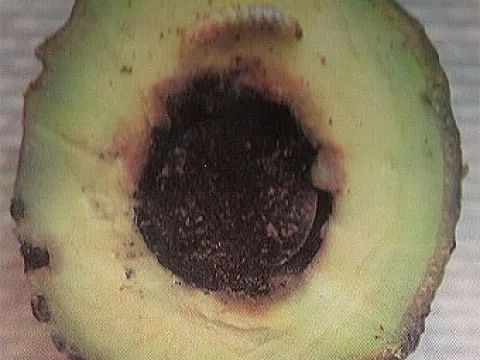
Fruit infection is a major issue as well. It typically starts as small spots that quickly expand, causing the fruit to soften and decay while still hanging on the tree. This damage makes the fruit unmarketable and susceptible to further secondary infections.
Seedlings are particularly vulnerable to this pathogen. Infection at the nursery stage can lead to systemic failure of the young tree, resulting in total loss of nursery inventory and affecting the quality of future plantations.
The cumulative damage to the tree results in reduced canopy density, lower photosynthetic capacity, and ultimately, a decrease in the tree's productive lifespan, which forces farmers to invest in early replacement of trees.
The most prominent sign of an active infection is the appearance of dark, sunken cankers on the bark of branches. Over time, these lesions grow, and the bark may crack or split, exposing the underlying woody tissue.
Close inspection of the infected bark often reveals the presence of small, black, pinhead-sized structures known as pycnidia. These are the fruiting bodies of the fungus, which release spores during humid conditions.
Foliar symptoms include yellowing, wilting, and premature leaf drop. These signs usually manifest on individual branches before spreading to larger sections of the tree canopy, leading to a general appearance of decline.
Fruits show distinctive brown or black necrotic spots. As the infection progresses, the infected areas of the fruit become soft and mushy, and under favorable conditions, the pathogen may produce white or gray mycelial growth on the surface.
- Sunken necrotic bark cankers.
- Small black pycnidia on dead tissue.
- Branch dieback and tip drying.
- Premature yellowing and leaf abscission.
- Soft, decayed spots on ripening fruit.
Sanitation is the cornerstone of managing Physalospora perseae. Pruning out infected branches at least 15-20 cm below the visible lesion is crucial. All pruned material must be removed from the orchard and burned or buried to minimize inoculum sources.
Cultural practices such as optimizing irrigation to prevent water stress and maintaining proper tree spacing help ensure better airflow. This reduces the duration of surface leaf wetness, which is necessary for spore germination.
Chemical control is effective when timed correctly. Preventative fungicide applications, particularly those containing copper or triazoles, can protect the tree during periods of high humidity or following heavy rains when spore dispersal is most active.
Tool hygiene is essential to prevent the spread of the pathogen. Pruning shears and saws should be disinfected between trees using appropriate disinfectants to avoid transferring spores from an infected branch to a healthy one.
Integrated Pest Management (IPM) strategies, including the use of resistant rootstocks and regular monitoring of the orchard, are the most effective ways to manage this disease in the long term, ensuring the productivity of avocado orchards.