
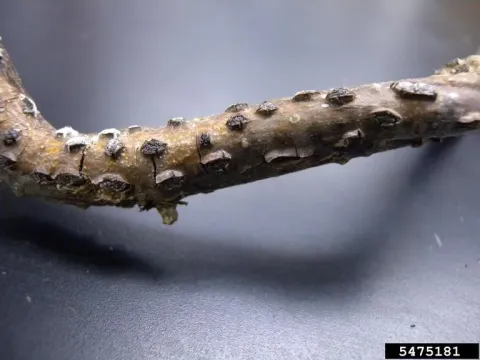
Physalospora glandicola
Physalospora glandicola
Physalospora glandicola is a fungal pathogen belonging to the Ascomycota division. It is recognized as an agent that specifically targets forest tree species, primarily focusing on oak varieties (Quercus).
What the section contains
Physalospora glandicola
The fungus is characterized by the formation of specialized fruiting bodies, known as perithecia, which develop within the host tissues. These structures are crucial for the sexual reproduction and dispersal of the fungus.
The mycelium of the pathogen penetrates deep into the tissues of acorns and twigs. It is a highly specialized organism that thrives by extracting nutrients from the host, causing degradation of plant cells.
Systematic classification involves examining the microscopic features of the ascospores, which are often produced in large quantities under favorable environmental conditions.
The pathogen is capable of surviving as a saprotroph on dead organic matter, allowing it to remain present in the forest floor even when a suitable host is temporarily unavailable.
The primary damage caused by Physalospora glandicola is the destruction of oak acorns. This affects both the reproductive success of the tree and the forestry industry's ability to collect viable seeds.
The fungus also causes localized necrosis on branches and young stems. These lesions can lead to the wilting and eventual death of the affected parts of the tree.
Economic impact is significant in nursery operations, where seed germination rates are heavily reduced due to the infection. Infected acorns are often visually unappealing and structurally unstable.
In addition to direct damage, the infection creates entry points for secondary pathogens, such as bacteria or other opportunistic fungi, further weakening the tree's health.
Large-scale outbreaks can result in a total loss of the acorn crop in certain areas, preventing natural forest regeneration and impacting local wildlife that depends on these seeds.
The pathogen is most active during the growing season when high humidity and moderate temperatures prevail. These conditions favor the germination of spores and the development of the mycelial network.
Overwintering occurs primarily in the form of dormant mycelium or spores located in leaf litter, soil debris, and infected branches that remain on the tree or have fallen to the ground.
During the spring, the arrival of rain triggers the release of spores from the overwintering structures. These spores are then dispersed by wind and rain splashes to new host tissues.
Late summer and early autumn represent a critical period for acorn infection, as the developing fruits are highly susceptible to the pathogen during this maturation phase.
Prolonged wet spells and overcast weather throughout the season provide the ideal environment for the disease to spread rapidly through a forest stand.
Initial infection on acorns manifests as dark, discolored lesions on the surface. These spots enlarge rapidly, leading to the softening of the acorn's shell and kernel.
Branch infection shows signs of dieback or localized lesions where the bark becomes sunken and cracked. Sometimes, visible fungal structures emerge through the bark surface.
- Darkened lesions on the acorn surface.
- Soft rot and breakdown of the seed interior.
- Wilting of leaves on branches affected by bark necrosis.
- Visible spotting on young shoots.
- Presence of powdery or crust-like fungal growth in high humidity.
Internal tissues of infected acorns often display a decayed, brownish appearance and a distinct lack of firmness, indicating the loss of structural integrity.
In advanced stages, the fungus may produce small, dark, pimple-like structures on the surface of the affected plant material, which are the reproductive organs of the fungus.
The most effective strategy for control is the rigorous selection and removal of infected acorns during the harvesting and storage processes to prevent the spread of the fungus.
Sanitation practices, such as the pruning of infected branches and the clearing of diseased leaf litter, are essential to reduce the inoculum load in the forest environment.
Proper storage conditions, including controlled low humidity and adequate airflow, are critical to prevent the proliferation of the pathogen among stored seeds.
In professional nursery settings, the application of approved fungicidal treatments can help protect young seedlings and seeds from infection during the vulnerable stages of development.
Maintaining high forest hygiene and promoting the vigor of oak stands through proper management techniques reduces the overall susceptibility of trees to fungal diseases.