
Physalospora canker
Physalospora malorum
Description
How to identify
The causative agent of this disease is the fungus Physalospora malorum (teleomorph: Botryosphaeria obtusa), a pathogenic fungus belonging to the order Botryosphaeriales. It is a common cause of bark necrosis in many fruit-bearing plants.
The fungus overwinters as mycelium in infected bark, mummified fruits, and dead wood. During the growing season, it produces pycnidia and perithecia, releasing spores that serve as primary inoculum for infection spread.
The pathogen is highly opportunistic, primarily entering the host through mechanical wounds, pruning cuts, sunscald, or winter frost damage. Once inside the tissue, the fungus grows into the cambium layer.
High humidity and moderate to warm temperatures (20–25°C) are ideal for the rapid development of the fungus. Rain and wind facilitate the dispersal of spores throughout the orchard canopy.
Poor orchard sanitation and overcrowding of trees significantly increase the risk of disease prevalence. Weakened trees, particularly those with poor nutritional status, are highly susceptible to infection.
What it damages
This pathogen primarily targets apples, pears, and various other pomaceous fruits. It affects multiple parts of the tree, including the trunk, scaffold limbs, leaves, and fruits, causing significant physiological damage.
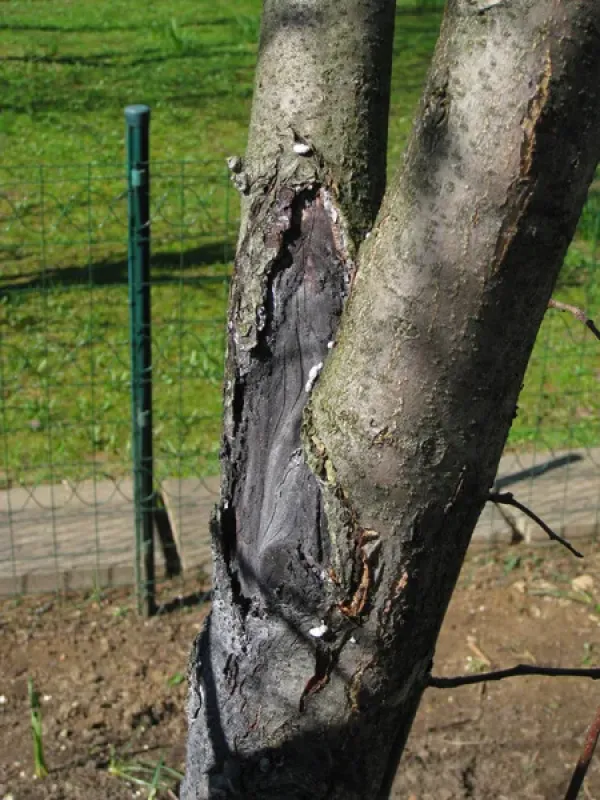
The most severe damage occurs on the bark. The fungus kills the inner layers, causing the bark to crack and peel, which interrupts nutrient transport and leads to the death of branches or the entire tree.
Fruit infection manifests as "black rot," where fruits become soft, discolored, and eventually shriveled. Mummified fruits often remain attached to the tree, continuing the infection cycle.
Economic losses arise from reduced fruit yield, lower quality of harvested produce, and the long-term necessity of replacing infected, dying trees. The disease can spread rapidly if left unchecked.
In addition to structural damage, the disease weakens the tree's overall vigor, making it more susceptible to other secondary infections and environmental stresses like extreme cold.
Signs of infestation
Early symptoms appear as small, reddish-brown, sunken spots on the bark. As the disease progresses, these lesions expand, and the bark turns black, cracks, and flakes off, exposing the dead wood underneath.
The presence of pycnidia — tiny, black, pimple-like structures on the surface of the infected bark — is a diagnostic hallmark of the pathogen. These structures produce massive amounts of spores.
Leaf infection causes small, purple-centered, brown-bordered spots, which may lead to premature defoliation. This reduces the photosynthetic area of the tree, further weakening it.
On fruits, the disease typically manifests as light brown spots that quickly enlarge. Over time, the entire fruit turns black and becomes covered in visible pycnidia, often in concentric circles.
- Blackened, cracked, or exfoliating bark.
- Visible black pycnidia on the bark or fruit.
- Mummified fruits hanging on branches.
- Brown necrotic lesions on foliage.
- Dieback of scaffold limbs and branches.
Control measures
Rigorous orchard sanitation is the primary control strategy. All infected branches must be pruned back into healthy wood, ensuring tools are disinfected between cuts to prevent pathogen spread.
All pruned materials must be removed from the orchard and burned or buried deep. Leaving infected debris on the orchard floor provides a continuous source of inoculum for the next season.
Wounds and pruning cuts should be treated with copper-based fungicides and sealed with protective wound paint to prevent the fungus from entering fresh tissue.
Scheduled fungicide applications, particularly during early spring bud-break and post-harvest, are essential for managing inoculum levels and protecting healthy trees from spore colonization.
Maintaining tree vigor through proper fertilization, adequate watering, and protecting the trunk against sunscald with whitewash can significantly improve the tree's natural defense mechanism.
Causes diseases · 1
Discussion
No discussions yet — be the first.