
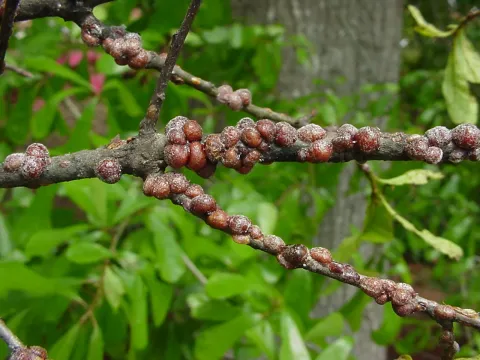
Bark canker
Physalospora corticis
Bark canker is caused by the fungus Physalospora corticis, classified within the Kingdom Fungi and the Phylum Ascomycota. This pathogen is known to be the cause of serious stem diseases in woody plants.
What the section contains
Bark canker
The fungus functions as a specialized parasite that targets the bark and cambium layers. It utilizes existing wounds, such as pruning cuts or winter damage, as primary infection sites for entry into the vascular system.
The life cycle involves the formation of fruiting bodies called perithecia, which produce ascospores. These spores are disseminated during wet conditions by rain splashes and wind, facilitating the spread of the disease within the orchard.
Mycelium remains dormant or active within the infected tissue throughout the year, allowing the pathogen to overwinter in stem tissues and resume its growth whenever environmental conditions become favorable.
Effective identification relies on recognizing the pathogen's ability to persist in plant debris. Its complex life cycle makes it a persistent threat that requires constant vigilance from growers.
The primary host for Physalospora corticis is highbush blueberry (Vaccinium corymbosum). The disease manifests as stem canker, which disrupts the transport of water and nutrients.
Infection results in localized necrosis that eventually girdles the stem, cutting off the circulation between the roots and the canopy. This often leads to the death of individual branches or the entire plant.
Plants affected by this pathogen show significant reductions in fruit yield and general vigor. Furthermore, the loss of branches necessitates intensive pruning, which negatively impacts the plant's architecture and productivity.
In commercial agriculture, widespread infection can result in severe financial losses. If left unchecked, the pathogen significantly reduces the life expectancy of the plantation and degrades fruit quality.
The physical damage to the stems makes the shrubs more susceptible to winter frost and other pathogens, leading to a synergistic negative effect on the overall health of the crop.
Early symptoms appear as small, reddish, circular spots on the green stems of the current year's growth. As the disease progresses, these spots expand, darken, and become sunken into the bark tissue.
Over time, the lesions develop into prominent cankers that crack and expose the woody tissue underneath. The bark may exhibit abnormal swelling or corky proliferation in the affected areas.
Small, black, pimple-like structures, which are the fruiting bodies (pycnidia or perithecia) of the fungus, emerge through the epidermis of the bark. These are clear indicators of an active infection.
Affected branches eventually show signs of water stress, including wilting, foliage reddening, and eventually complete necrosis. The upper parts of the branches may die back rapidly during the growing season.
- Reddish lesions on young green stems
- Sunken, cracking cankers on woody stems
- Presence of small black fruiting bodies on bark
- Wilting and dieback of affected branches
- Premature reddening of leaves on infected shoots
The most robust defense against bark canker is the planting of resistant blueberry cultivars. Selecting varieties with known tolerance to Physalospora corticis is critical for long-term success.
Strict sanitation practices, including the removal and destruction of all infected stems, are essential. Pruning cuts should be made well below the visible infection line to ensure all diseased wood is removed.
To prevent mechanical spread, all pruning tools must be disinfected with alcohol or other appropriate agents between cuts on different bushes. This prevents the transfer of fungal spores.
Fungicide applications, particularly those containing copper, can help protect susceptible stems from infection during the early spring and after harvest, creating a protective barrier against spores.
Managing the plant environment is equally important. Growers should avoid excessive nitrogen fertilization, which produces succulent, highly vulnerable growth, and ensure proper irrigation to prevent plant stress.