
Banana Phaeoseptoria leaf spot
Phaeoseptoria musae
Description
How to identify
The causative agent of this disease is the fungus Phaeoseptoria musae, which belongs to the class Dothideomycetes. It acts as a specialized foliar pathogen targeting plants within the Musa genus.
The life cycle involves the formation of pycnidia within necrotic host tissue. These pycnidia release numerous conidia (spores) that serve as the primary source of dissemination across the plantation.
Environmental requirements for infection include high humidity levels and warm temperatures. Rain-splash and wind serve as the main mechanical vectors for transporting spores from infected to healthy leaves.
The fungus colonizes the leaf tissue by penetrating stomata or epidermal injuries, subsequently invading the mesophyll cells and inducing localized necrosis.
Survival of the fungus between seasons is primarily facilitated by infected leaf debris left on the plantation floor, which acts as a reservoir for subsequent reinfection.
What it damages
The disease exclusively affects banana plants (Musa spp.). Significant damage is observed in the foliage, resulting in reduced photosynthesis and overall crop vigor.
Signs of infestation
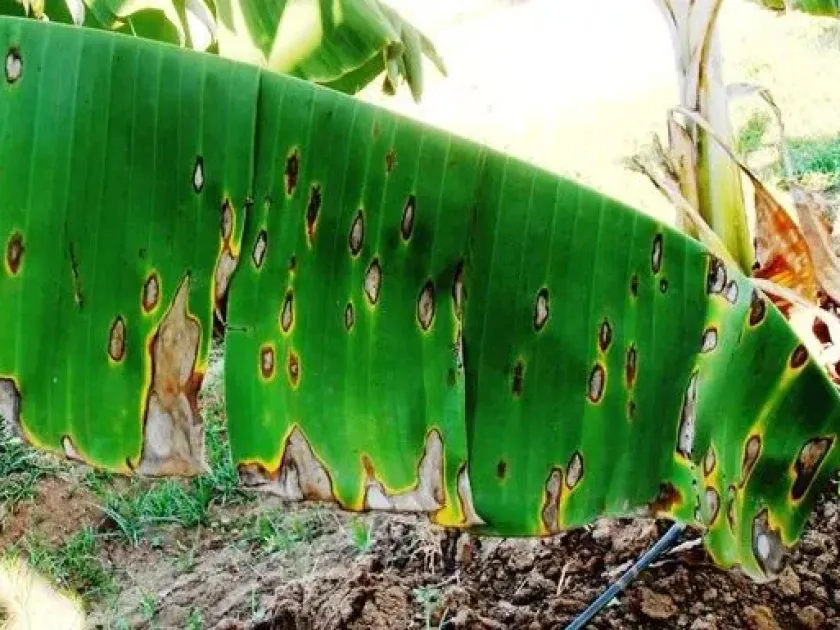
Early symptoms appear as small, brownish flecks that gradually expand into larger lesions, often displaying a dark brown or blackish color in the center.
A distinct chlorotic halo often surrounds the necrotic lesions, which serves as a defensive response by the plant against the spread of the pathogen's toxins.
As the infection progresses, multiple spots coalesce, covering large sections of the leaf blade, which leads to tissue collapse and early wilting of the foliage.
Microscopic examination or close inspection of dead tissue reveals tiny black dots known as pycnidia, which are the reproductive structures of the fungus.
Severe infestations reduce the plant's photosynthetic area, leading to lower fruit yields, delayed maturity, and decreased bunch weight at the time of harvest.
Control measures
Sanitation is a cornerstone of management; routinely removing and destroying infected leaf material significantly lowers the inoculum pressure within the field.
Application of systemic fungicides, when timed correctly, is effective in managing the spread of the disease and protecting newly emerged leaves during peak infection seasons.
Improving field sanitation and management practices, such as optimizing plant spacing, enhances airflow and creates a less conducive environment for spore germination.
Balanced fertilization programs, particularly those emphasizing potassium and phosphorus, are known to improve the plant's structural integrity and resistance to leaf pathogens.
Implementing strict quarantine protocols and sourcing clean, disease-free suckers or tissue-cultured plantlets are essential to preventing the introduction of this pathogen into new plantations.
Causes diseases · 2
Discussion
No discussions yet — be the first.