
Barley mosaic
Hordeum mosaic
The causal agent of this disease is the Barley mosaic virus (HoMV), which belongs to the genus Potyvirus. It is a plant-pathogenic virus with a single-stranded RNA genome that specifically infects various cereal crops.
What the section contains
Barley mosaic
The transmission of this virus is mediated by insect vectors, primarily aphids, which acquire the virus while feeding on infected plants and transmit it to healthy ones. The virus is not soil-borne in the traditional sense, relying on active insect movement.
As an obligate parasite, the virus relies entirely on the host plant's cellular machinery for replication. It requires living plant tissues for survival, making the "green bridge" between cropping seasons crucial for its persistence.
Accurate identification is typically conducted in laboratory settings using ELISA tests or molecular techniques like RT-PCR. These methods detect the presence of viral RNA or capsid proteins within the plant tissue.
The virus moves systemically throughout the host plant through the phloem tissues. Once established, it can disrupt metabolic functions, significantly impacting the plant's growth and eventual yield potential.
While barley is the primary host, the virus can also infect wheat, rye, and various wild grass species. These wild grasses act as essential reservoirs for the virus during the off-season.
The infection triggers a systemic physiological imbalance, primarily affecting photosynthesis and carbon assimilation. This results in stunted growth, reduced biomass, and weakened overall plant vigor.
Infected plants often show a reduction in the number of fertile tillers and grain weight. Yield losses can be substantial, especially if infection occurs at the seedling stage, which disrupts the development of reproductive organs.
Beyond direct yield loss, the infection compromises the plant's resistance to environmental stresses, including drought and cold, further jeopardizing the health of the entire crop stand.
Quality parameters of the harvested grain, such as protein content and seed plumpness, are frequently negatively affected by the systemic nature of the viral infection.
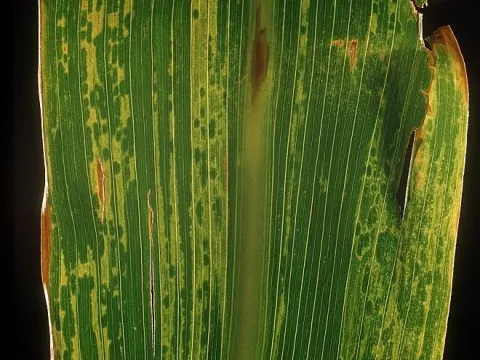
The most characteristic sign of Barley mosaic is the development of a mosaic-like pattern on the leaves. This pattern consists of light green, yellow, or pale patches, sometimes appearing as stripes or streaks.
Stunting is a very common feature of infected fields. Affected plants are consistently shorter than healthy neighbors, leading to uneven crop stands and patches of poor growth within the field.
Leaf deformation, including curling or narrowing of the blades, can occur in severe cases. The spikes may also be affected, appearing smaller, poorly filled, or failing to emerge fully from the flag leaf sheath.
Symptom expression is highly dependent on environmental conditions, particularly temperature. High temperatures during the growing season can sometimes mask the symptoms, though the virus remains present.
- Mosaic patterns and chlorotic stripes on foliage
- Significant plant stunting and reduced height
- Reduced tillering and overall biomass
- Leaf curling and deformation
- Poor spike development and reduced grain set
The most effective strategy is the use of resistant or tolerant barley cultivars. Breeding programs focus on genetic resistance to mitigate the impact of the virus on field performance.
Rigorous weed control, particularly of wild grasses around field borders, is essential. These weeds serve as natural hosts for the virus and breeding grounds for aphid vectors.
Implementing strategic insecticide applications to manage aphid populations during their migration periods can significantly reduce the rate of virus spread within a crop.
Optimizing planting dates helps avoid peak periods of insect vector activity. Early sowing of spring cereals often reduces the risk of infection compared to late-planted fields.
Maintaining spatial isolation between winter and spring cereal crops is a critical cultural practice. This prevents the transfer of the virus from surviving overwintering plants to the new crop cycle.