
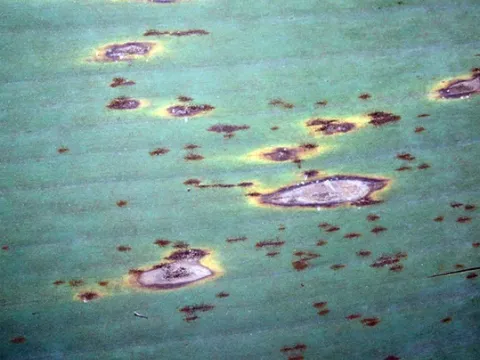
Banana rust
Uredo musae
Banana rust is a fungal disease caused by the pathogen Uredo musae, which belongs to the order Pucciniales. This organism is an obligate parasite, meaning it can only complete its life cycle and thrive when colonizing the living tissue of the banana plant.
What the section contains
Banana rust
The fungus propagates through the production of urediniospores, which are highly mobile and easily dispersed by wind and splashing rain. These spores are capable of initiating new infection cycles rapidly, especially under high humidity conditions (90%+) and temperatures ranging from 20 to 25 degrees Celsius.
Mycelial growth occurs within the leaf tissues, eventually rupturing the epidermis to produce visible spore clusters. Because the pathogen relies on specific microclimatic conditions, the disease is most prevalent in tropical regions with high rainfall and constant moisture.
Transmission is facilitated not only by natural elements but also through human activity, including the movement of contaminated pruning tools or contact during harvest. The fungus remains active on debris, allowing it to survive between crop cycles.
The biological nature of Uredo musae requires integrated management strategies. Since it acts as a biotrophic pathogen, suppressing its development depends largely on controlling the environment and reducing the inoculum density within the field.
The primary damage caused by banana rust is the significant reduction of photosynthetic capacity. As the fungus colonizes the leaves, it destroys healthy plant cells, leading to a loss of green leaf area and impaired metabolic processes.
This physiological stress directly affects fruit production. Bananas harvested from infected plants typically show reduced bunch weight and smaller fruit size. Furthermore, the aesthetic quality of the fruit is compromised, making it less marketable for global trade.
Prolonged infection weakens the entire plant, making it more susceptible to secondary pests and various opportunistic pathogens. In severe cases, the premature loss of foliage leads to a stunted plant that fails to produce a viable harvest.
Economic losses arise from both decreased yield and the high cost of implementing intensive fungicide programs. Plantation owners must invest heavily in chemical inputs and labor to mitigate the spread of the disease across their operations.
If left unmanaged, banana rust can lead to complete failure of the plantation. The loss of profitability often forces farmers to abandon infected areas or invest in replacement cultivars that show higher tolerance to the pathogen.
The initial signs of banana rust appear as minute, yellowish flecks on the underside of the leaves. As the pathogen matures, these flecks expand into distinct pustules containing a mass of rusty-brown or orange spores.
The host tissue around these spore-producing structures begins to turn yellow and eventually becomes necrotic. These necrotic areas often form long streaks or patches, which are characteristic of the disease and aid in early field identification.
As the infection spreads across the leaf surface, the individual lesions coalesce, creating large dead areas. The leaf eventually wilts, curls, and dries up, losing its structural integrity and falling prematurely from the pseudostem.
- Appearance of rusty-brown spots on the abaxial side of leaves.
- Visible powdery spore masses at the site of infection.
- Yellowing of leaf tissues surrounding the pustules.
- Formation of elongated necrotic streaks along leaf veins.
- Rapid drying and shedding of the lower foliage.
The powdery nature of the spores is a key diagnostic feature. By gently rubbing an affected area, one can observe the characteristic rust-colored dust, which distinguishes this fungal disease from bacterial or physiological leaf disorders.
Successful management begins with optimizing the plantation environment. Ensuring proper plant spacing and effective drainage helps to reduce the humidity levels that the fungus requires for optimal spore germination and colonization.
Sanitary practices are crucial for reducing the primary inoculum. Regular removal and destruction of infected leaf debris prevent the buildup of spores. Pruning should be performed with sanitized tools to prevent the mechanical spread of the fungus.
Fungicide application is a standard component of control programs in commercial banana production. Preventive sprays utilizing copper-based compounds, mancozeb, or triazoles are effective at protecting young leaf tissue from the initial colonization by Uredo musae.
Maintaining the overall vigor of the banana crop through proper fertilization and irrigation is essential. A healthy plant can better withstand the stress caused by minor infections and may show greater resilience against the pathogen.
Future control strategies are increasingly focusing on the development and adoption of resistant cultivars. By selecting hybrids that are genetically equipped to resist rust, producers can lower their reliance on chemical sprays and ensure long-term sustainability.