
Pestalotiopsis
Pestalotiopsis guepinii
Pestalotiopsis (Pestalotiopsis guepinii) is a genus of ascomycetous fungi that acts as a significant plant pathogen. It is widely recognized for causing various necrotic diseases across a diverse range of botanical hosts, especially in warm and humid environments.
What the section contains
Pestalotiopsis
The fungus is characterized by its conidia, which typically feature several septa and distinctive apical appendages. These structures are crucial for identification under a microscope and play a vital role in the long-distance dispersal of the pathogen via wind and water.
Taxonomically, it belongs to the family Sporocadaceae. It behaves primarily as an opportunistic pathogen, infecting plants that are already stressed due to environmental factors, mechanical injury, or poor maintenance practices.
Survival of Pestalotiopsis guepinii is facilitated by its ability to persist in soil, plant debris, and bark. Under favorable conditions, particularly high humidity and moderate temperatures, the fungus produces large quantities of spores that can quickly colonize host tissue.
Dissemination is highly efficient, occurring through splashing water during irrigation or rain, as well as via contaminated pruning tools. Once introduced into a nursery or garden, it can spread rapidly if sanitary measures are ignored.
Pestalotiopsis is a major concern for ornamental conifers, such as thuja, juniper, and cypress, where it causes significant needle drop and branch dieback. It also affects a broad array of broadleaf plants, including tea, palms, citrus, and numerous greenhouse ornamentals.
The damage often begins as small lesions on leaves or needles, which eventually expand into large, necrotic patches. This tissue death impairs the plant's ability to photosynthesize, leading to stunted growth and, in severe cases, the death of the entire specimen.
On woody stems, the pathogen causes cankers that can girdle branches, cutting off nutrient and water supply to the upper parts of the plant. This leads to the characteristic flagging or wilting of shoots that often confuses growers with other vascular diseases.
For fruit and ornamental nurseries, this fungus represents a severe economic risk. It can devastate young seedlings in a very short time, forcing growers to discard entire batches of inventory that have been compromised by the infection.
Chronically infected plants remain a source of inoculum in the environment. Even if the plant appears to be recovering, the underlying fungal presence can trigger recurring outbreaks during seasonal transitions or stress periods.
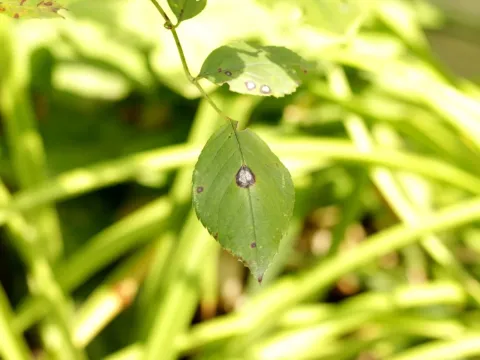
The most common sign is the appearance of light brown or gray lesions on leaves and needles. These lesions are usually bordered by a dark, thin line that separates the dead, necrotic tissue from the healthy part of the leaf.
A definitive diagnostic sign is the presence of tiny, black, pimple-like structures called acervuli on the surface of the dead tissue. These structures are where the fungus produces masses of spores, often appearing as small droplets in high humidity.
In conifers, branch dieback is a classic indicator. The needles turn yellow and then reddish-brown, starting from the tips and progressing towards the base. Often, the transition between healthy green needles and dead tissue is abrupt and clear.
For greenhouse plants, a sudden loss of turgor and wilting of new shoots is common. Even with sufficient soil moisture, the plants look dehydrated because the fungal infection has disrupted the vascular pathways in the stems.
During wet weather, a thin, grayish fungal mat may be observed on the surface of the infected lesions. This mat is a direct result of prolific spore production and signals that the disease is actively spreading to surrounding susceptible tissues.
Integrated pest management (IPM) is essential for controlling Pestalotiopsis. The first step involves rigorous sanitation: pruning out all dead and diseased branches well back into healthy wood and destroying the infected material immediately.
Environmental manipulation is equally important. Reducing overhead irrigation, improving air circulation through proper plant spacing, and keeping the foliage as dry as possible significantly inhibit spore germination and infection rates.
Chemical control involves the application of fungicides, particularly those containing copper or systemic active ingredients such as mancozeb or thiophanate-methyl. These should be applied preventively, especially during periods of high humidity and new growth.
- Regular sanitation of pruning tools using alcohol or bleach solutions.
- Maintaining plant vigor through proper fertilization and stress reduction.
- Using disease-free, high-quality propagation material from reputable sources.
- Regular inspections to identify and remove localized infections before they spread.
Long-term success in managing Pestalotiopsis guepinii relies on a combination of these methods. By minimizing stress on the plants and removing potential sources of fungal spores, growers can successfully protect their collections from this damaging pathogen.