
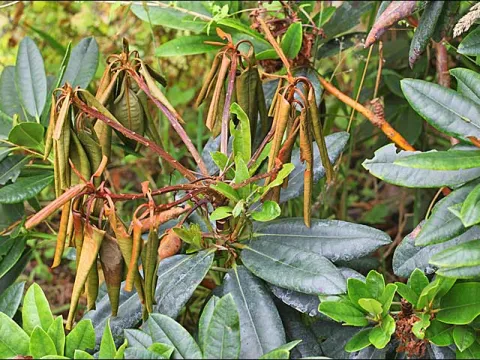
Pestalotia
Pestalotia macrotricha
Pestalotia macrotricha is a fungal pathogen classified within the Coelomycetes group. It is primarily known as a causative agent of leaf spots, blights, and dieback in a wide range of botanical species.
What the section contains
Pestalotia
The fungus is characterized by the production of acervuli, which are small, dark, cushion-like structures that break through the epidermis of the host plant. These structures contain the fungal spores (conidia) responsible for the spread of the infection.
Microscopic examination reveals spindle-shaped conidia that are septate, often possessing characteristic long, filamentous appendages at the ends. This unique structure is crucial for accurate diagnosis in laboratory settings.
As a facultative parasite, the fungus survives in dead or decaying organic matter. It persists in soil or on infected plant debris, waiting for optimal conditions, such as high moisture and moderate temperatures, to activate and initiate infection.
The dispersal of conidia is largely driven by splashing rain or irrigation water. Because the spores are mucilaginous, they stick easily to tools, clothing, and animals, facilitating rapid transmission across nursery or garden environments.
Pestalotia macrotricha causes significant economic damage to ornamental nurseries, particularly affecting rhododendrons, camellias, and various palm species. It can also impact certain berry-producing shrubs when environmental stressors are present.
The infection manifests primarily as necrotic lesions on foliage. These spots often coalesce, covering the majority of the leaf surface, which leads to premature defoliation and a drastic reduction in the plant's aesthetic value.
When the pathogen infects shoots or stems, it causes localized tissue death and can girdle branches, resulting in sudden dieback of sections of the plant. This is particularly problematic for young, fragile seedlings in intensive culture systems.
Weakened plants are highly susceptible to secondary infections by bacteria or other opportunistic fungi once Pestalotia has established itself. This cumulative damage can rapidly accelerate the death of the host plant.
Commercial producers suffer the most, as aesthetic blemishes and tissue necrosis render plants unmarketable. The inability to contain the fungus in a closed system often leads to the destruction of entire batches of nursery stock.
The initial signs of infection are small, light-brown spots that expand rapidly. As the spots mature, they often develop a darker margin and a grayish center where the fungal sporulation (the black acervuli) becomes visible.
In humid conditions, the pathogen produces a mass of spores that can appear as a damp, dark, or translucent ooze on the surface of the lesions. This mass is highly contagious and easily spread by water contact.
Symptoms on branches include cracking or splitting of the bark, sometimes accompanied by sunken lesions that indicate an advanced stage of infection. This restricts nutrient flow to higher branches, causing them to wither.
Leaf drop is a common consequence of heavy infestations. The foliage may show signs of chlorosis around the spots before turning necrotic and abscising from the stem, leaving the plant sparse and vulnerable.
Visual identification is highly reliable once the black fruiting bodies appear on the necrotic tissues. Growers are advised to inspect the undersides of leaves and stems regularly during wet periods for these clear signs.
The primary control strategy involves rigorous sanitation. Removing infected leaves and pruning away symptomatic branches reduces the local inoculum level significantly, preventing further spread during the growing season.
Proper environmental management is essential. Improving air circulation and reducing leaf wetness (e.g., by switching to drip irrigation) creates an environment less conducive to the pathogen's growth and spore germination.
Chemical control is effective when used preventively. Copper-based fungicides are standard for protecting healthy tissues, while systemic fungicides such as those containing strobilurins may be used for curative purposes.
Disinfecting all pruning equipment between plants is non-negotiable. Tools can easily carry spores from an infected plant to a healthy one if not properly sterilized with a suitable disinfectant solution.
- Strict sanitation and disposal of debris
- Improved aeration and ventilation
- Copper-based fungicide applications
- Disinfection of pruning tools
- Monitoring plant vigor and soil health