
Peronosclerospora spontanea
Peronosclerospora spontanea
Description
How to identify
Peronosclerospora spontanea is an obligate parasitic oomycete classified within the kingdom Chromista. This phytopathogen is a recognized agent responsible for systemic diseases in various cereal crops, primarily maize.
The pathogen develops endophytically, with its mycelium spreading intercellularly throughout the host tissues. Infection typically initiates through the stomata or direct penetration of the epidermal layers of young seedlings.
The lifecycle involves the production of conidiophores that emerge through stomata to facilitate asexual reproduction. For long-term survival, the pathogen produces oospores, which persist in the soil and crop debris.
Taxonomically, it belongs to the Peronosclerospora genus, which is known for causing downy mildew diseases. Accurate diagnosis often requires microscopic observation of conidiophore morphology or molecular assays.
Due to its high degree of host specialization, this pathogen is strictly adapted to the host's physiological environment, making it a critical subject for agricultural quarantine and surveillance.
What it damages
Maize (Zea mays) is the primary economic host for this pathogen. Infections cause substantial yield losses by inhibiting nutrient transport and hindering the plant's photosynthetic capacity.
Systemic infection leads to stunted growth, distorted foliage, and the overall collapse of the plant's metabolic functions. Affected plants frequently fail to develop viable ears or grain.
Tissue necrosis and structural weakness are common consequences of the infection, which makes the crop susceptible to lodging and secondary colonization by other opportunistic microorganisms.
The quality of fodder and silage is severely compromised in infected fields, leading to significant economic losses for farmers and livestock producers relying on maize production.
Furthermore, because of its status as a quarantine pathogen in many jurisdictions, its presence can lead to significant trade restrictions and additional costs for phytosanitary compliance.
When it appears
The development of the disease is highly dependent on environmental conditions, particularly humidity and temperature. It is most active during the active growth phases of the maize crop.
Conidial dispersal occurs primarily during nighttime hours under conditions of high relative humidity and the presence of surface moisture. Wind acts as the primary vector for spreading the pathogen.
Primary inoculum often originates from oospores dormant in the soil. The germination of these oospores is stimulated by specific moisture and temperature thresholds in the spring, allowing infection of young roots.
Mid-season periods characterized by persistent rainfall and moderate temperatures provide the optimal environment for secondary disease cycles, which can lead to rapid spread across a field.
The pathogen enters a dormant state when conditions become unfavorable, with oospores serving as the survival structures throughout the winter months until the next planting season.
Signs of infestation
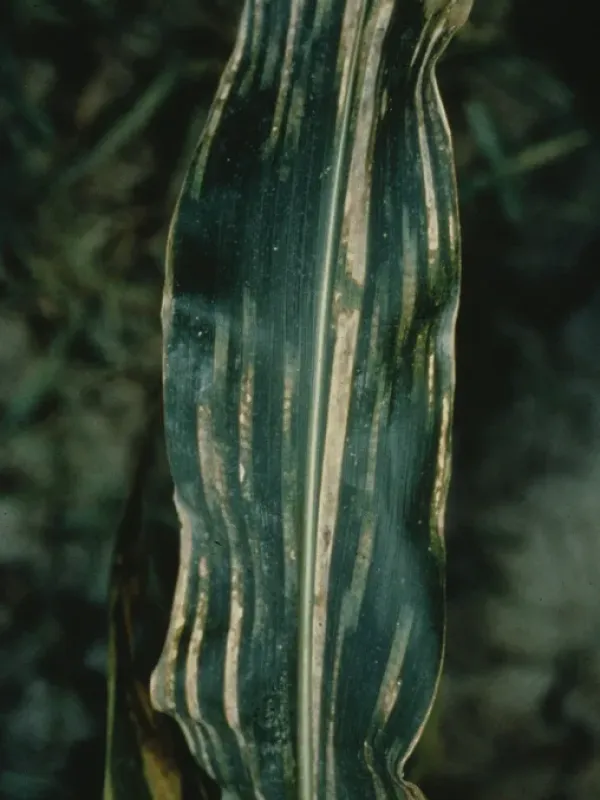
Early symptoms are characterized by chlorotic striping on the leaves, which progresses from light yellow to white as the disease advances. These stripes typically follow the venation of the leaf.
Under high-humidity conditions, a downy white to greyish layer of fungal sporulation appears on the underside of the infected leaves, which is the most definitive clinical sign.
Systemically infected plants are often severely dwarfed, displaying shortened internodes and malformed, twisted leaves. Such plants remain stunted throughout their developmental cycle.
Generative structures are frequently replaced by abnormal, tassel-like growth that lacks the ability to produce functional kernels, rendering the ear unproductive.
As the infection progresses, premature senescence of the foliage occurs, and infected plants often die before reaching full physiological maturity, significantly reducing harvest quality.
Control measures
The most effective management strategy is the deployment of resistant maize hybrids, which drastically reduce the incidence and severity of the disease in commercial fields.
Implementing a rigorous crop rotation program, avoiding host crops for at least 2-3 years, helps reduce the soil-borne inoculum pressure of the oospores.
Cultural practices, including deep plowing to bury crop residues, are essential to accelerate the decomposition of infected tissues and decrease the survival rate of the pathogen.
Seed treatments using systemic fungicides are highly recommended to protect seedlings during the critical early growth stage from soil-borne primary infection.
Strict phytosanitary monitoring of imported seeds and local field scouting are vital steps to prevent the spread of the pathogen into new, disease-free cultivation areas.
Causes diseases · 1
Discussion
No discussions yet — be the first.