
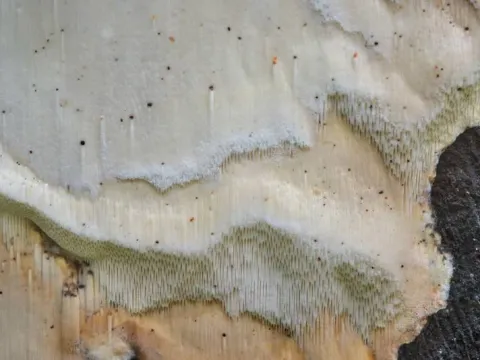
Perenniporia subacida
Perenniporia subacida
Perenniporia subacida belongs to the kingdom Fungi, within the genus Perenniporia. It is a wood-decaying basidiomycete responsible for causing white stringy rot in timber.
What the section contains
Perenniporia subacida
The fungal mycelium actively penetrates the wood structure, systematically degrading cellulose and lignin. The fruiting bodies are perennial, often resupinate, with a waxy or cork-like texture.
The hymenophore ranges in color from white to creamy or yellowish hues. The pores are small and typically round or slightly angular, serving as a key diagnostic feature for identification.
This pathogen shows a strong preference for coniferous species but can also affect hardwoods, causing systemic damage to the trunk and root systems.
While it functions as a natural decomposer in forest ecosystems, it acts as a destructive parasite in plantations and orchards, significantly lowering wood value.
The primary hosts for this fungus include coniferous trees such as spruce, fir, and pine. It affects both living standing trees and dead organic matter like stumps.
The fungus induces intense white rot that spreads through the heartwood and root system, severely compromising the mechanical integrity of the wood.
Affected wood softens, develops a stringy or fibrous texture, and exhibits a light yellowish color accompanied by distinct black zone lines.
Trees infected with this pathogen become prone to windthrow due to the significant structural failure of the root system and the lower part of the trunk.
The economic impact involves decreased timber quality, forest stand dieback, and increased safety risks due to falling hazardous trees.
The most visible indicator of infection is the emergence of perennial fruiting bodies on the bark, typically found at the tree base or on decaying stumps.
Internal examination of the wood reveals distinct color changes and structural degradation, characterized by zones where fibers become soft and easily peeled.
Symptoms of advanced infection include canopy thinning, premature needle yellowing, and leaf drop, reflecting the disruption of nutrient and water transport.
During late stages, a tree may appear outwardly healthy while harboring large internal cavities that significantly reduce its stability.
The decomposition process mediated by this fungus is frequently accompanied by a subtle, acidic, or fruity odor that indicates active lignin degradation.
The primary management strategy involves the prompt sanitary removal of infected trees and the disposal of fruiting bodies to prevent spore dispersal.
It is crucial to prevent mechanical damage to bark and roots during forest operations, as wounds serve as primary entry points for the fungal spores.
In managed landscapes, treating fresh cuts with copper-based fungicides can act as a barrier against spore penetration and colonization.
Maintaining proper stand hygiene and avoiding waterlogged soil conditions help limit the spread of the fungus in susceptible plantations.
Consistent forest monitoring and scouting for early signs of infection are essential for identifying localized outbreaks and preventing broader spread.