
Peronosclerospora maydis
Peronosclerospora maydis
Peronosclerospora maydis is a destructive plant pathogen within the class Oomycetes. It is widely recognized as the primary cause of Philippine downy mildew in maize, a disease that can devastate corn yields.
What the section contains
Peronosclerospora maydis
Unlike true fungi, this organism produces zoospores that require moisture to move and infect host tissues, making it highly dependent on the local microclimate.
Taxonomically, it belongs to the Peronosporaceae family. Its biological structure allows for both sexual reproduction, forming durable oospores, and asexual reproduction for rapid dispersal.
The pathogen is an obligate parasite, meaning it must live within living plant tissue to complete its life cycle and maintain its viability.
Accurate identification of the pathogen usually involves microscopic examination of the conidiophores and conidia produced on the underside of the leaves.
The primary host for this pathogen is maize (Zea mays). When environmental conditions are optimal, the pathogen can infect a high percentage of plants in a single field.
While corn is the main target, the pathogen may also affect certain wild grass species, which serve as alternative hosts, ensuring its survival between growing seasons.
The systemic nature of the infection means that once the pathogen enters the plant, it colonizes the internal vascular systems, severely hindering nutrient and water transport.
Yield loss is significant, often resulting from barren stalks, deformed ears, or the total failure of the plant to produce a marketable crop.
In addition to direct yield reduction, the overall vigor of the crop is compromised, making it more susceptible to environmental stresses and other secondary opportunistic pests.
The spread of the disease is highly favored by high relative humidity, particularly when temperatures remain within the 20°C to 28°C range during the night.
The pathogen's asexual stage is most active during periods of frequent rainfall or heavy dew, which facilitate the production and dissemination of conidia through the air.
Infection is most critical at the seedling stage (up to the 4-leaf stage). Plants infected at this stage rarely recover and usually exhibit severe stunting or death.
Oospores in the soil act as a primary inoculum source. They germinate when the soil moisture is high, infecting the roots of emerging corn seedlings.
Throughout the growing season, repeated cycles of conidial production can lead to secondary spread, causing the disease to progress throughout the entire plantation.
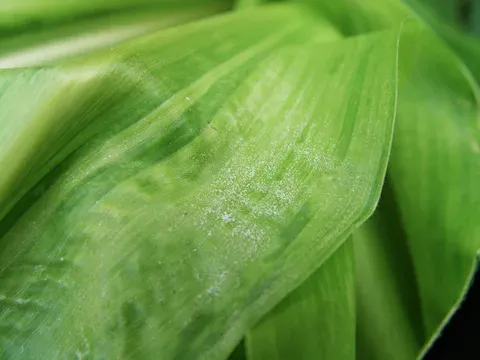
Visible symptoms often begin as pale, chlorotic streaks on the leaf surface that run parallel to the veins, eventually leading to generalized yellowing.
A hallmark sign of the infection is the development of a white, downy fungal-like growth on the undersides of the leaves during high-humidity periods.
- Severe stunting and shortening of internodes.
- Narrowing and excessive elongation of leaves.
- Failure of the tassels to emerge or the development of abnormal, deformed tassels.
- Inability to produce properly filled ears with stunted grain development.
- Plants may show increased tillering, appearing bushy and abnormal.
In systemic infections, the pathogen spreads throughout the plant, meaning that symptoms may appear on leaves that were formed long after the initial infection event.
The use of resistant or tolerant corn hybrids is the most sustainable and effective management strategy for controlling maize downy mildew.
Treating seeds with appropriate systemic fungicides is essential in regions with a history of the pathogen to protect seedlings during the highly vulnerable early stages.
Implementing a crop rotation program is critical to disrupt the life cycle of the pathogen and reduce the population of oospores stored in the soil.
Cultural practices, such as removing wild grasses that can harbor the pathogen, help in creating a sanitary barrier around commercial corn fields.
Proper field management, including the destruction of crop residues immediately after harvest, reduces the overwintering capacity of the pathogen and limits future outbreaks.