
Nectria
Nectria
Nectria is a genus of ascomycetous fungi that act as significant pathogens in the plant kingdom. These fungi are best known for causing various forms of canker and bark necrosis on trees and shrubs.
What the section contains
Nectria
The most economically important species is Nectria galligena, which is the primary cause of European canker in pome fruits like apples and pears, as well as several broad-leaved forest tree species.
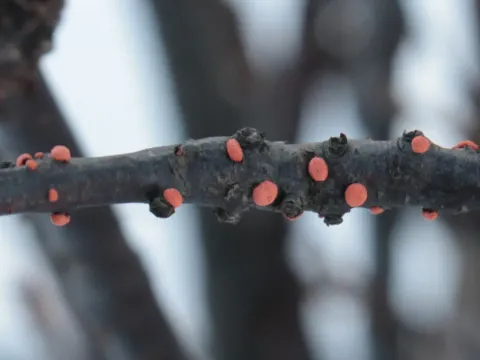
The fungus is characterized by the production of perithecia — small, spherical, bright red to orange fruiting bodies that typically appear in clusters on the surface of infected bark or necrotic wood.
Nectria typically invades its host through natural openings or wounds such as pruning cuts, leaf scars, or damage caused by frost and insects, initiating the colonization of the cambium and wood.
The fungus propagates through two types of spores: ascospores, which are spread by wind during wet weather, and conidia, which are splashed by rain or transmitted by insect vectors to new infection sites.
Nectria primarily affects fruit trees (apple and pear) and various deciduous forest trees including beech, ash, and maple. In nurseries, it can be devastating, causing high mortality rates in young seedlings.
The fungus causes severe damage by destroying bark tissues, which interrupts the flow of water and nutrients throughout the tree, leading to limb dieback and general tree decline.
Large cankers can girdle the trunk or main branches, ultimately killing the distal parts of the tree and significantly reducing fruit yield and overall orchard productivity.
In addition to woody tissue, Nectria can cause fruit rot, leading to economic losses during storage as the infection spreads from one fruit to another in crates or bins.
Weakened trees become susceptible to other secondary pathogens and environmental stressors, leading to the premature death of the tree if left untreated.
Nectria is highly active during cool, wet periods, particularly during the autumn and spring months when humidity levels are high and temperatures are moderate.
The fungus remains active even during mild winter conditions. It continues to colonize the wood slowly throughout the dormant season, which makes monitoring essential year-round.
The most critical window for infection is during the leaf fall period in autumn and the pruning season in winter, as these periods leave fresh, unprotected wounds.
While summer temperatures may slow the spread of the fungus, the established cankers do not disappear and may continue to expand if the tree is stressed or damaged.
Because the fungus has a prolonged life cycle, long-term orchard management is necessary to keep infection levels under control and minimize the risk of epidemic spread.
The initial signs of Nectria infection include sunken, discolored patches on the bark. Over time, these areas crack and develop into open lesions or cankers surrounded by callus growth.
Typical symptoms and indicators include:
- Clusters of tiny red or orange fruiting bodies visible on dead bark.
- Deep longitudinal cracks that expose the underlying wood.
- Leaf yellowing and premature dropping on affected branches.
- Dieback of terminal shoots caused by systemic toxins.
On fruits, symptoms appear as circular, sunken brown spots, often characterized by concentric zones and the presence of spore-bearing masses in the center.
Trees with advanced stages of the disease exhibit a stunted, unhealthy appearance, often with dead wood visible throughout the canopy, making them easy to spot during regular inspections.
The primary control measure is the careful removal of all cankered branches. Pruning must be done in dry weather, and all cuts should be treated with protective fungicides or sealants.
Good orchard hygiene is essential; all infected prunings and fallen debris should be gathered and burned or buried to prevent the dispersal of spores throughout the area.
Application of copper-based fungicides during the dormant season and at bud break can help protect susceptible trees and reduce the overall inoculum pressure.
Selecting resistant cultivars and ensuring trees are not overcrowded can significantly reduce the incidence of Nectria canker in commercial plantations.
Management of insect pests and protection against frost injury are crucial, as these factors create the specific wounding sites where the fungus is most likely to establish a foothold.