
Neck rot of onion
Botrytis aclada
Description
How to identify
Botrytis aclada is a necrotrophic fungal pathogen classified under the Kingdom Fungi. It is the primary cause of neck rot in onions, a disease that significantly impacts global onion production by causing post-harvest losses.
The fungus survives the off-season as mycelium or small black sclerotia within soil debris or infected bulbs. Upon the arrival of suitable conditions, it produces conidia which serve as the primary source of infection in the field.
What it damages
The disease primarily affects bulb onions (Allium cepa), shallots, and occasionally garlic. The damage is most visible during storage, where the fungus spreads from bulb to bulb, leading to complete degradation of the produce.
Field infection often leads to poor stand establishment or premature bulb decay. Because the fungus thrives in storage, it can destroy entire shipments if the initial infection rate at harvest is high.
When it appears
Development is favored by cool and wet weather during the late growing season. Excessive irrigation or frequent rainfall before harvest significantly increases the probability of pathogen infection through the neck area.
During storage, the pathogen requires high humidity (above 70%) and lack of proper airflow to proliferate. Once the fungus settles in, it can continue to infect new bulbs even at low temperatures.
Signs of infestation
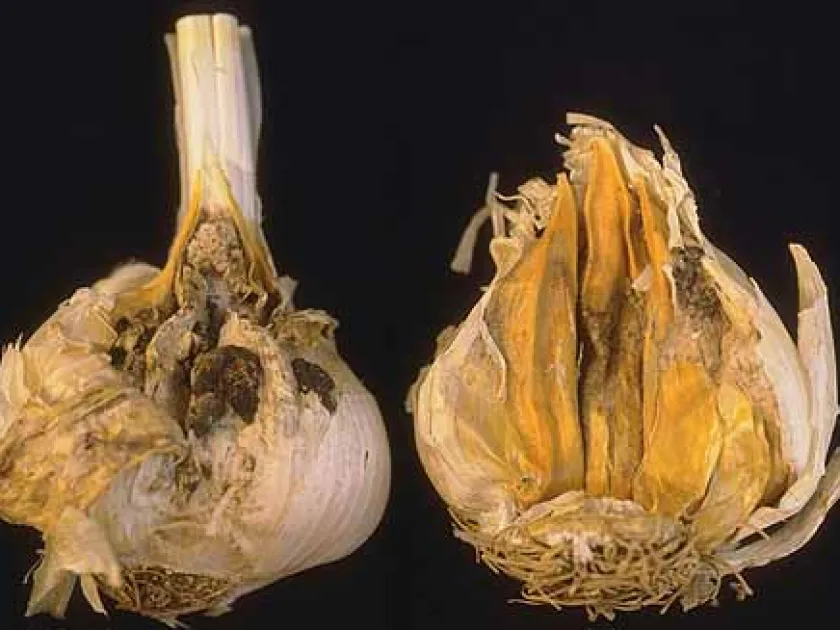
Initial infection manifests as a softening and water-soaked appearance at the neck of the bulb. As the disease progresses, the internal scales of the bulb turn brown and exhibit a characteristic grey, fuzzy mold.
Eventually, the affected areas show hard, black, crust-like sclerotia scattered within the grey mycelial growth. As the disease reaches its final stage, the bulb tissues collapse, emitting a sharp, unpleasant odor.
Control measures
Management focuses on reducing the initial inoculum and ensuring the bulbs are properly cured. Curing is the most critical step to prevent the entry of the fungus through the neck area.
- Harvest onions only when the tops have naturally died down and the neck is dry.
- Ensure rapid and thorough drying (curing) after harvest to close the neck.
- Practice crop rotation, avoiding alliums on the same land for at least three years.
- Store bulbs in a well-ventilated facility with controlled humidity and low temperatures.
- Monitor field conditions and apply preventative fungicides if weather forecasts predict persistent rainfall before harvest.
Causes diseases · 1
Discussion
No discussions yet — be the first.