
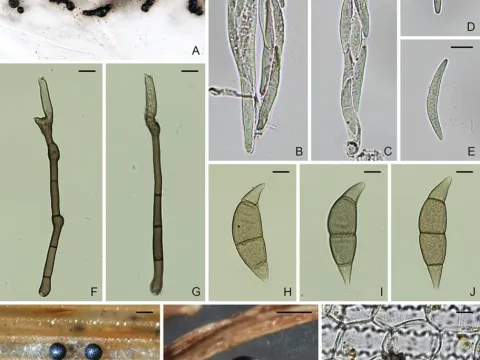
Nakataea sigmoidea
Nakataea sigmoidea
Nakataea sigmoidea is an ascomycetous fungus, primarily recognized as the causal agent of stem rot in rice. Its teleomorph state is taxonomically classified as Magnaporthe salvinii.
What the section contains
Nakataea sigmoidea
The fungus is distinguished by the production of sclerotia—hardened, black, sigmoid-shaped structures. These sclerotia allow the pathogen to survive prolonged adverse environmental conditions in soil and debris.
The lifecycle is triggered by water immersion in rice paddies. Sclerotia float on the surface, making direct contact with the lower parts of rice stalks, which initiates the primary infection process.
Under favorable conditions, the pathogen produces conidia. These spores are dispersed by water droplets, allowing for rapid secondary spread throughout the canopy and infecting neighboring plants.
Molecular identification and morphological study of the sclerotia are essential for researchers to differentiate this pathogen from other fungi that cause similar rot symptoms in cereals.
Rice (Oryza sativa) is the principal host for Nakataea sigmoidea. The disease, commonly referred to as stem rot, poses a significant threat to global rice production.
The fungus invades the leaf sheaths and culms of the rice plant near the water line, causing tissue degradation and preventing the transport of essential nutrients and water.
Severe infestations lead to the destruction of the stem's structural integrity, resulting in widespread lodging. This physical damage prevents the plant from maturing properly and hinders harvesting.
Grain weight and quality are significantly reduced, leading to economic losses. In addition, infected plants often show poor grain filling, with many grains remaining empty or underdeveloped.
While rice is the primary host, the pathogen has been observed on several alternative grass species, which serve as reservoirs and maintain the infection cycle in agricultural environments.
The earliest signs of infection include small, dark, water-soaked spots on the outer leaf sheaths. These spots progressively enlarge as the fungus penetrates deeper into the stem tissues.
The most diagnostic sign is the presence of black, sclerotial bodies within the infected tissues. These can often be found by examining the interior of the culm where the fungus has colonized.
As the disease progresses, the stem becomes soft and necrotic. The upper leaves may show yellowing (chlorosis) or wilting due to the interruption of water transport caused by the fungal colonisation.
In high humidity, a grayish fungal mat, consisting of mycelium and reproductive conidia, may appear on the surface of the lesions, marking active sporulation.
Visible lodging of the stems, often occurring shortly before harvest, is a hallmark of significant stem rot pressure in the field, making the condition easily identifiable to farmers.
Integrated pest management (IPM) is the most effective approach to control this pathogen. Strategies focus on reducing the initial inoculum levels in the soil after the harvest cycle is complete.
Deep plowing and the thorough destruction of rice stubble are critical practices to bury or destroy sclerotia, thereby reducing the probability of infection in the following planting season.
Maintaining proper field drainage and avoiding excessive nitrogen fertilization are essential practices, as these factors directly influence the microclimate and plant resistance to fungal pathogens.
Chemical control involving systemic fungicides is used to protect the crop during critical growth stages. Applications should be timed strategically to prevent the pathogen from penetrating the culms.
- Use of resistant or tolerant rice varieties.
- Balanced fertilization to prevent dense canopy development.
- Rigorous weed control to remove alternative hosts.
- Timely fungicide applications based on monitoring.