
Nectria ramulariae
Nectria ramulariae
Nectria ramulariae belongs to the Kingdom Fungi and the Phylum Ascomycota. This specialized pathogen is frequently associated with infections in woody plants, trees, and various shrub species.
What the section contains
Nectria ramulariae
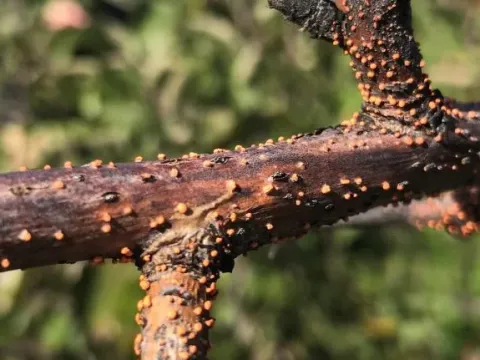
Systematically, it is a member of the genus Nectria, characterized by the formation of bright red or orange fruit bodies (perithecia) on the bark of infected hosts.
The fungus primarily acts as a saprotroph, yet under favorable environmental conditions, it demonstrates aggressive parasitic behavior, leading to necrotic damage within plant tissues.
Laboratory identification typically involves microscopic examination of conidia and spores, as colony morphology on growth media can be inconsistent and variable.
In the field, it is identified by characteristic spore cushions that appear on damaged branches or stems, particularly following periods of high humidity and moisture.
The primary economic damage occurs in deciduous trees and berry-producing shrubs. Plants that have already been weakened by mechanical injuries or frost damage are significantly more susceptible to infection.
The fungus infiltrates plant tissue through open wounds, cracks, or leaf scar sites, progressively colonizing the plant's vascular system.
Damage manifests as impaired sap flow, which eventually results in the desiccation of individual branches or the total mortality of the plant in cases of girdling infections.
Nectria infections often occur in conjunction with secondary pathogens, complicating the overall health of the ecosystem and reducing the quality of wood and overall crop yields.
In berry crops, the fungus often triggers shoot dieback, leading to substantial losses and necessitating rigorous pruning and sanitation measures to contain the spread.
Pathogen development peaks during periods of high humidity, which typically correlate with spring sap flow or prolonged periods of autumn rainfall.
Fungal spores are disseminated by wind and rain splash, infecting new tissues throughout the growing season, especially when free moisture is present on plant surfaces.
The fungus overwinters as mycelium or as mature fruit bodies residing directly on infected branches, bark, or decaying organic matter on the ground.
The most critical infection phase occurs during active growth periods when plant tissues are most vulnerable to fungal entry via micro-abrasions.
The fungus possesses a broad temperature tolerance, allowing it to maintain metabolic activity even during cooler weather conditions in the spring and autumn months.
The initial symptom of infection is the emergence of small reddish spots or pustules on the bark, which eventually develop into bright orange or red spore cushions.
Surrounding the infection site, one often observes bark discoloration, cracking, and the development of deep cankers that eventually penetrate into the underlying wood.
Leaves on infected branches may exhibit chlorosis, curling, and premature abscission due to the disruption of nutrient and water transport caused by shoot necrosis.
Internal examination of the affected branch often reveals brown or dark-colored staining of the wood, indicating the colonization of the xylem by the fungal mycelium.
- Appearance of orange fruit bodies on the bark
- Formation of necrotic cankers and cracks
- Dieback of shoot tips
- Premature leaf drop
- Internal wood discoloration
The primary control strategy involves timely sanitation pruning and the destruction of infected plant debris to eliminate sources of inoculum.
Protecting pruning cuts and mechanical bark injuries with specialized wound dressings or fungicidal pastes is essential to prevent pathogen colonization.
Preventative applications of copper-based fungicides (such as Bordeaux mixture) are highly effective in reducing the overall infection pressure in orchards and nurseries.
Maintaining optimal agronomic standards, including balanced nutrition and irrigation, is critical, as vigorous plants exhibit increased natural resistance to fungal invasion.
In cases of severe outbreaks, systemic fungicides approved for the treatment of ascomycete diseases should be employed according to regional regulatory guidelines.