
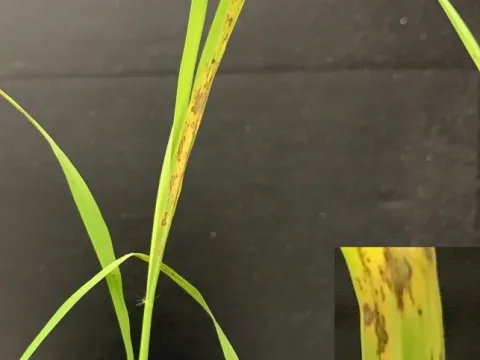
Nakataea oryzae
Nakataea oryzae
Nakataea oryzae is a fungal pathogen classified within the Dothideomycetes class. It is the anamorph stage of the fungus previously referred to as Leptosphaeria salvinii, which is widely recognized in plant pathology.
What the section contains
Nakataea oryzae
This pathogen acts as a specialized parasite primarily attacking the stems and leaf sheaths of rice plants. Its survival mechanism relies on the formation of sclerotia, which allow it to persist in soil and crop debris for several years.
The fungus colonizes the intercellular spaces of host tissues. By producing specific enzymes and toxins, it degrades cellular components, leading to localized necrosis and structural damage to the rice plant.
Biological studies highlight that the pathogen requires specific environmental triggers, primarily high humidity and water availability, to germinate its resting structures and initiate infection.
Taxonomically, the fungus is characterized by its ability to survive adverse conditions in a dormant state, making it a persistent threat in regions where rice is cultivated intensively.
Rice (Oryza sativa) is the primary host for Nakataea oryzae. The pathogen specifically targets the basal parts of the plant, including the stem and the surrounding leaf sheaths.
The damage caused by this fungus is severe because it interferes with the translocation of water and nutrients from the roots to the panicles, significantly impacting grain development.
Infected stems become weak and prone to lodging, which not only reduces the potential yield but also creates major complications during mechanical harvesting operations.
Beyond physical damage, the fungus facilitates the entry of secondary opportunistic pathogens, which can exacerbate the total decay of the plant's structural integrity.
Economic losses are often substantial, as severe infestations can lead to stunted growth, empty grains, and in extreme cases, the total collapse of the crop before maturity.
The infection cycle typically begins in the early stages of the rice growing season when irrigation water transports sclerotia from the soil to the base of the young plants.
Development is highly favored by tropical or temperate conditions characterized by temperatures between 25°C and 30°C and persistent high humidity levels.
The disease prevalence reaches its peak during the booting and heading stages of the rice crop, as the plants become more susceptible during these rapid growth phases.
Spread across the field is facilitated by irrigation water, which acts as the primary vector for carrying fungal spores and sclerotia to healthy plant tissue.
As the season draws to a close, the fungus completes its life cycle by producing new sclerotia that fall into the soil, ensuring the pathogen's survival through the non-cropping period.
Initial symptoms are usually observed near the waterline as small, dark, or greyish-brown spots on the lower leaf sheaths, which eventually spread upwards.
As the infection progresses, these lesions enlarge and become irregularly shaped with dark margins, indicating active fungal colonization of the host tissue.
A definitive diagnostic sign is the presence of small, black, hard, round bodies known as sclerotia embedded within the decaying stem tissues.
- Blackened and necrotic lesions at the base of the stem.
- Visible formation of small black sclerotia inside the stems.
- Premature yellowing and drying of the lower foliage.
- Softening of the stem leading to plant lodging.
In humid conditions, a sparse, greyish fungal mycelium may appear over the lesions, representing the active sporulation phase of the pathogen.
Integrated Pest Management (IPM) is essential for controlling Nakataea oryzae, starting with strict crop rotation to reduce the build-up of sclerotia in the soil.
Cultural practices such as deep plowing to bury infested rice stubble are highly effective in limiting the primary inoculum source for subsequent seasons.
Water management is crucial; intermittent drainage of paddy fields during susceptible growth stages can significantly hinder the infection process.
Chemical control involving systemic fungicides applied during the tillering and booting phases is a recommended strategy to suppress mycelial growth within the stems.
The utilization of resistant or tolerant rice cultivars remains the most sustainable approach for minimizing the long-term impact of stem rot disease in commercial agriculture.