
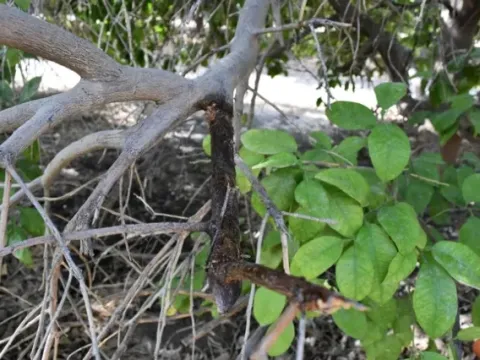
Nattrassia mangiferae
Nattrassia mangiferae
Nattrassia mangiferae (formerly known as Hendersonula toruloidea) is a significant fungal pathogen belonging to the phylum Ascomycota. It is recognized primarily as the cause of branch cankers and dieback in various tree species.
What the section contains
Nattrassia mangiferae
Taxonomically, the fungus falls within the order Botryosphaeriales. It typically acts as a wound parasite, exploiting trees that have been stressed by high temperatures, drought, or physical damage.
The fungus produces pycnidia, which serve as the fruiting bodies that release conidia for reproduction. These structures are often found embedded in the bark of infected host plants, appearing as small, dark pustules.
Although widely associated with mango trees, the pathogen has a broad host range, affecting various tropical and subtropical crops, as well as several woody ornamentals in managed landscapes.
Accurate identification is typically confirmed through laboratory isolation and molecular diagnostic techniques, as the symptoms can often be confused with other wood-decaying fungi.
The damage caused by Nattrassia mangiferae is primarily vascular in nature. By colonizing the xylem and cambium, the fungus disrupts water and nutrient transport, leading to the rapid wilting and necrosis of branches.
Infection often starts in the bark, where the fungus causes dark, sunken lesions. As the infection progresses, the bark begins to crack, peel, and fall off, exposing the underlying dead wood.
The economic impact is substantial, particularly in fruit orchards. Severe infections can lead to the loss of entire branches or, if left untreated, the complete collapse and death of the entire tree.
The fungus is particularly destructive in hot and arid environments, where trees are already prone to water stress, making them significantly more susceptible to successful colonization.
Secondary damage occurs when the necrotic wood becomes an entry point for other opportunistic wood-boring insects, further weakening the tree's structural integrity.
The development of Nattrassia mangiferae is highly dependent on environmental temperature. The pathogen exhibits optimal growth rates between +25°C and +35°C, making summer the period of highest risk.
High relative humidity, especially following rainfall, provides the necessary moisture for the conidia to germinate and colonize new tissue through open wounds or cracks.
During the cooler months, the fungus survives in a quiescent state within the bark and woody tissues. It is remarkably hardy and can persist in dead debris on the orchard floor for extended periods.
Water stress is a primary seasonal factor that predisposes trees to infection. Periods of prolonged drought correlate strongly with increased incidences of dieback caused by this pathogen.
Monitoring for symptoms should be most intensive during the active growing season, particularly after heat waves, when trees are less capable of mounting an effective defense response.
One of the earliest signs of infection is a localized discoloration of the bark, turning from a natural color to a dark, reddish-brown or black hue. Affected areas may feel slightly spongy to the touch.
Under the surface, the cambium and xylem show pronounced darkening. A hallmark sign is the presence of black, sooty spore masses located beneath the loosened bark, which indicates advanced colonization.
Above ground, symptoms include sudden wilting of foliage on individual branches, followed by chlorosis and premature leaf drop. This is often followed by the classic «dieback» symptom, where branches die from the tip inward.
Some host species may exhibit gumming or resinous exudates, although this is a general reaction to stress and not exclusively diagnostic for this specific fungus.
- Dark, sunken cankers on the bark
- Black sooty spore masses under the bark
- Tip dieback and sudden branch wilting
- Necrosis of the cambium layer
Sanitary pruning is the most critical control strategy. All infected branches must be removed, cutting back well into healthy tissue, and the material must be promptly burned to destroy the inoculum.
Strict disinfection of pruning tools between every single cut is necessary to prevent the mechanical transmission of fungal spores from diseased to healthy trees.
Proper orchard management, including adequate irrigation and balanced fertilization, is vital to prevent water stress, which is a key trigger for Nattrassia mangiferae outbreaks.
Application of copper-based fungicides to pruning wounds can provide a protective barrier against spore entry. Furthermore, sealing cuts with appropriate wound dressings may help maintain tree integrity.
Minimizing mechanical damage during cultivation is essential, as any wound or crack in the bark provides an ideal entry point for the pathogen to establish a new infection site.