
Myriosclerotinia borealis
Myriosclerotinia borealis
Myriosclerotinia borealis is a psychrophilic fungal pathogen belonging to the family Sclerotiniaceae. It is a well-known causal agent of snow mold in various cereal crops.
What the section contains
Myriosclerotinia borealis
The fungus is biologically adapted to survive and thrive in low-temperature environments, specifically functioning under snow cover during winter months.
Classification identifies it as a member of the Leotiomycetes class, characterized by the production of sclerotia which act as resting structures.
The pathogen demonstrates high physiological specialization for cold climates, making it a primary limiting factor for winter crop survival in northern latitudes.
Its life cycle relies on the survival of microsclerotia in the soil or crop debris, which germinate as temperatures approach zero degrees Celsius.
The primary hosts for this pathogen include winter wheat, winter rye, and various perennial grasses used for forage and fodder production.
Damage manifests as significant thinning of the stand, reduced vegetative biomass, and, in severe cases, total death of the crop over large areas.
The fungus damages the leaf tissue, leaf sheaths, and crucial crown nodes, effectively preventing the plant from resuming normal growth in the spring.
Yield losses are significant due to the requirement of expensive reseeding operations when the level of infection exceeds the economic threshold.
Furthermore, the pathogen reduces the overall quality of forage grasses, impacting the nutritional value and health of livestock grazing on affected fields.
Activity of Myriosclerotinia borealis begins under the snow cover during winter, particularly when temperatures remain close to 0°C.
The pathogen is most aggressive in early spring, as snow begins to melt and soil moisture levels remain consistently high for extended periods.
Development slows significantly and ceases once ambient temperatures consistently rise above 10-12°C, limiting the spread to the spring transition period.
The fungus can persist in the soil for several years in the form of sclerotia, leading to recurring infections if environmental conditions are favorable.
High soil humidity combined with a prolonged period of stagnant moisture favors the development and transmission of the mycelium.
The infection is characterized by the presence of white or grayish mycelial mats covering the leaves and stems of plants under the snow.
Affected plant tissues appear water-soaked and eventually disintegrate, showing clear signs of soft rot common to Sclerotinia infections.
Small, hard, black microsclerotia are often visible on the surface of the infected tissue or embedded within the dead plant stems.
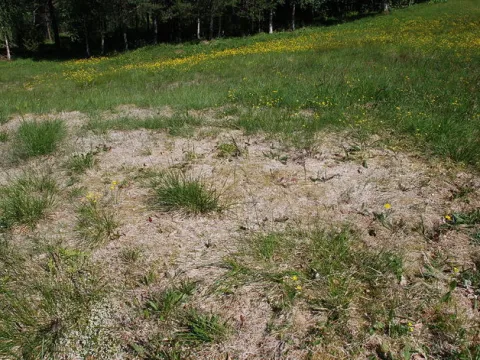
Upon snowmelt, distinct irregular patches of dead, bleached, and flattened plants become visible, which is a hallmark sign of snow mold damage.
- White mycelium on leaves.
- Water-soaked, rotting stems and crowns.
- Presence of black microsclerotia.
Effective management requires strict crop rotation practices, ensuring that susceptible species are not grown consecutively in high-risk areas.
Selecting resistant cultivars with high winter hardiness is the most effective approach to mitigate the risks associated with this pathogen.
Preventative fungicide applications in the late autumn can significantly reduce the overwintering infection potential on the plant surface.
Good agricultural practices, such as proper soil drainage and avoiding over-fertilization with nitrogen in late autumn, help minimize excessive leaf growth.
Promoting overall plant health through balanced mineral nutrition, particularly with potassium, enhances the natural defense mechanisms against cold-weather pathogens.