
Myrothecium verrucaria
Myrothecium verrucaria
Myrothecium verrucaria is a hyphomycete fungus from the phylum Ascomycota and the genus Myrothecium. It is a significant soil-borne pathogen known for causing necrotic diseases in a wide range of agricultural and ornamental crops.
What the section contains
Myrothecium verrucaria
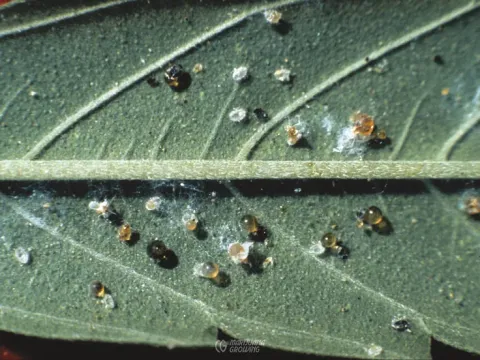
Microscopically, the fungus is identified by the formation of sporodochia—compact fungal cushions where conidia are produced. The conidia appear as cylindrical structures, often turning dark green or black when accumulated in large masses.
This pathogen possesses high enzymatic activity, including the secretion of cellulases, which allows it to efficiently break down plant tissues. In scientific research, it is frequently used as a model organism for studying biological weed control.
The fungus survives in the soil as mycelium or dormant structures, making it persistent in crop rotation systems. Its high biological plasticity allows it to switch from a saprotrophic existence to a parasitic one when environmental conditions are favorable.
For accurate identification in the field, a humidity chamber test is often performed: placing symptomatic plant tissue in a sealed container with high humidity for 24–48 hours typically triggers the development of characteristic black sporodochia.
The pathogen affects a diverse range of crops, including vegetables, flowers (e.g., begonias, cyclamens), and industrial crops like cotton. It poses a particularly high risk to seedlings in greenhouse environments.
The primary symptom of damage is tissue necrosis. Infected plants often exhibit rotting of the roots, crown, and stems, leading to lodging and rapid death of young seedlings.
On leaves, the fungus induces distinct spots with concentric zones that progressively expand. Under high humidity, the center of these lesions becomes covered with a characteristic dark, spore-bearing mass.
Economic damage is not limited to yield loss but includes the complete degradation of the commercial value of ornamental plants. In intensive cultivation, the infection spreads rapidly, potentially destroying entire batches of planting material.
Furthermore, the fungus can infect produce that comes into contact with the soil, leading to soft rot, decay, and rendering the fruit unfit for sale or long-term storage.
Active development of the pathogen occurs under conditions of high humidity and moderately warm air temperatures. The optimal range for infection is between 20–28°C.
In greenhouses, the disease can occur throughout the year if sanitation protocols and microclimate regulations are ignored. Outbreaks are most commonly observed during the spring season when irrigation of seedlings is frequent.
Conidia are dispersed via irrigation water splashes, rainfall, and the movement of contaminated soil or infested gardening tools.
In field conditions, the peak of damage occurs during periods of prolonged rainfall accompanied by high nighttime humidity, creating ideal conditions for spore germination on vegetative plant surfaces.
Significant temperature fluctuations and excessive soil compaction contribute to reduced plant immunity, facilitating the colonization of tissues by Myrothecium verrucaria.
The first visual sign is the appearance of small, water-soaked spots on leaves or stems, which eventually turn brown or dark brown.
When the stem is infected, the pathogen causes constrictions, leading to plant wilting despite sufficient watering, as the vascular system becomes compromised.
On the surface of necrotic tissues, black or dark olive-green sporodochia are clearly visible, arranged in rings or sporadically. These structures resemble tiny, dark warts.
Seedlings often exhibit "damping-off" symptoms, where tissues at the base of the stem soften and darken, causing the plant to collapse and dry out shortly after.
In severe cases, the infected tissues become brittle, and significant spread of the infection leads to premature leaf drop and the total loss of the plant's aerial parts.
The primary control method is strict adherence to phytosanitary protocols. It is essential to use only sterilized growing media and high-quality, disease-free seed material.
Regulating irrigation is recommended, avoiding overhead watering in the evening to keep foliage dry overnight. Proper greenhouse ventilation significantly reduces the risk of epiphytotic spread.
The removal and destruction of all crop residues after each growing cycle is a critical step in preventing the accumulation of the pathogen in the soil.
Chemical control involves the use of broad-spectrum fungicides based on copper, mancozeb, or systemic triazole compounds, though efficacy heavily depends on the timing of the application.
- Regular disinfection of tools and equipment.
- Maintaining optimal plant spacing to promote airflow.
- Application of biological agents, such as Trichoderma species, to suppress soil-borne pathogens.
- Prompt removal and disposal of symptomatic plants from the crop.