
Microstroma juglandis
Microstroma juglandis
Microstroma juglandis is a specialized fungal phytopathogen belonging to the class Exobasidiomycetes. It is the causal agent of a disease known as white leaf spot, which primarily affects walnut trees (Juglans species).
What the section contains
Microstroma juglandis
The fungus is an obligate parasite that invades the leaf tissue, residing within intercellular spaces. It produces its reproductive structures, known as microstromata, which emerge through the stomata of the leaf surface.
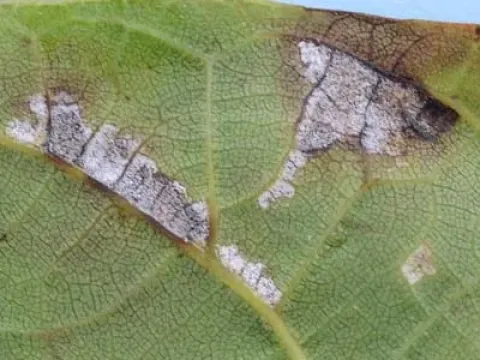
Morphologically, the fungus is identified by the formation of white, powdery patches on the underside of leaves. These patches are actually masses of conidia and specialized hyphae that emerge when environmental conditions are suitable.
The pathogen is highly host-specific, primarily infecting the common walnut (Juglans regia) and its close relatives, including the butternut and black walnut, causing significant aesthetic and physiological damage.
Correct identification often involves microscopic examination of the fungal structures, as symptoms can sometimes overlap with other foliage diseases such as anthracnose (Gnomonia leptostyla).
The primary damage caused by Microstroma juglandis is the destruction of leaf tissue, which inhibits the tree's ability to photosynthesize effectively. This leads to a decline in energy reserves essential for winter hardiness.
Severe infestations result in early defoliation, where trees shed their leaves long before the natural autumn senescence. This premature leaf drop significantly stresses the tree and can lead to reduced nut yields in the following season.
In addition to leaf damage, the fungus can infect leaf stalks and succulent green shoots. This causes stunted growth and deformation of the current season's terminal growth, compromising the structural health of the branches.
Trees weakened by chronic infection are more susceptible to secondary stressors, including wood-boring insects, drought, and frost damage, eventually leading to reduced long-term productivity of the orchard.
Commercial plantations are particularly vulnerable to the cumulative economic losses caused by the reduced nut size and lower overall vitality of infected trees.
The disease typically emerges during late spring and early summer when moisture levels are high and temperatures are moderate. These conditions are optimal for the germination of overwintering spores.
Frequent rainfall and high humidity throughout the summer months facilitate the secondary spread of conidia from infected foliage to healthy leaves, potentially causing repeated infection cycles within the same season.
As summer progresses into autumn, the pathogen activity slows down. The fungus survives the winter period primarily as dormant mycelium within fallen leaf debris on the orchard floor.
Orchards located in areas with poor air circulation or those with high canopy density are prone to higher levels of disease incidence due to the prolonged persistence of moisture on the leaf surface.
Prognosis for disease development depends heavily on spring rainfall; years with wet spring weather are usually associated with a high incidence of white leaf spot.
Early symptoms appear as small, irregular, or circular yellowish patches on the upper surface of the leaves. As the disease progresses, these spots may enlarge and merge, often turning brown or necrotic.
The diagnostic feature is the appearance of a white, felt-like layer on the underside of these spots, which indicates active sporulation of the fungus. This white coating is distinct in its appearance during humid weather.
- Yellowish or chlorotic spots on the leaf surface.
- White, velvet-like fungal growth on the underside of leaves.
- Deformation or curling of the leaf blades.
- Premature yellowing and shedding of leaves.
- Necrosis of leaf tissue in the later stages of infection.
Leaves affected by Microstroma juglandis become thin and brittle. During heavy outbreaks, the white coating can become quite dense, covering a large percentage of the leaf area.
In advanced cases, the entire tree may appear discolored, making it look as though it has already reached late autumn while mid-summer conditions persist.
Sanitation is the cornerstone of management. Removing and burning or composting fallen leaves during late autumn and winter is essential to eliminate the primary source of the fungal inoculum.
Prophylactic fungicide applications, specifically copper-based compounds, applied during bud break and again after petal fall, can help protect the developing foliage from initial infection.
Improving orchard management through proper pruning ensures better light penetration and airflow, which helps to keep the canopy dry and reduces the time that leaf surfaces remain wet.
Avoiding excessive nitrogen fertilization is recommended, as it encourages succulent, lush growth that is highly susceptible to fungal penetration and rapid disease spread.
When necessary, systemic fungicides should be employed according to local agricultural guidelines, ensuring rotating chemical groups to prevent the development of resistance within the fungal population.