
Microdochium panattonianum
Microdochium panattonianum
Microdochium panattonianum is a fungal pathogen responsible for a disease commonly known as lettuce anthracnose or shot-hole disease. It is a member of the Ascomycota division.
What the section contains
Microdochium panattonianum
This fungus is highly specific to the Lactuca genus. It behaves as a hemibiotroph, meaning it initially requires living host tissue but can survive as a saprophyte on plant debris.
The fungus produces masses of conidia in specialized fruiting structures, which serve as the primary inoculum for spreading the disease within a field or greenhouse.
Understanding its lifecycle is crucial for integrated pest management, as it can overwinter in soil or contaminated seeds for several years.
It is classified as a significant threat in vegetable production because even low levels of initial inoculum can lead to rapid epidemics under conducive environmental conditions.
The primary host for Microdochium panattonianum is lettuce (Lactuca sativa). It infects all types of lettuce, causing severe aesthetic and physical damage.
The pathogen primarily attacks leaves. Initial symptoms appear as small, water-soaked spots that eventually turn into necrotic, straw-colored lesions.
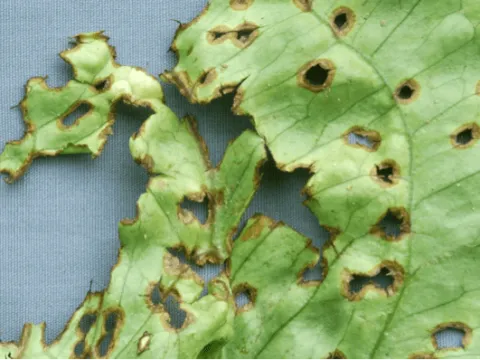
In mature plants, these lesions often tear, giving the leaves a "shot-hole" appearance, which significantly reduces the marketability of the crop.
In cases of severe infection, the entire leaf blade may die, leading to substantial yield losses and potential total crop failure if left unmanaged.
The damage caused by this pathogen also facilitates secondary infections by soft-rot bacteria, which can cause the lettuce head to collapse entirely.
The disease thrives in cool, wet weather conditions. Rain splashes and high relative humidity are critical factors for the dispersal of conidia.
The optimal temperature range for infection typically falls between 15°C and 20°C (59°F–68°F), though the fungus can grow at a wide range of temperatures.
Greenhouse environments are particularly susceptible during seasons with poor ventilation, where high humidity allows the fungus to flourish year-round.
The presence of free water on leaf surfaces, such as dew or sprinkler irrigation, is necessary for the germination of fungal spores.
Outbreaks are most commonly observed during spring and autumn, correlating with periods of frequent precipitation and moderate temperatures.
The most characteristic sign is the appearance of small, circular, water-soaked lesions that later become necrotic and turn light brown or tan in color.
- Lesions with distinct, irregular margins on leaves.
- Small holes appearing in the center of dead spots (shot-hole effect).
- A pinkish or whitish layer of fungal growth on the underside of leaves.
- Yellowing (chlorosis) of the leaves surrounding the necrotic areas.
- Wilting and stunted growth of the entire plant under heavy infestation.
As the disease progresses, the central necrotic tissue often dries and falls out, leaving holes in the leaves that make the plant unappealing to consumers.
The primary control strategy is the use of high-quality, certified, disease-free seed, as the pathogen is known to be seed-borne.
Crop rotation is essential; avoid planting lettuce or other susceptible hosts in the same ground for at least three years to break the infection cycle.
Sanitation is paramount: all crop debris should be removed and destroyed immediately after harvest to prevent the build-up of the pathogen in the soil.
In greenhouses, focus on maintaining low humidity through proper ventilation and avoid overhead irrigation to keep leaf surfaces dry.
Fungicides can be used as a preventative measure or at the early onset of symptoms, provided they are approved for use on leafy green vegetables.