
Microsphaera penicillata
Microsphaera penicillata
Microsphaera penicillata, now frequently reclassified within the genus Erysiphe, is an obligate parasitic fungus belonging to the order Erysiphales. It is well-known as a primary cause of powdery mildew on various plant species.
What the section contains
Microsphaera penicillata
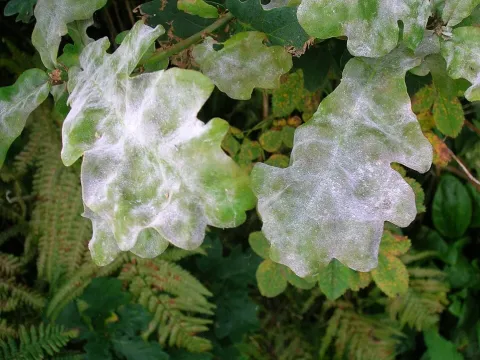
The fungus develops as a superficial white to greyish mycelium on the surface of leaves, stems, and fruits. It feeds by inserting specialized structures called haustoria into the plant's epidermal cells to extract nutrients.
Its life cycle involves the production of conidia for asexual reproduction and cleistothecia for overwintering, which are essential for its long-term survival in the environment.
Identification is primarily based on the microscopic examination of the appendages found on the cleistothecia, which exhibit specific branching patterns characteristic of this species.
As an obligate biotroph, the fungus cannot survive without a living host, which makes the management of alternative weed hosts and crop debris vital for disease prevention.
This pathogen impacts a wide range of horticultural crops and wild plants, particularly those in the legume family and certain deciduous trees such as hazel and alder.
Infection results in reduced photosynthesis due to the mycelial covering, causing stunted growth, leaf chlorosis, and in severe cases, the premature abscission of foliage.
The aesthetic and commercial quality of ornamental plants is significantly degraded, while edible crops suffer from yield losses and decreased nutritional value of the produce.
Weakened plants are more susceptible to secondary infections and environmental stresses, including drought and winter damage, which can lead to the eventual death of the specimen.
Under favorable conditions, the infection can spread rapidly across a plantation, leading to significant economic losses for agricultural producers and nurseries.
Primary infections typically originate in the spring from ascospores released from overwintering cleistothecia located on dead plant tissue or leaf litter.
Secondary infections occur via the mass production of conidia, which are wind-dispersed and capable of causing multiple disease cycles throughout the growing season.
The fungus thrives during periods of warm weather, with the highest disease incidence often recorded during late summer when environmental conditions are optimal for sporulation.
The transition into the dormant phase occurs as temperatures decline in the autumn, with the fungus producing resilient cleistothecia that remain on the surface of plant parts.
Variable humidity and temperature fluctuations, especially cool nights with heavy dew, often trigger higher infection rates in susceptible host populations.
The initial appearance of the disease is marked by small, white, powdery spots on the leaf surface that quickly coalesce to cover larger areas of the plant tissue.
As the colony matures, the white mycelium becomes more dense and greyish in color, often resembling a dusting of flour over the affected parts of the plant.
Black, pinhead-sized structures known as cleistothecia appear scattered throughout the mycelial mat as the season progresses, indicating that the fungus is maturing.
Severe infection leads to leaf distortion, rolling of the edges, and subsequent yellowing or necrosis of the leaf blades, which significantly impairs plant health.
- White powdery mycelial growth.
- Leaf yellowing and curling.
- Formation of small black fruiting bodies.
- Stunted shoot development.
- Premature leaf drop.
Management strategies focus on strict sanitation, including the thorough removal and destruction of infected plant debris to eliminate primary inoculum sources for the next season.
Selecting and planting resistant cultivars is the most sustainable approach to controlling powdery mildew, significantly reducing the need for chemical interventions.
When necessary, chemical control involves the application of fungicides such as sulfur-based products, triazoles, or strobilurins applied at the first sign of symptoms.
Cultural practices like maintaining proper plant spacing and pruning promote air circulation, which reduces the local humidity levels that favor fungal development.
Frequent monitoring of crops allows for early detection, enabling spot treatments that keep the disease at manageable levels while preserving the overall plantation health.