
Mirafiori lettuce virus
Lettuce necrotic
Mirafiori lettuce virus (MiLV) is a plant pathogen belonging to the genus Mirafiorivirus, family Aspiviridae. This virus contains a single-stranded RNA genome and is often associated with other viral complexes in affected plants.
What the section contains
Mirafiori lettuce virus
In natural conditions, the virus is transmitted by the soil-borne fungus Olpidium brassicae. The zoospores of this fungus carry viral particles and transmit them to the root system of the lettuce plant during contact with contaminated soil or irrigation water.
The virus can persist for long periods in the resting spores (cystosori) of the fungal vector within the soil. This persistence makes it highly resilient to environmental changes and challenging to eradicate once the soil is infested.
Diagnosis is often complex because symptoms can mimic other viral infections or physiological disorders. Definitive identification requires specialized molecular biology techniques, such as RT-PCR, to detect viral RNA in plant tissue.
The spread of the virus occurs in patches that may eventually merge. Initial infection sources are usually linked to the use of contaminated potting media or the presence of fungal spores on agricultural equipment.
The primary host is lettuce (Lactuca sativa). The disease causes significant economic loss in both greenhouse and open-field production, severely compromising the aesthetic quality and market value of the crop.
The virus impacts the root system, disrupting nutrient uptake and overall plant metabolism. Consequently, plants exhibit stunted growth, which renders the produce unsuitable for commercial sale.
Severe infection results in the deformation of the leaf blade and degradation of internal tissue structures. In many cases, extensive necrosis leads to tissue death, making the head of lettuce unmarketable.
Economic impact is driven not only by yield reduction but also by the necessity of discarding infected batches. Affected plants lose turgor and wilt rapidly when exposed to direct sunlight.
Beyond lettuce, the virus can survive in various weed hosts, which serve as reservoirs for the pathogen. This complicates crop rotation schemes, as the virus can persist long after the main crop is harvested.
The infection develops most actively during periods of high soil moisture, which favor the lifecycle and mobility of the fungal vector Olpidium brassicae. Cool and wet spring weather often contributes to seasonal infection peaks.
In greenhouse settings, the disease can manifest year-round if irrigation practices are suboptimal and contaminated substrates are utilized. High humidity within the greenhouse environment is a major factor driving disease progression.
The development cycle is closely tied to the host plant's growth stage. Outbreaks are most commonly observed in young seedlings, which can lead to total crop failure before the plants reach maturity.
Soil temperature is a critical factor: the optimal range for the fungal vector activity is between 12 and 18 degrees Celsius. Higher soil temperatures often correlate with reduced pathogen activity.
The movement of zoospores via irrigation water facilitates rapid spread across a field or greenhouse block when shared irrigation systems are used. Initial symptoms typically appear two to three weeks post-transplanting.
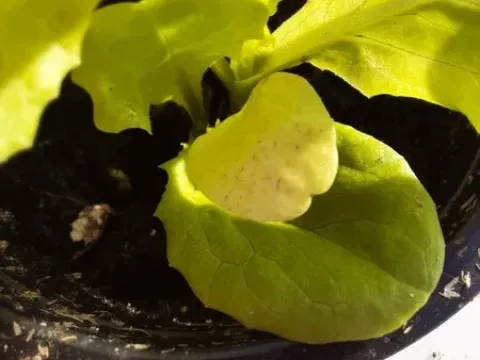
The initial visual symptoms include the yellowing or chlorosis of the fine leaf veins, which is the hallmark of this disease. Over time, necrotic spots become more prominent and eventually cover the entire leaf surface.
A characteristic sign is the appearance of brown or dark-gray necrotic streaks following the vein patterns. The leaf blade may curl and exhibit a mosaic-like pattern due to the uneven development of the tissues.
Growth suppression is characterized by smaller head sizes and a lack of structural density. The leaves become brittle, and leaf margins may roll inward or outward depending on the severity of the infection.
- Chlorosis and yellowing of veins in early stages
- Brown necrotic stripes along leaf veins
- Significant leaf deformation and curling
- Overall stunted development and dwarfism
- Wilting symptoms despite adequate soil moisture
In advanced cases, necrotic lesions merge, affecting large areas of the leaf and leading to premature tissue death. This condition creates an opening for opportunistic secondary bacterial pathogens.
The primary control strategy involves maintaining strict phytosanitary practices in greenhouses. It is essential to sanitize tools, trays, and any surfaces that come into contact with the growing medium.
Using high-quality, disinfected substrate for seedling production is crucial. Soil steaming or chemical sterilization helps to effectively eliminate the resting spores of the fungal vector.
Implementing resistant lettuce varieties remains the most effective long-term management tool. Ongoing breeding programs focus on identifying genetic resistance to the mirafiorivirus.
Managing irrigation frequency and duration helps reduce the risk of zoospore transmission. Avoiding waterlogging and preventing standing water in the root zone limits the mobility of the Olpidium brassicae fungus.
Eliminating weeds surrounding the greenhouse or field is necessary to reduce the accumulation of alternative host reservoirs. Regular crop monitoring allows for the early isolation and removal of infected patches.