
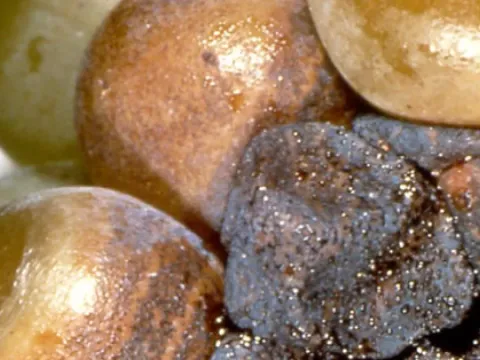
Bitter rot of grapes
Melanconium fuligineum
Melanconium fuligineum (often referred to as Greeneria uvicola) is an anamorphic fungus classified within the Ascomycota division, responsible for the disease known as bitter rot of grapes.
What the section contains
Bitter rot of grapes
The pathogen is highly specialized and thrives in warm, humid conditions, making it particularly prevalent in specific viticultural regions.
It propagates primarily through conidia, which are produced in acervuli that erupt through the epidermis of the host tissue, appearing as minute black dots.
The fungus survives the winter on infected cane debris, rachises, and mummified berries left on the vineyard floor or attached to the trellis system.
During the growing season, splashing rain and overhead irrigation facilitate the dispersal of spores from the overwintering sites to developing fruit clusters.
The disease primarily targets the berries, causing significant direct economic losses by rendering the harvest unmarketable and unsuitable for wine production.
In addition to berries, the fungus attacks the rachises, which can lead to the detachment and loss of entire grape clusters before they reach maturity.
The bitter flavor imparted by the fungal metabolites to the berries makes the entire crop inedible, even if the infection is localized to a few berries.
Young shoots and leaf petioles can also be colonized, serving as reservoirs for the fungus and contributing to the overall decline of vine vigor.
Dense clusters are particularly susceptible to damage as they trap moisture, providing the perfect environment for the rapid colonization of the fruit.
The initial symptoms are small, light brown spots on the berries that quickly enlarge, eventually covering the entire surface of the fruit.
Tiny, black, carbonaceous pustules (fruiting bodies) develop in a concentric pattern on the surface of the infected lesions, which is a key diagnostic feature.
Infected berries soften and eventually shrivel into mummies, becoming hard and dark, often remaining attached to the cluster stem through the dormant season.
When the rachis is infected, a distinct brown or black necrotic lesion forms, disrupting the vascular supply to the clusters and causing wilting.
The most distinctive characteristic, which gives the disease its name, is the intensely bitter taste of the infected fruit pulp.
Effective management begins with strict sanitation practices, such as the removal and destruction of all infected plant debris and clusters after harvest.
Canopy management, including thinning and leaf removal, is crucial for improving airflow and lowering humidity levels within the fruiting zone of the vine.
Chemical control strategies should involve the application of registered fungicides, particularly during the critical stages of berry development and high humidity.
Dormant season sprays with copper-based products can help reduce the initial inoculum load that survives on the vine structure.
- Maintain proper vine spacing to encourage drying of foliage.
- Implement timely fungicide applications during the growing season.
- Prune and destroy all mummified clusters during winter dormancy.