
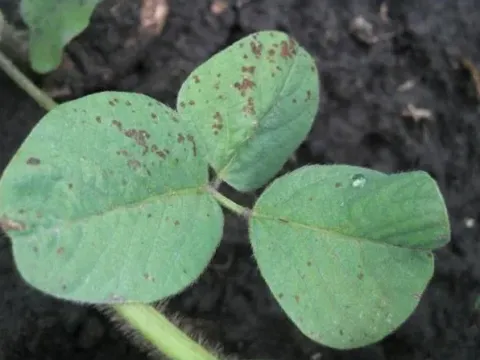
Bipolaris leaf spot of soybean
Bipolaris glycines
Bipolaris leaf spot is caused by the fungus Bipolaris glycines (formerly known as Helminthosporium glycines), a member of the Ascomycota phylum. It is a widespread pathogen affecting soybean production globally, particularly in warm and humid environments.
What the section contains
Bipolaris leaf spot of soybean
The fungus produces dark-pigmented conidia that are disseminated primarily by wind, rain splashes, and farm machinery. It thrives under conditions of high humidity and temperatures ranging from 20°C to 30°C.
Bipolaris glycines survives between growing seasons as mycelium or conidia on crop residues, in the soil, and within infected soybean seeds, serving as primary inoculum for the next crop.
The life cycle involves the germination of spores on the leaf surface, followed by penetration and colonization of plant tissue, leading to the development of necrotic lesions and subsequent sporulation.
Microscopic identification is based on the morphological characteristics of the conidia, which are usually multiseptate, dark-brown, and curved, a hallmark of the Bipolaris genus.
The pathogen attacks all stages of soybean (Glycine max) growth. Severe infections often occur when environmental conditions favor the rapid spread of the fungus during the mid-to-late vegetative and reproductive stages.
Leaf lesions reduce the photosynthetic capacity of the plant, leading to premature defoliation. This loss of canopy cover directly impacts the plant's ability to fill pods, ultimately reducing seed weight.
Stem and petiole infections can occur, causing local necrosis that disrupts the transport of water and nutrients, which may lead to plant stunting or lodging in severe cases.
Pod infection results in discolored and shriveled seeds. Infected seeds show reduced germination rates and serve as long-distance carriers for the pathogen to new fields.
Overall economic damage is reflected in reduced yield quantity and significant degradation of grain quality, affecting marketability and oil/protein content.
Symptoms initially appear as small, brown-to-reddish spots on the leaves. As the disease progresses, these spots expand, often becoming irregular or elongated in shape.
A distinct feature of the disease is the development of a dark, olive-black fungal growth within the centers of the lesions, which consists of masses of conidia and conidiophores.
In cases of heavy infestation, infected leaves become chlorotic, wither, and drop prematurely, often giving the soybean field a scorched appearance by the end of the season.
Pods may exhibit dark, sunken lesions. If humidity remains high, these lesions may become covered with a velvety fungal growth, leading to internal seed colonization.
Seeds harvested from heavily infected plants often show dark staining or gray mycelial mats on the seed coat, indicating deep-seated infection that compromises seedling vigor.
Crop rotation is the most effective cultural practice; rotating soybeans with non-host crops like corn or wheat for at least 2–3 years significantly reduces soil inoculum levels.
The use of high-quality, disease-free seed is essential. Seed treatment with systemic fungicides is recommended to eradicate surface-borne pathogens and protect emerging seedlings.
Effective management of crop debris through tillage practices helps in the decomposition of infected residues, thereby limiting the survival of the fungus in the field.
Foliar fungicide applications during the R1 to R3 growth stages can be used in high-risk areas to suppress disease progression, especially during wet weather periods.
Breeding and planting soybean varieties with documented resistance to Bipolaris glycines remains the cornerstone of sustainable management, reducing reliance on chemical control measures.