
Bipolaris sacchari
Bipolaris sacchari
Bipolaris sacchari is a fungal pathogen classified within the Ascomycota division. It is widely recognized as the causal agent of "eye spot" disease in sugarcane and several other grass species in tropical and subtropical regions worldwide.
What the section contains
Bipolaris sacchari
The fungus produces elongated conidia with multiple septa, which are highly adapted for airborne dispersal. Once spores land on a host, they germinate and penetrate the epidermis, establishing a mycelial network within the plant tissues.
The life cycle of Bipolaris sacchari involves both asexual and potentially sexual stages, with asexual conidia serving as the primary inoculum for seasonal outbreaks. The pathogen can survive for extended periods on crop debris and in the soil.
Genetic diversity within the species is significant, posing a continuous challenge for plant breeders aiming to develop resistant crop varieties. Laboratory diagnosis relies on morphological analysis of the fungal colonies and microscopic identification of conidial structures.
Environmental conditions, particularly high humidity and temperatures between 25°C and 30°C, are optimal for rapid mycelial growth and sporulation. These conditions facilitate the rapid spread of the disease during monsoon seasons or irrigation periods.
The primary impact of this pathogen is on sugarcane yield and juice quality. By infecting leaves, the fungus significantly impairs the plant's photosynthetic efficiency, leading to reduced sugar accumulation in the stalks.
Severe infestations can lead to premature leaf senescence and death, causing substantial biomass loss. When infection occurs early in the growth stage, it can result in stunted development and, in extreme cases, the total loss of the plant stand.
The disease affects the structural integrity of the sugarcane stalks, making them prone to lodging and breakage. This complicates mechanical harvesting processes and often leads to post-harvest losses due to rotting.
Furthermore, the systemic presence of the fungus in the plant material used for propagation (setts) ensures the carry-over of the disease to subsequent planting cycles. This underscores the importance of sourcing pathogen-free planting stock.
Economic damage is twofold: a reduction in total cane tonnage and a decrease in the quality of the raw sugar extracted. These factors combined significantly impact the profitability of sugarcane plantations.
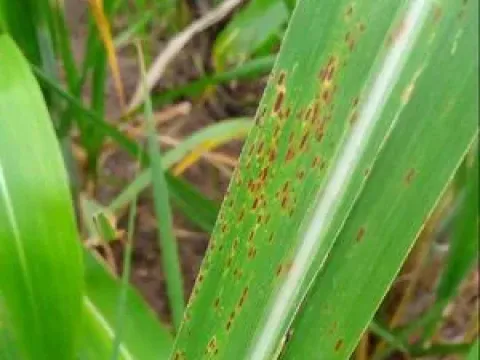
The first signs of Bipolaris sacchari infection are small, chlorotic spots on the leaf surface. As the fungus matures, these spots elongate and develop reddish-brown centers, frequently surrounded by a yellow halo.
Under humid conditions, the lesions exhibit a distinct olive-green to black fungal growth, representing the mass production of conidia. This "eye spot" morphology is highly characteristic of the disease.
In advanced stages, lesions may coalesce, causing large portions of the leaf blade to wither and die. If the infection spreads to the leaf sheath, it can lead to localized necrosis and weakening of the structural support of the plant.
In highly susceptible varieties, the disease can affect the spindle or the growing point, leading to the death of the apical meristem. This halts further upward growth and forces the plant to sprout auxiliary buds, resulting in deformed stalks.
Monitoring for these specific symptoms is crucial for early detection. The appearance of lesions on young, developing leaves is often the first indicator of an emerging disease outbreak in the field.
The most effective strategy for managing Bipolaris sacchari is the use of disease-resistant or tolerant cultivars. Breeding programs focus on identifying genetic resistance that prevents fungal penetration and lesion expansion.
Cultural control measures, such as the destruction of crop residue after harvest, are essential to reduce the primary inoculum load. Proper field sanitation, including the removal of infected weeds, further limits the pathogen's ability to survive between seasons.
Good agricultural practices, such as maintaining optimal planting density, improve airflow through the canopy, reducing leaf wetness duration and inhibiting fungal development. Balanced fertilization, avoiding excessive nitrogen, also helps maintain plant vigor.
Chemical control involving fungicides can be effective when applied as a preventative measure or at the first sign of infection. Systemic fungicides are particularly useful for protecting young plants during high-risk weather conditions.
Integrated Pest Management (IPM) strategies, combining resistant varieties, proper water management, and targeted fungicide applications, offer the most sustainable approach to minimizing the impact of eye spot disease.