
Hop stunt viroid
Hop stunt
Hop stunt viroid (HSVd) is a pathogenic agent consisting of a small, circular, single-stranded RNA molecule that lacks a protective protein coat. Classified under the Hostuviroid genus within the Pospiviroidae family, it is a highly efficient plant pathogen.
What the section contains
Hop stunt viroid
Unlike viruses, viroids rely entirely on the host plant's enzymatic machinery for replication. Because of their simplicity and high stability, they can survive on tools, clothing, and in soil, facilitating easy transmission in agricultural environments.
The viroid has a surprisingly broad host range, infecting not only hops but also citrus trees, grapevines, cucumbers, peppers, and various ornamental plants, making it a significant concern for global agriculture.
Identification is rarely possible through visual inspection alone, as symptoms are often confounded by nutrient deficiencies or drought. Reliable detection requires molecular techniques, primarily RT-PCR (reverse transcription polymerase chain reaction).
The pathogen is systemic, meaning it spreads throughout the entire plant once infected. The lack of insect vectors in many cases underscores that mechanical transmission via human activity is the primary driver of spread.
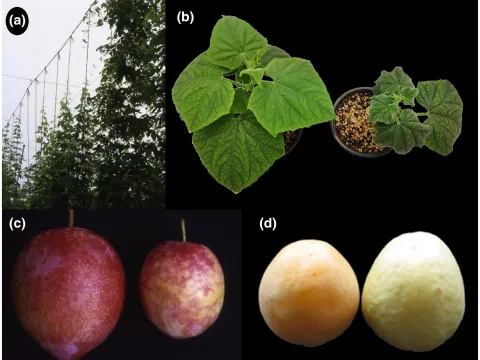
In hop cultivation, HSVd is a serious economic threat. It restricts the development of the bine, leading to stunted growth, reduced lateral branch formation, and a significant decrease in both the number and size of hop cones.
Citrus trees are severely affected as well, where the viroid causes a disease known as 'cachexia' or 'xyloporosis', resulting in stem pitting, stunted tree growth, and a drastic decline in fruit quality and tree longevity.
Grapevines infected with HSVd show reduced vigor, smaller leaves, and shortened internodes. This impacts the quality of the grape clusters and often necessitates the removal of infected vines to save the rest of the vineyard.
Vegetable crops such as cucumbers and tomatoes experience severe stunting and reduced yield. The quality of the fruit is compromised, and plants may become unproductive much earlier in the season than healthy counterparts.
The cumulative damage includes not only quantitative yield losses but also qualitative degradation, such as reduced alpha-acid content in hops or poor sugar accumulation in fruits, lowering the market value of the produce.
The hallmark symptom of HSVd in hops is the extreme shortening of internodes, giving the plant a flattened, compact appearance. Growth is significantly retarded, and the bines fail to climb their supports effectively.
Leaves often show signs of chlorosis, curling, or overall malformation. In many hosts, the infected plants look brittle and less vibrant compared to healthy neighboring plants, often exhibiting a generally chlorotic appearance.
On grapevines, visual indicators include diminished canopy density and shortened shoot growth. These symptoms are often more pronounced during the mid-season when the plant's metabolic demands are at their peak.
In cucurbits and solanaceous crops, the viroid causes general stunting and mosaic-like patterns on leaves. Fruit development is noticeably affected, with fruits often appearing small, distorted, or ripening irregularly.
Because symptoms can remain latent for extended periods—especially in woody hosts like citrus—infected plants can act as symptomless reservoirs, unknowingly spreading the pathogen further through contaminated pruning tools.
The cornerstone of management is the use of viroid-free certified planting material. Rigorous indexing of mother plants using sensitive molecular assays is essential to ensure the health of new stock.
Strict sanitation protocols during pruning and harvesting are vital. Tools must be thoroughly disinfected using sodium hypochlorite (bleach) solutions between every single plant to prevent mechanical transmission.
Rogueing, the prompt identification and removal of infected plants, is necessary to minimize the spread within a field. Removed plants and their residues should be destroyed, preferably by burning, to prevent environmental contamination.
Continuous monitoring of the field or orchard for any signs of stunted growth is recommended. Any suspicious plant should be sampled and subjected to PCR testing to confirm the presence of the viroid.
Quarantine regulations regarding the movement of vegetative material across regions are critical. Preventing the introduction of HSVd into clean areas is far more effective than trying to eradicate it once it has become established.